Viewpoint: Rethinking pros and cons of livestock ‘factory farms’

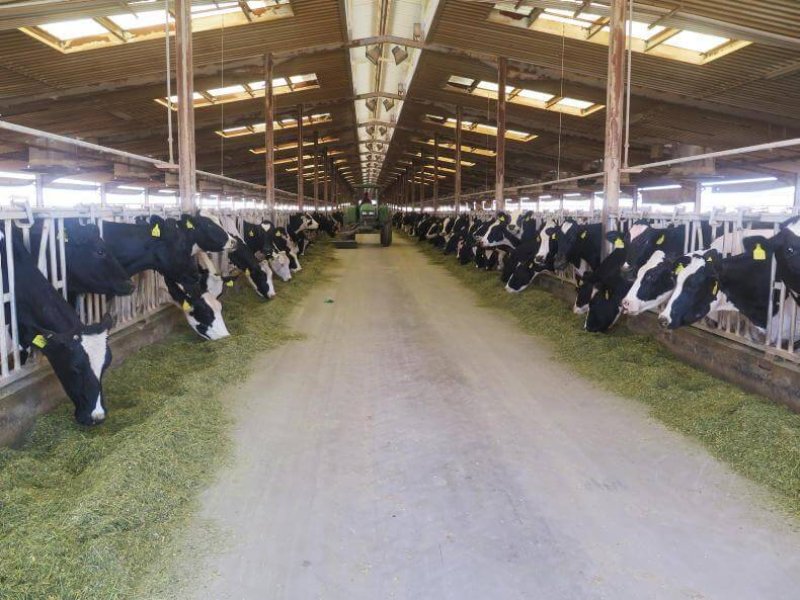
Almarai's large scale Al Badiah dairy farm. Credit: Patrick Donohoe

Large-scale or industrial farming or factory farms — whatever you want to call them, are farms designed to maximize efficiency, just like a factory. The scale and the efficiency mean these farms require fewer resources, which also translates to lower greenhouse gas emissions. That’s a good thing. Proponents of Big Ag, industrial agriculture, whatever you want to call it — are happy to tout the efficiency of the system.

But everything is a tradeoff. When the factory product is meat, the widgets are animals. And everything gets a lot more complicated because each type of meat comes with its own set of costs, to the environment, the animal’s welfare and the surrounding communities.

Follow the latest news and policy debates on sustainable agriculture, biomedicine, and other ‘disruptive’ innovations. Subscribe to our newsletter.

There are alternatives to factory farms for producing meat…. But for most of those systems to work, we also have to give up cheap and abundant meat. So when we talk about climate-food systems solutions, it’s not that we have to pursue the solutions that still rely on the factory farming model (albeit with policies that push for more sustainable models of intensification). It’s just that there really isn’t a set of solutions where consumers can just avoid thinking about the food system and not make any changes at all. Everything is a tradeoff, and we need to be thinking through these tradeoffs now. There’s no more time for delay.
This is an excerpt. Read the original post here

{{ reviewsTotal }}{{ options.labels.singularReviewCountLabel }}
{{ reviewsTotal }}{{ options.labels.pluralReviewCountLabel }}
{{ options.labels.noReviewsLabel }}
{{ options.labels.newReviewButton }}
{{ userData.canReview.message }}

Related Articles

Infographic: Global regulatory and health research agencies on whether glyphosate causes cancer

Infographic: Global regulatory and health research agencies on whether glyphosate causes cancer

Does glyphosate—the world's most heavily-used herbicide—pose serious harm to humans? Is it carcinogenic? Those issues are of both legal and ...

Most Popular

ChatGPT-Image-Mar-10-2026-01_39_01-PM
Viewpoint—“Miracle molecule” debunked: Why acemannan supplements don’t work
Screenshot 2025-09-17 at 12.41
Misinformation alert: No, glyphosate use in Canadian forests is not spurring more wildfires
Screenshot 2026-07-11 094410
Growing animal muscle and fat cells inside rice grains and calling it beef: One of numerous genetically engineered products shaking up our ecosystem
ChatGPT-Image-Jun-25-2026-12_23_17-PM
No, Bill Gates did not secretly engineer ticks to promote veganism
Screenshot-2026-07-16-at-11.32.12-AM
Viewpoint: Trump appoints climate change hoax promoter to head influential government policy project
Screenshot 2026-07-16 at 8.49
Pete Hegseth’s bizarre Viagra commercial as Trump administration endorses ‘hormone replacement therapy’

Sorry. No data so far.

glp menu logo outlined

Get news on human & agricultural genetics and biotechnology delivered to your inbox.