The gene-edited CRISPR twins are growing up — raising questions about the ethics of continuing to study them

Credit: Insider
Credit: Insider

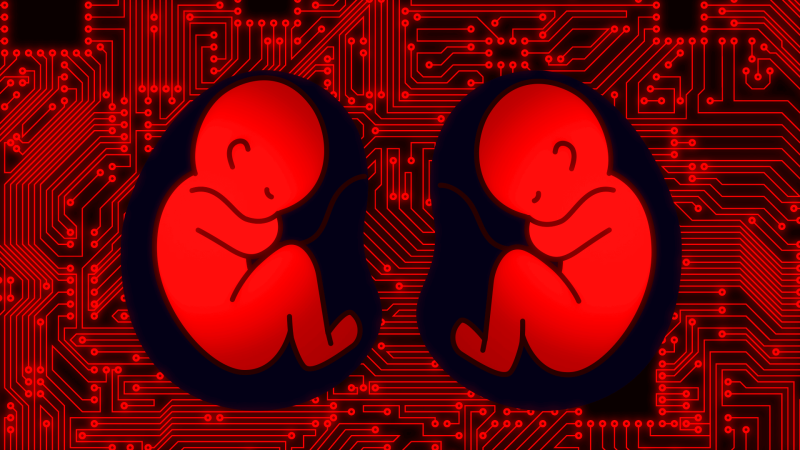
More than a billion people live in China, but researchers in the country have proposed the creation of a healthcare institute to look after just three: Amy and twins Lulu and Nana. These three children are the first genetically engineered humans in history.

Known publicly only by these pseudonyms, as embryos their genomes were edited using CRISPR technology by scientist He Jiankui in an effort to prevent them contracting HIV from their fathers. After announcing the experiment to the world in 2018, He was denounced as highly unethical. He was imprisoned in China in 2019 and was released in April this year.

Follow the latest news and policy debates on sustainable agriculture, biomedicine, and other ‘disruptive’ innovations. Subscribe to our newsletter.

The children are now toddlers, and as they grow up the scientific community faces a complex dilemma: how to care for their well-being and any fallout from He’s experiment, while also respecting their private lives.


“In my opinion, the best way to provide them with special protection is to establish a center to perform surveillance, regular or irregular examination, and treat and care for them when they fall ill, which may be caused by genetic abnormalities,” says Qiu Renzong, a bioethicist at the Institute of Philosophy at the Chinese Academy of Social Sciences. Along with his colleagues, Qiu has presented a proposal for this facility to other scientists and several Chinese government ministries.


This is an excerpt. Read the original post here

{{ reviewsTotal }}{{ options.labels.singularReviewCountLabel }}
{{ reviewsTotal }}{{ options.labels.pluralReviewCountLabel }}
{{ options.labels.newReviewButton }}
{{ userData.canReview.message }}

Related Articles

Infographic: Global regulatory and health research agencies on whether glyphosate causes cancer

Infographic: Global regulatory and health research agencies on whether glyphosate causes cancer

Does glyphosate—the world's most heavily-used herbicide—pose serious harm to humans? Is it carcinogenic? Those issues are of both legal and ...

Most Popular

Picture1
The FDA couldn’t find a vaccine safety crisis, so it buried its own research
vax-misinformation-main
Facts & Fallacies Podcast: Limit free speech to blunt social media misinfo?
ChatGPT-Image-May-7-2026-01_23_27-PM-2
Viewpoint: Will AI democratize personalized cancer treatment or fuel medical misinformation?
ChatGPT-Image-Apr-16-2026-02_56_53-PM
Financial incentives, over diagnosis, and weak oversight: Autism claims are driving up Medicare costs
ChatGPT-Image-May-12-2026-11_27_01-AM-2
AI likely to improve health care, research shows—but not for blacks and ethnic minorities
Screenshot-2026-04-22-at-12.21.32-PM
Viewpoint: Why the retracted Monsanto glyphosate study doesn’t change the science—the world’s most popular herbicide is safe 
modi visit sikkim
Viewpoint: Indian PM wants farmers to switch to 50% organic. It would take at least 10 years, likely won’t work, and isn’t more sustainable
Screenshot-2026-05-19-at-11.23.34-AM
West-originated vaccine disinformation sparks murders of health care workers across Africa
Screenshot-2026-04-13-at-1.39.26-PM
Viewpoint: ‘Safer for children?’ Stonyfield yogurt under fire for deceptive organic marketing
newborn infant baby mother
Sharp rise in number of parents refusing newborn vitamin K shots, putting babies at 81-fold higher risk of severe bleeding
ChatGPT-Image-May-7-2026-12_32_36-PM
Viewpoint: The state of U.S. vaccine policy? Dismal nationally, but some states are stepping up.
ChatGPT-Image-May-20-2026-04_53_21-PM-2
Viewpoint: Doctors can fight health misinformation — if hospitals let them
Screenshot-2026-05-18-at-12.57.12-PM
Viewpoint—‘Technology is pulling us apart’: Environmental, political, and economic
glp menu logo outlined

Get news on human & agricultural genetics and biotechnology delivered to your inbox.