A yield-boosting wheat gene could help address growing climate and food insecurity crises

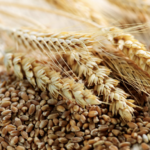
This breakthrough could increase world wheat production significantly at scale. Credit: CSIRO

Humans have been modifying and domesticating natural plants and animals for human needs and development for tens of thousands of years. Wheat, one of the most important food rations, is an inbred crop with low genetic diversity and unique evolutionary constraints. Feeding a growing population is a huge challenge. Therefore, it is necessary to create new alleles and identify new loci in wheat to further improve grain yield traits.

The wheat spike is a compound spike with several axial nodes bearing a spikelet at the base of each node. Spikelet number is significantly and positively correlated with grain number. Therefore, the analysis of key genes affecting spikelet number is of great theoretical and practical significance to improving wheat grain yield.

Follow the latest news and policy debates on sustainable agriculture, biomedicine, and other ‘disruptive’ innovations. Subscribe to our newsletter.

The researchers then artificially edited the wheat gene using CRISPR/Cas9 technology. They found that the spikelets in the lower middle part of the spikes exhibited a multi-spikelet phenotype (2-3 spikelets at the base of each rachis node) in gene-edited mutants. Live imaging revealed more and larger cells in the basal spikelet primordia of the mutant wheat in comparison with the wild type suggesting that the gene regulates cell division.

During yield-plot experiments in the field, the researchers also discovered that the gene-edited mutant wheat had significantly more grains per spike compared with the wild type, thereby increasing yield per unit area.


This is an excerpt. Read the original post here

{{ reviewsTotal }}{{ options.labels.singularReviewCountLabel }}
{{ reviewsTotal }}{{ options.labels.pluralReviewCountLabel }}
{{ options.labels.newReviewButton }}
{{ userData.canReview.message }}

Related Articles

Infographic: Global regulatory and health research agencies on whether glyphosate causes cancer

Infographic: Global regulatory and health research agencies on whether glyphosate causes cancer

Does glyphosate—the world's most heavily-used herbicide—pose serious harm to humans? Is it carcinogenic? Those issues are of both legal and ...

Most Popular

S
As vaccine rejectionism spreads, measles may be taking a more dangerous turn
Screenshot-2026-05-01-at-1.29.41-PM
Viewpoint: What happens when whole grains meet modern food manufacturing? Labels don’t tell the whole story.
Screenshot 2026-05-06 at 2.56
Singularity crisis ahead? Can super babies save us from rogue AI geniuses?
Screenshot-2026-03-13-at-12.14.04-PM
The FDA wants to make many popular prescription drugs OTC—a great idea. Here’s why it’s unlikely to happen
Screenshot-2026-05-06-at-2.07.43-PM
Manufacturing a conspiracy: The timeline of how  the White House embraced the fringe claim that scientists are being mysteriously murdered
Screenshot-2026-05-01-at-11.56.24-AM
‘Science moves forward when people are willing to think differently’: Memories of DNA maverick Craig Venter
Screenshot-2026-04-30-at-2.19.37-PM
5 myths about summer dehydration that could damage your health — or even kill you
Screenshot-2026-04-20-at-2.26.27-PM
Viewpoint — Food-fear world: The latest activist scientists campaign: Cancer-causing additives
Screenshot-2026-04-03-at-11.15.51-AM
Paraben panic: How a flawed study, media hype, and chemophobia convinced the public of the danger of one of the safest classes of preservatives
images
The never-ending GMO debate: Pros and cons
Screenshot-2026-04-12-135256
Bixonimania: The fake disease scam that AI swallowed whole
glp menu logo outlined

Get news on human & agricultural genetics and biotechnology delivered to your inbox.