Moving from off-the-shelf cancer vaccines to shots personalized to your genetic makeup

Credit: Getty Images

In recent years, we have seen great advances in disease diagnosis through biomarkers and, increasingly, gene sequencing.

Follow the latest news and policy debates on sustainable agriculture, biomedicine, and other ‘disruptive’ innovations. Subscribe to our newsletter.

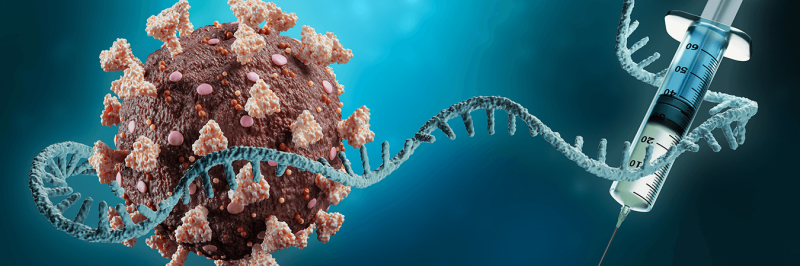
This progress has resulted in the development of a number of successful immuno-oncology approaches to cancer therapy such as checkpoint inhibitors and chimeric antigen receptor (CAR) T cell–based products. We are also seeing the development of cancer vaccines, which aim to train the immune system to target tumor-specific antigens.

Although off-the-shelf vaccines are easier to manufacture, they require the incorporation of many irrelevant epitopes, potentially compromising efficacy. Also, they may benefit only selected patients. In contrast, personalized vaccines are potentially applicable across tumor types and for all patient populations. However, they can be difficult and costly to develop and manufacture.

The personalized approach is built around increasing sequencing capabilities and the use of algorithms to predict multiple MHC class I epitopes specific to an individual patient’s tumor. Then it is necessary to manufacture vaccines that are, essentially, targeted to an individual patient’s tumor. Doing so requires an extra degree of precision.

Despite these challenges, several companies, such as Roche/Genentech, Evaxion Biotech, EpiVax, and Geneos Therapeutics, have products that are in clinical trials or have already completed clinical trials.


This is an excerpt. Read the original post here

{{ reviewsTotal }}{{ options.labels.singularReviewCountLabel }}
{{ reviewsTotal }}{{ options.labels.pluralReviewCountLabel }}
{{ options.labels.newReviewButton }}
{{ userData.canReview.message }}

Related Articles

Infographic: Global regulatory and health research agencies on whether glyphosate causes cancer

Infographic: Global regulatory and health research agencies on whether glyphosate causes cancer

Does glyphosate—the world's most heavily-used herbicide—pose serious harm to humans? Is it carcinogenic? Those issues are of both legal and ...

Most Popular

Screenshot-2026-04-22-at-12.21.32-PM
Viewpoint: Why the retracted Monsanto glyphosate study doesn’t change the science—the world’s most popular herbicide is safe 
ChatGPT-Image-May-1-2026-11_42_59-AM-2
Viewpoint: NAD is the wellness grifters latest evidence-lite longevity fad. At least the mice are impressed.
Picture1
The FDA couldn’t find a vaccine safety crisis, so it buried its own research
ChatGPT-Image-Apr-16-2026-02_56_53-PM
Financial incentives, over diagnosis, and weak oversight: Autism claims are driving up Medicare costs
Screenshot-2026-04-12-135256
Bixonimania: The fake disease scam that AI swallowed whole

Sorry. No data so far.

glp menu logo outlined

Get news on human & agricultural genetics and biotechnology delivered to your inbox.