US Department of Agriculture leads trade delegation to Kenya as African country embraces genetically modified crops

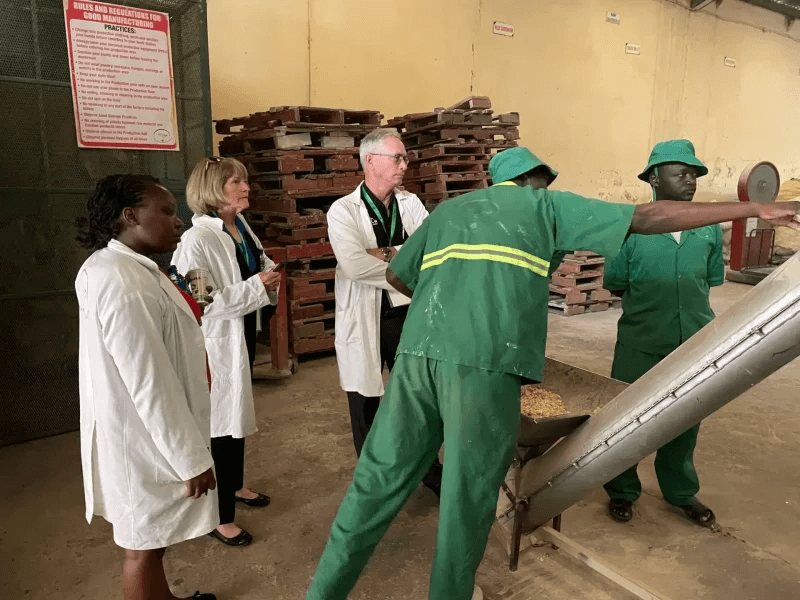
U.S. trade representatives observe a soy processing facility. Credit: ASA

Representatives from 32 US agribusiness firms [arrived in Kenya on October 30] as part of an American government delegation scouting for trade opportunities.

The US food firms are looking for new and expanded markets in Kenya for their crops. Kenya currently faces food insecurity and also wants to seal a trade deal with Americas.

Nairobi has been pressured by Washington to allow access to its genetically modified (GM) food and crop products and this month gave approval to GM imports, providing a huge market opportunity for American companies.

Follow the latest news and policy debates on sustainable agriculture, biomedicine, and other ‘disruptive’ innovations. Subscribe to our newsletter.

“I am excited to lead this delegation to foster stronger ties and build economic partnerships between the United States, Kenya and Tanzania as both of these countries present a growing opportunity for US agricultural exports,” said US Deputy Agriculture Secretary Jewel Bronaugh in a statement ahead of the visit.

“This trade mission will provide firsthand knowledge of market conditions and opportunities in East Africa and expand awareness about US agricultural and food products in the region.”

Kenya seeks to seal the deal before the expiry of the Africa Growth and Opportunity Act, which allows Sub-Saharan African countries to export thousands of products to the United States without tariffs or quotas until 2025.


This is an excerpt. Read the original post here

{{ reviewsTotal }}{{ options.labels.singularReviewCountLabel }}
{{ reviewsTotal }}{{ options.labels.pluralReviewCountLabel }}
{{ options.labels.newReviewButton }}
{{ userData.canReview.message }}

Related Articles

Infographic: Global regulatory and health research agencies on whether glyphosate causes cancer

Infographic: Global regulatory and health research agencies on whether glyphosate causes cancer

Does glyphosate—the world's most heavily-used herbicide—pose serious harm to humans? Is it carcinogenic? Those issues are of both legal and ...

Most Popular

ChatGPT-Image-Mar-10-2026-01_39_01-PM
Viewpoint—“Miracle molecule” debunked: Why acemannan supplements don’t work
ChatGPT-Image-Jun-25-2026-12_23_17-PM
No, Bill Gates did not secretly engineer ticks to promote veganism
ChatGPT-Image-Jun-19-2026-04_11_20-PM
Daubert for Dummies—Scientific Reliability in U.S. Courts: Daubert, Rule 702, and Made-for-Litigation Evidence
ChatGPT-Image-Jun-17-2026-10_52_43-AM
Anguished parents, doctors in tears: Utah’s long measles outbreak takes a toll
Screenshot-2026-06-15-at-1.55.27-PM
America's trust in Trump-Kennedy's CDC health recommendations is plunging
Screenshot-2026-06-22-at-9.04.46-PM
Kennedy's nutrition prescription for medical schools: Real problem, bad cure
ChatGPT-Image-Jun-15-2026-11_51_00-AM-4
Viewpoint: As the International Association for Research on Cancer loses influence, activists and trial lawyers scramble to protect a lucrative playbook

Sorry. No data so far.

glp menu logo outlined

Get news on human & agricultural genetics and biotechnology delivered to your inbox.