Viewpoint: ‘What’s the biological equivalent of an atomic bomb’? Here’s how the gene editing revolution could go astray

Credit: Today's Clinical Lab

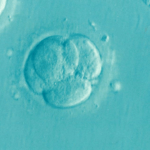
We now sequence the genes of people, animals, plants and tumors routinely. We’re starting to edit DNA, not only in individual cells but even inside living people, as a treatment. Drug companies have created therapies for previously unconquerable diseases from melanoma to spinal muscular atrophy. Artificial intelligence, machine learning, and other computer tools aim to speed up the process further.

So what’s the biological equivalent of the atom bomb? Sure, there are worries that we’ll edit the wrong genes, or create biological inequality to mirror the economic inequality we already have. But the biggest looming problem is that we will simply become lost and confused as to what works and what doesn’t, scuttling our own progress, wasting money, and missing opportunities to save lives. That’s what happens when new technologies in biology outpace our ability to assess them.

Follow the latest news and policy debates on sustainable agriculture, biomedicine, and other ‘disruptive’ innovations. Subscribe to our newsletter.

When a new plane is tested, there is little doubt as to whether or not it can fly. But new medicines that enter human studies fail 90% of the time, and often, even when they are on the market and are very effective, large studies can be needed to be sure they are doing more good than harm. But we’re not doing these studies, called clinical trials, right. We’re embracing shortcuts called “real-world evidence” in place of rigorous studies that randomize patients to receive one treatment or another. Our electronic health records, a key to moving forward, are siloed and maddeningly unstructured.


This is an excerpt. Read the full article here

{{ reviewsTotal }}{{ options.labels.singularReviewCountLabel }}
{{ reviewsTotal }}{{ options.labels.pluralReviewCountLabel }}
{{ options.labels.noReviewsLabel }}
{{ options.labels.newReviewButton }}
{{ userData.canReview.message }}

Related Articles

Infographic: Global regulatory and health research agencies on whether glyphosate causes cancer

Infographic: Global regulatory and health research agencies on whether glyphosate causes cancer

Does glyphosate—the world's most heavily-used herbicide—pose serious harm to humans? Is it carcinogenic? Those issues are of both legal and ...

Most Popular

ChatGPT-Image-Jul-17-2026-12_42_10-PM
Viewpoint: RFK, Jr. is setting up a panel to compensate people who claim they were injured by a COVID vaccine–no proof needed 
Screenshot-2026-07-17-at-12.55.22-PM
Viewpoint: Is bagged salad a dangerous science experiment? Challenging an online misinformation campaign
Screenshot-2026-07-01-at-2.49.48-PM
Dr. TikTok and male fertility: Viral claims tout GLP-1 drugs as fertility boosters. What does the science say?
ChatGPT-Image-Mar-10-2026-01_39_01-PM
Viewpoint—“Miracle molecule” debunked: Why acemannan supplements don’t work
ChatGPT-Image-Jul-6-2026-02_25_26-PM
40 million Americans take glucosamine. If you have memory loss, it could accelerate cognitive decline.
reverse-aging
Rapamycin: Here’s the skinny on the anti-aging pill that increases the lifespan—of mice by 10%
UK scientists support loosening restrictions limiting embryo research
Are we edging closer to precisely, and safely, editing human embryos?
vitamin k refuse genai
More and more babies are developing uncontrollable bleeding—linked directly to vaccine deniers' rejection of vitamin K shots
Screenshot 2026-07-11 094410
Growing animal muscle and fat cells inside rice grains and calling it beef: One of numerous genetically engineered products shaking up our ecosystem
px-Minced-beef-meat-cow-cattle
Can we trust Trump’s USDA to accurately report farm data? Beef export numbers suggest ‘no’.
ChatGPT-Image-Jul-9-2026-02_39_22-PM
Viewpoint: Polyphenols or NAD+ supplements to combat aging: No, Gwenyth Paltrow and followers, don’t waste your money.
ma art page image
‘It’s time to have a conversation’: Once adamantly opposed to human gene editing, UK’s The Guardian acknowledges likely benefits
ChatGPT-Image-Jun-17-2026-03_29_08-PM
Viewpoint: What’s the impact of the U.S. abandoning support for global health?
afb-a-b
As the EU loosens restrictions on agricultural gene editing, it remains years behind the rest of the world on equally-safe GMO foods
glp menu logo outlined

Get news on human & agricultural genetics and biotechnology delivered to your inbox.