Here’s the background on India’s newly-approved high-yielding genetically modified mustard

Credit: ANI Photo
Credit: ANI Photo

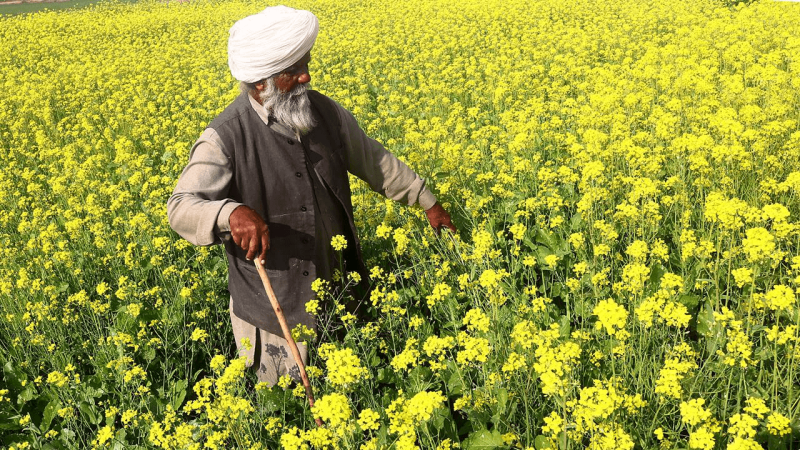
The Genetic Engineering Appraisal Committee (GEAC), India’s apex regulator of genetically modified plants and food products, has approved the environmental release of Dhara Mustard Hybrid-11 (DMH-11), a genetically-engineered variant of mustard. If approved for commercial cultivation it would be the first genetically modified food crop available to Indian farmers.

Follow the latest news and policy debates on sustainable agriculture, biomedicine, and other ‘disruptive’ innovations. Subscribe to our newsletter.

Trials conducted over three years by the Indian Council of Agricultural Research (ICAR) suggest that DMH-11 has 28% higher yields than its parent Varuna and was 37% better than zonal checks, or local varieties that are considered the best in different agro-climatic zones.

DMH-11 rather than being an end in itself signals the proof of success of the barnase-barstar system that can act as a platform technology to develop newer hybrids. Scientists say that having better hybrids is necessary to meet India’s rising edible-oil import bill.

This isn’t the first time that the GEAC has cleared the environmental release of GM mustard. In 2017 too, the apex body had cleared it but the process got stalled after a case was lodged in the Supreme Court. The government, or specifically the Environment Ministry, hasn’t officially supported GM mustard despite the GEAC being a body under it.


This is an excerpt. Read the original post here

{{ reviewsTotal }}{{ options.labels.singularReviewCountLabel }}
{{ reviewsTotal }}{{ options.labels.pluralReviewCountLabel }}
{{ options.labels.newReviewButton }}
{{ userData.canReview.message }}

Related Articles

Infographic: Global regulatory and health research agencies on whether glyphosate causes cancer

Infographic: Global regulatory and health research agencies on whether glyphosate causes cancer

Does glyphosate—the world's most heavily-used herbicide—pose serious harm to humans? Is it carcinogenic? Those issues are of both legal and ...

Most Popular

Screenshot-2026-05-01-at-1.29.41-PM
Viewpoint: What happens when whole grains meet modern food manufacturing? Labels don’t tell the whole story.
S
As vaccine rejectionism spreads, measles may be taking a more dangerous turn
ChatGPT-Image-Mar-27-2026-11_47_30-AM-2
FDA’s expedited drug reviews are hailed in some quarters but other approval practices are problematic
Screenshot 2026-05-06 at 2.56
Singularity crisis ahead? Can super babies save us from rogue AI geniuses?
Farmers can talk to plants
Farmers are a major source of misinformation—about farming
Screenshot-2026-04-20-at-2.26.27-PM
Viewpoint — Food-fear world: The latest activist scientists campaign: Cancer-causing additives
Screenshot-2026-04-30-at-2.19.37-PM
5 myths about summer dehydration that could damage your health — or even kill you
Screenshot-2026-05-06-at-2.07.43-PM
Manufacturing a conspiracy: The timeline of how  the White House embraced the fringe claim that scientists are being mysteriously murdered
Screenshot-2026-03-13-at-12.14.04-PM
The FDA wants to make many popular prescription drugs OTC—a great idea. Here’s why it’s unlikely to happen
Screenshot 2026-05-06 at 2.19
Vaccine shootout at the CDC 
Screenshot-2026-04-03-at-11.15.51-AM
Paraben panic: How a flawed study, media hype, and chemophobia convinced the public of the danger of one of the safest classes of preservatives
glp menu logo outlined

Get news on human & agricultural genetics and biotechnology delivered to your inbox.