Some agricultural sector experts are advocating for enhanced access to improved technology like gene editing in crop production. They say this can help create resilient crops to respond to the negative impact of climate change on agricultural production, particularly in the Global South.
“Pests and diseases have dramatically increased in rice fields and other farms due to climate change. We need to see whether CRISPR gene editing and other technologies can help deal with this. Locally led institutes need to be empowered to lead the process,” Arif Hossain, the chief executive officer of Farming Future Bangladesh says.
“Climate change is negatively impacting rice production in Bangladesh. We’ve got a vaccine for Covid but there is no vaccine for climate change. To ensure climate resilient rice in the face of climate change, we need to get science-based information to policymakers,” he adds.
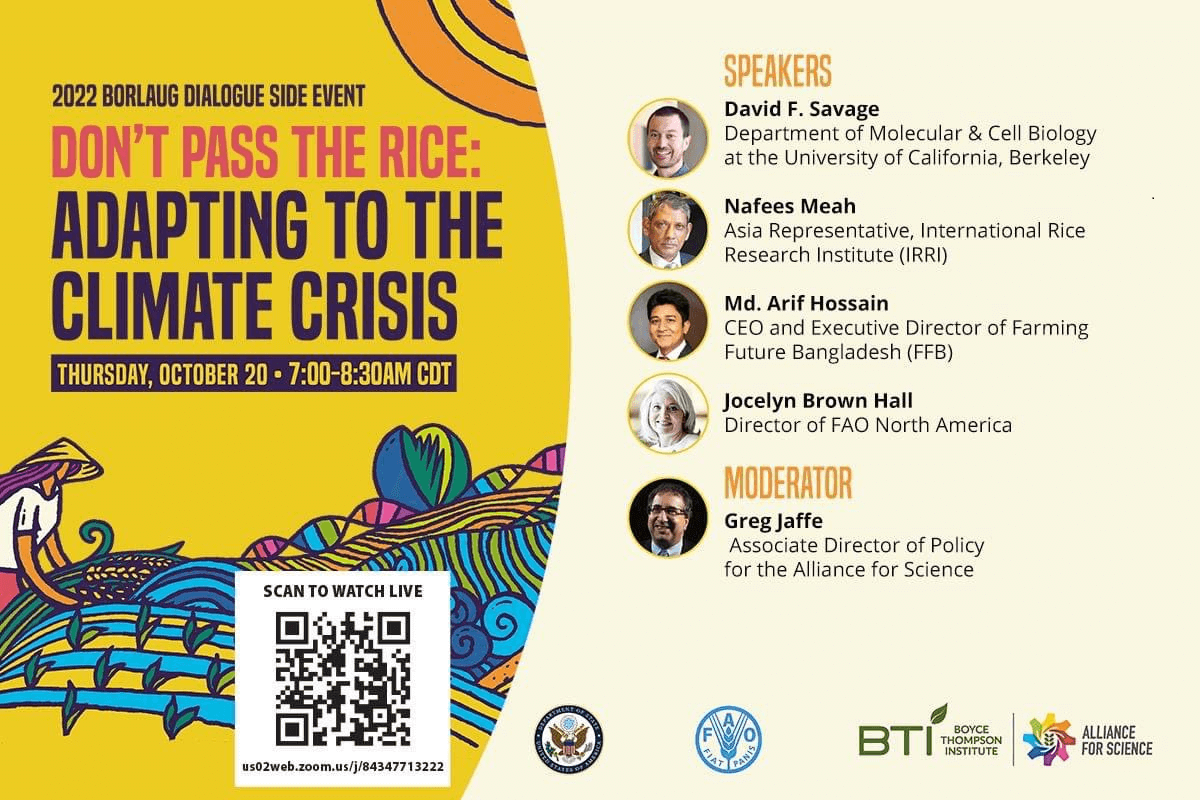
Hossain was speaking during one of the 2022 Borlaug Dialogues at the World Food Prize event in Des Moines, Iowa. The panel discussion was on the theme; “Don’t Pass the Rice: Adapting to the Climate Crisis.”
Rice is a staple food for over 3.5 billion people around the world, particularly Asia and Africa. It grows best in warm and wet climates, where the soils are waterlogged. But the crop is highly vulnerable to climate change. Warmer weather, more frequent floods, sea-level rise, and saltwater intrusion due to climate change are negatively impacting rice productivity across the globe.
A 2018 study led by scientists from China, Pakistan and Saudi Arabia predicted that the increase in the frequency of higher temperatures in rice-growing regions will cause a 40% reduction in crop yields by the endof the 21st Century.
Jocelyn Brown Hall, who is the Director of the Food and Agricultural Organization’s North America Region, told the session that rice is an important crop which should be improved upon for the benefit of the global population amidst climate change.
“We can’t live in a world without rice. We need rice. So, we’ve really got to accelerate technologies to help smallholder farmers grow rice. And ensure the technologies don’t run into challenges with various protocols and to feed a hungry world by 2050, we need to increase rice production by 15% thus working with diverse stakeholders to develop climate-resilient rice is paramount,” she added.
Dr. David Savage, a researcher with the Howard Hughes Medical Institute,University of California, Berkeley, says technological applications must be prioritized if crops like rice can be improved to meet the challenges of climate change.

He emphasized that to develop climate-smart crops, access to technology is extremely important. Advanced technologies like genome editing, machine learning and artificial intelligence can help speed up the pace of rice research and data analysis.”.
,
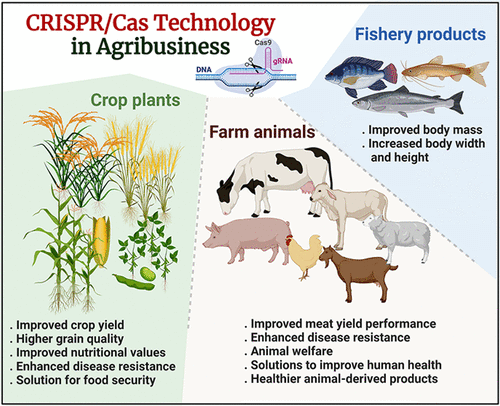
Gene editing, also known as genome editing, is a group of technologies that gives scientists the ability to make permanent and heritable changes at specific sites in the genome of an organism. It is cheaper, simpler, faster and more accurate than other plant breeding methods. The technology makes it possible to enhance the quality of crops by conferring traits like drought tolerance, improved nutrition, and pest and disease resistance.
Dr. Savage’s research work uses gene editing technology, particularly CRISPR genetic screens to engineer a more efficient carbon-concentrating mechanism for photosynthesis in crops. This will ensure farmers can harvest more yield from the gene-edited crops while using less land and fewer chemical inputs, giving agriculture the tools to adapt to changing climate conditions.
He added that “we need to encourage farmers to pick up new practices. This is important because some of these technologies we are discussing are more complicated than traditional practices.”
US Special Envoy for Global Food Security, Dr. Cary Fowler, told the session stakeholders that there is need to ensure such technological tools transferred from the Global North to the Global South, fit the expectations of local communities. “We need to work on solutions that are technically and scientifically sound. But which also fit the local context in which the communities are working in,” he said.
Dr. Naseef Meah, who is the International Rice Research Institute’s (IRRI’s) Regional Representative for South Asia, agrees that local context is crucial in encouraging technological adoption.
“At IRRI, we have tested 36 climate-resilient rice varieties in various parts of Asia and Africa. We are developing technologies to reduce greenhouse gas emissions from rice production. You will need a proper understanding of the local political economy to accelerate the adoption of technology by farmers,” he said.
Joseph Gakpo is a journalist for many Ghanaian outlets, has a master’s degree in communications studies from the University of Ghana and writes for the Alliance for Science. You can follow Joseph on Twitter @josephopoku1990
A version of this article as posted at the Cornell Alliance for Science and is used here with permission. You can follow Alliance for Science on Twitter @ScienceAlly