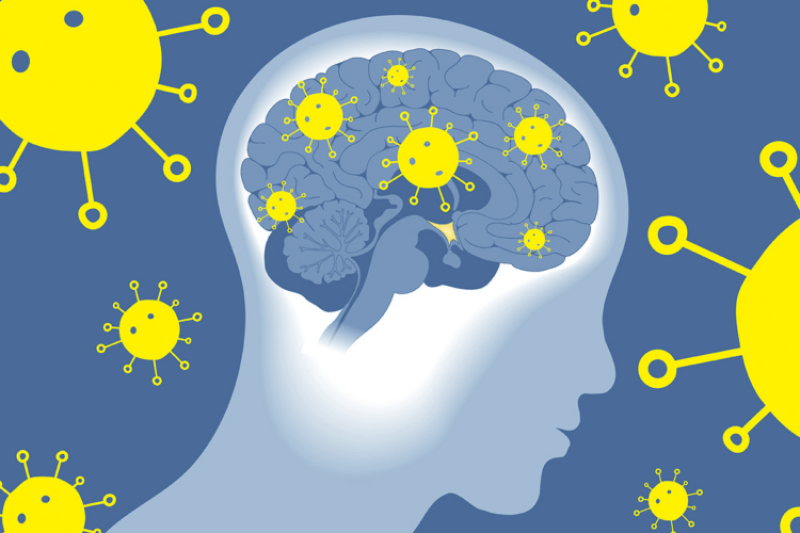
COVID survivors show lingering brain abnormalities up to 6 months after infection

long COVID linked to brain abnormalities up to 6 months after infection
Credit: Washington University

A specialized type of MRI showed lingering brain abnormalities in patients up to 6 months after they recovered from COVID-19.

Data from susceptibility-weighted MRI in 46 COVID-recovered patients and 30 healthy controls showed that the former had significantly higher susceptibility values in regions of the frontal lobe and brain stem, according to Vidur Mahajan, MBBS, MBA, CEO of CARPL.ai of San Francisco and New Delhi.

Follow the latest news and policy debates on sustainable agriculture, biomedicine, and other ‘disruptive’ innovations. Subscribe to our newsletter.

“These brain regions are linked with fatigue, insomnia, anxiety, depression, headaches, and cognitive problems,” explained co-investigator Sapna Mishra, a PhD candidate at the Indian Institute of Technology in Delhi, in aย press release. COVID-recovered study patients reported symptoms of fatigue, trouble sleeping, lack of attention, and memory issues.

These abnormalities did not appear in the brains of the controls (age about 34), noted Mahajan, who presented the results on behalf of Mishra, who was unable to attend RSNA due to visa issues.

“Group-level studies have not previously focused on COVID-19 changes in magnetic susceptibility of the brain despite several case reports signaling such abnormalities,” Mishra stated in the release. “Our study highlights this new aspect of the neurological effects of COVID-19 and reports significant abnormalities in COVID survivors. Changes in susceptibility values of brain regions may be indicative of local compositional changes.”


This is an excerpt. Read the full article here

{{ reviewsTotal }}{{ options.labels.singularReviewCountLabel }}
{{ reviewsTotal }}{{ options.labels.pluralReviewCountLabel }}
{{ options.labels.newReviewButton }}
{{ userData.canReview.message }}

Related Articles

Infographic: Global regulatory and health research agencies on whether glyphosate causes cancer

Infographic: Global regulatory and health research agencies on whether glyphosate causes cancer

Does glyphosateโ€”the world's most heavily-used herbicideโ€”pose serious harm to humans? Is it carcinogenic? Those issues are of both legal and ...

Most Popular

Screenshot-2026-04-22-at-12.21.32-PM
Viewpoint: Why the retracted Monsanto glyphosate study doesnโ€™t change the scienceโ€”the worldโ€™s most popular herbicide is safeย 
ChatGPT-Image-Apr-16-2026-02_56_53-PM
Financial incentives, over diagnosis, and weak oversight: Autism claims are driving up Medicare costs
Picture1
The FDA couldnโ€™t find a vaccine safety crisis, so it buried its own research
global warming
โ€˜Implausibleโ€™: Top climate scientists reject worst-case scenarioโ€”soaring temperatures and fast-rising sea levels
ChatGPT-Image-May-1-2026-11_42_59-AM-2
Viewpoint: NAD is the wellness grifters latest evidence-lite longevity fad. At least the mice are impressed.

Sorry. No data so far.

glp menu logo outlined

Get news on human & agricultural genetics and biotechnology delivered to your inbox.