Viewpoint: ‘40% of all crops grown are lost to pests and disease’ — That’s we need regulatory reform and automation to promote gene editing

Credit: Annemik M.C. Schilder at Michigan State University via CC-SA-4.0

With between 20 and 40% of all crops grown being lost to pests and diseases, the UK agriculture industry could hugely benefit from the prosperity that growing gene-edited crops will bring.

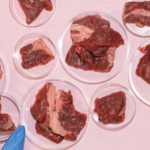
The first challenge is around regulation, especially in cultured meat and plants. Currently, the EU’s rules around gene editing focuses on legal interpretation rather than science – which has restricted the UK’s agricultural research institutions from carrying out research.

Follow the latest news and policy debates on sustainable agriculture, biomedicine, and other ‘disruptive’ innovations. Subscribe to our newsletter.

For the synthetic plants and meat industry to develop and grow, organisations need to be able to deliver products to market at scale. However, the environment that cells grow in requires very high levels of accuracy, with reproducibility and close control being critical parts of the process. This means enabling mass production is a challenge, as human error and contamination are both a risk when throughput needs to be increased.


This is where automation and robotics can play an important role. Scientists are talented, skilled individuals, but it can be impossible to manually keep up with both the pace and quality needed to scale development. With automation, it’s possible to run assays faster and for longer than scientists can, by using remote management to run assays through the night for example.


This is an excerpt. Read the original post here

Related Articles

Infographic: Global regulatory and health research agencies on whether glyphosate causes cancer

Infographic: Global regulatory and health research agencies on whether glyphosate causes cancer

Does glyphosate—the world's most heavily-used herbicide—pose serious harm to humans? Is it carcinogenic? Those issues are of both legal and ...

Most Popular

ChatGPT-Image-Mar-10-2026-01_39_01-PM
Viewpoint—“Miracle molecule” debunked: Why acemannan supplements don’t work
Screenshot-2026-09-16-at-12.07.47-PM
The heated debate over trans athletes in the WNBA
Screenshot-2026-09-10-at-11.50.46-AM
Did COVID vaccines kill 2,500 service members? RFK Jr. hires an investigator who compares vaccine promoters to Nazi doctors
Screenshot-2026-09-11-at-2.26.23-PM
Newly approved GMO chestnut trees planted across from the White House are stirring debate
Screenshot-2026-09-10-at-12.20.19-PM
'Jet fuel didn't melt the steel': 9/11 conspiracy theories debunked
ChatGPT-Image-Sep-9-2026-02_48_24-PM
Viewpoint: Trump-RFK Jr. report on “Gender Ideology & Left-wing Ideology’ targets LGBTQ community—and science
Screenshot-2026-09-15-at-11.04.54-AM
Viewpoint: Childhood deaths in dispute: Why the CDC vs Pennsylvania conflict over measles vaccines matters
ChatGPT-Image-Sep-15-2026-12_15_00-PM
Viewpoint: Women, depression and empathy: Explaining the gender gap in views about child-murderer Lindsay Clancy
ChatGPT-Image-Sep-15-2026-11_36_23-AM
Doomsday cult? Why we should be suspicious of end-of-the-world claims
Screenshot 2026-09-10 at 11.28
A meaty problem: How to make cell-grown protein taste like steak, chicken, and seafood
Screenshot-2026-09-14-at-4.31.14-PM
Viewpoint: What’s the likely impact when the EPA loosens rules limiting methane pollution from oil and gas wells?
ChatGPT-Image-Aug-28-2026-03_33_46-PM
Viewpoint: Bad science—Five bogus Trump administration claims about vaccines and autism
ChatGPT-Image-Sep-15-2026-05_59_18-PM
RFK Jr. spent two years distancing himself from Children’s Health Defense. Now he’s keynoting its anti-vaccine DC conference.
glp menu logo outlined

Get news on human & agricultural genetics and biotechnology delivered to your inbox.