Viewpoint: ‘Italy’s scientifically-unfounded fight against cultured meat is futile’ — Why the country can’t afford to block sustainable livestock alternatives

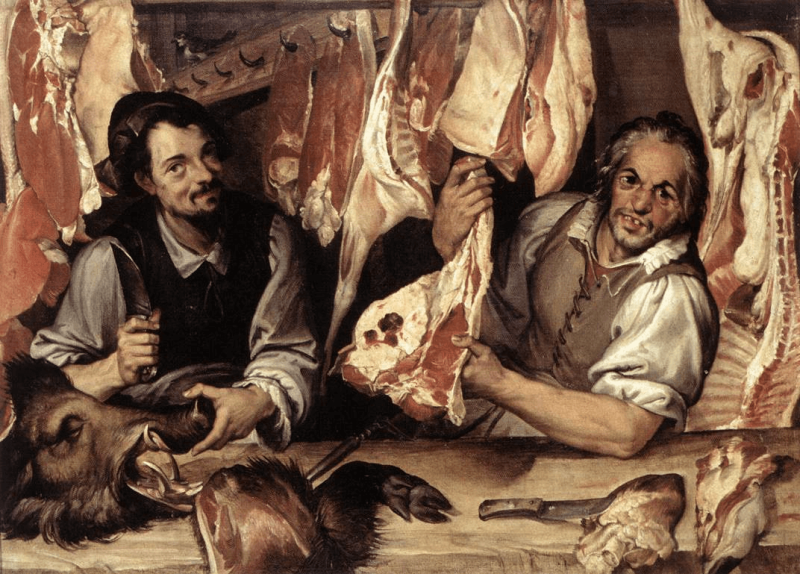
Traditional meat from livestock holds powerful sway over Italian culture. Credit: Bartolomeo Passarotti  and Web Gallery of Art via Public Domain
Traditional meat from livestock holds powerful sway over Italian culture. Credit: Bartolomeo Passarotti and Web Gallery of Art via Public Domain

Italy is moving to become the first country in the world to ban its companies from producing lab-cultivated meat, threatening fines of up to €60,000.

Upon introducing the bill to the Senate, the country’s Agriculture and Food Sovereignty Minister, Francesco Lollobrigida, said:

It damages small food producers.
It damages the environment.
It standardises food habits.
Studies do not guarantee it’s safe.

Follow the latest news and policy debates on sustainable agriculture, biomedicine, and other ‘disruptive’ innovations. Subscribe to our newsletter.

Singapore became the first country to give the green light to human consumption of cultivated meat in 2020. The US Food and Drug administration followed in November 2022.

And in the EU? Cell-based agriculture is still being researched, but the bloc’s Food and Safety Authority says it’s a “promising solution” towards achieving its ambitious environmental goals.

If the EU approves cultivated food, the proposed bill won’t be enough to keep it away “from the tables of the Italians”, as promised by Italy’s Agriculture Minister.

Yes, it does ban Italian companies from producing it, but doesn’t prevent foreign businesses from exporting it to Italy.

The opposition argued that this would only create a competitive disadvantage for Italian businesses, instead of protecting them.


This is an excerpt. Read the original post here

{{ reviewsTotal }}{{ options.labels.singularReviewCountLabel }}
{{ reviewsTotal }}{{ options.labels.pluralReviewCountLabel }}
{{ options.labels.newReviewButton }}
{{ userData.canReview.message }}

Related Articles

Infographic: Global regulatory and health research agencies on whether glyphosate causes cancer

Infographic: Global regulatory and health research agencies on whether glyphosate causes cancer

Does glyphosate—the world's most heavily-used herbicide—pose serious harm to humans? Is it carcinogenic? Those issues are of both legal and ...

Most Popular

ChatGPT-Image-Jun-25-2026-12_23_17-PM
No, Bill Gates did not secretly engineer ticks to promote veganism
ChatGPT-Image-Jun-23-2026-03_12_23-PM
Is cellular reprogramming junk science? Nearly 20 patients are getting eye injections in the first FDA-cleared cellular trial
ChatGPT-Image-Mar-10-2026-01_39_01-PM
Viewpoint—“Miracle molecule” debunked: Why acemannan supplements don’t work
Screenshot-2026-06-15-at-1.55.27-PM
America's trust in Trump-Kennedy's CDC health recommendations is plunging
ChatGPT-Image-Jun-17-2026-10_52_43-AM
Anguished parents, doctors in tears: Utah’s long measles outbreak takes a toll
ChatGPT-Image-Jun-24-2026-11_36_47-AM
Why the human genome is less a script than a puzzle
Screenshot-2026-06-05-at-2.12.30-PM
Some plants can poison you. So how did humans figure out what is safe to eat?
ChatGPT-Image-May-18-2026-12_06_18-PM-2
Defying death: The immortality movement goes mainstream

Sorry. No data so far.

glp menu logo outlined

Get news on human & agricultural genetics and biotechnology delivered to your inbox.