Will AI robots ever be accorded legal rights?

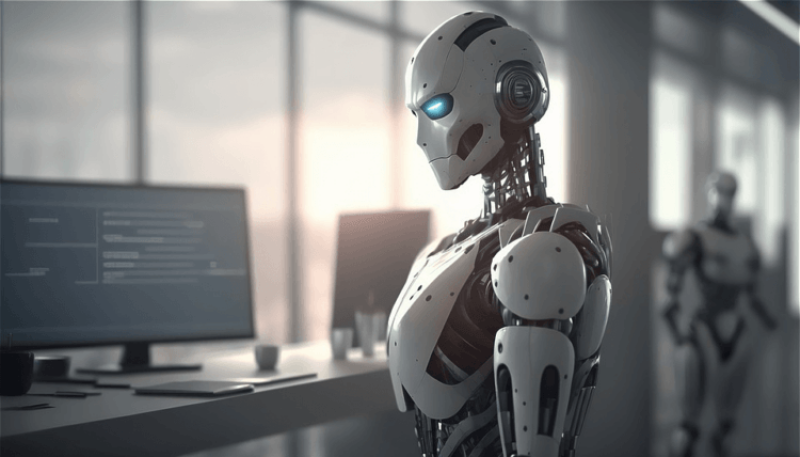
Will robots with AI ever be accorded legal rights?
Credit: Pixabay/ Malinaphotocz

Artificial intelligence is writing essays, winning at chess, detecting likely cancers and making business decisions. That’s just the beginning for a technology that will only grow more powerful and pervasive, bolstering longstanding worries that robots might someday overtake us.

Yet far less attention has been paid to how we should treat these new forms of intelligence, some of which will be embodied in increasingly anthropomorphic forms. Might we eventually owe them some kind of moral or legal rights? Might we feel we should treat them like people if they look and act the part?

Mis- and disinformation are distorting science and public policy. Subscribe to our Daily and Weekly Digests for incisive coverage of ‘disruptive’ innovations in AI, agricultural biotechnology, food, chemicals, nuclear energy, vaccines, and other disruptive innovations.

If robots get any rights at all, Dr. [David J.] Gunkel says, first to come will be basic protections of the kind that exist in many places against cruelty toward animals. Like animals, robots could be seen as what philosophers call “moral patients,” or beings worthy of moral consideration whether or not they can fulfill the duties and responsibilities of “moral agents.” Your dog is a moral patient, and so are you. But you are also a moral agent—someone who is able to tell right from wrong and act accordingly.

This is an excerpt. Read the full article here

Related Articles

Infographic: Global regulatory and health research agencies on whether glyphosate causes cancer

Infographic: Global regulatory and health research agencies on whether glyphosate causes cancer

Does glyphosate—the world's most heavily-used herbicide—pose serious harm to humans? Is it carcinogenic? Those issues are of both legal and ...

Most Popular

ChatGPT-Image-Sep-23-2026-02_36_39-PM
Viewpoint: After firing the entire National Science Board, Trump reshapes funding initiatives. Here’s the good and the bad.
ChatGPT-Image-Mar-10-2026-01_39_01-PM
Viewpoint—“Miracle molecule” debunked: Why acemannan supplements don’t work
sorghum farmers in kenya FARMERS TREND
Here are all the ways CRISPR gene editing is transforming Africa’s staple crops—and there’s a lot more innovation to come
ChatGPT-Image-Sep-10-2026-10_36_07-AM
Viewpoint: Even lousy scientific articles can shield authors when they hype dubious health claims and products
ChatGPT-Image-Sep-30-2026-01_25_34-PM
Blood tests for Alzheimer’s? The latest grifter, social media scam.
ChatGPT-Image-Sep-30-2026-01_38_36-PM
Viewpoint: Died “with measles” vs. died “from measles”: RFK, Jr.’s dangerously subversive word games
ChatGPT-Image-Sep-30-2026-01_11_07-PM
How U.S. teamed with Russia to block global human AI weapons oversight
Screenshot-2026-10-01-at-11.21.27-AM
Vaccine hesitancy, like malaria, surges globally, topping 35% in some countries
ChatGPT-Image-Sep-21-2026-03_15_09-PM
Viewpoint: Chipotle-inspired lesson: 10,000 sick customers suggest that processed foods can be safer than fresh ones
glp menu logo outlined

Get news on human & agricultural genetics and biotechnology delivered to your inbox.