The challenge
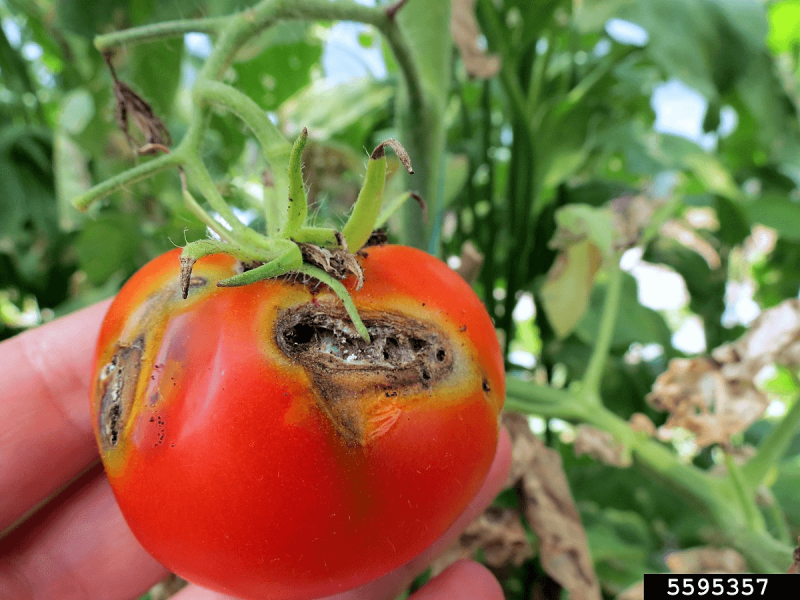
Farming is a risky business — just one late frost, pest infestation, or extreme weather event can decimate a crop, evaporating a farmer’s profits.
While they can’t do anything about the weather, farmers can protect their crops from pests by spraying them with chemicals that kill the buggers — but those pesticides can also kill off-target species, contaminate soil and waterways, and sometimes threaten farmers’ health.
What’s new?
More than 30 years ago, Martha Mutschler-Chu, a plant breeder and geneticist at Cornell University, set out to develop a tomato that would be naturally pest-resistant, minimizing or even eliminating the need for pesticide sprays.
She’s now just a couple of months away from wrapping up the project and giving seed companies access to 20 elite lines of naturally pest-resistant tomatoes.
How it works
Insects can damage tomatoes directly by their eating leaves and fruit, but if the insect is carrying a virus, it can also infect the plant with the virus, causing even worse damage. However, a variety of tomato native to Peru, Solanum pennellii, doesn’t have this problem.
The Peruvian variety excretes droplets of sugar compounds, called “acylsugars,” from tiny hairs on its surface. When insects land on the plant, the acylsugars cause them to start grooming themselves excessively and quickly fly away rather than feeding.

S. pennellii isn’t tasty, though, so Mutschler-Chu and her colleagues set out to find the genes responsible for the production of acylsugars in the wild plant and breed them into a type of tomato people like to eat.
The lines she is now preparing to make accessible to seed companies contain just 2.5% of the wild tomatoes’ DNA, so they don’t have its undesirable flavor and other negative traits, such as small fruit and too many branches. They do, however, ward off a variety of insect species.
Looking ahead
Once seed companies have access to Mutschler-Chu’s elite lines, they’ll need to cross breed the plants with their own varieties of tomatoes — that process could take up to five years, so we won’t be seeing the tomatoes in stores for a short while yet.
However, because Mutschler-Chu used traditional breeding techniques to create the pest-resistant tomatoes — rather than modifying them with genes from other species — they won’t need to go through the lengthy regulatory approval process for GMOs, and, when the fruits do hit the produce aisle, they could be more quickly accepted by consumers.
“[T]his would not be considered something different than what we’ve been doing in processing tomatoes in a commercial, professional research way for at least the last 70 years,” said Zach Bagley, managing director of the California Tomato Research Institute, which helped fund Mutschler-Chu’s research.
Kristin Houser is a science writer for several publications, including Freethink. Kristin also co-founded LA Music Blog. Follow Kristin on Twitter @KristinJHouser