Viewpoint: Nuclear codes — ‘The temptation to automate nuclear weapons with AI will be great. The danger is greater’

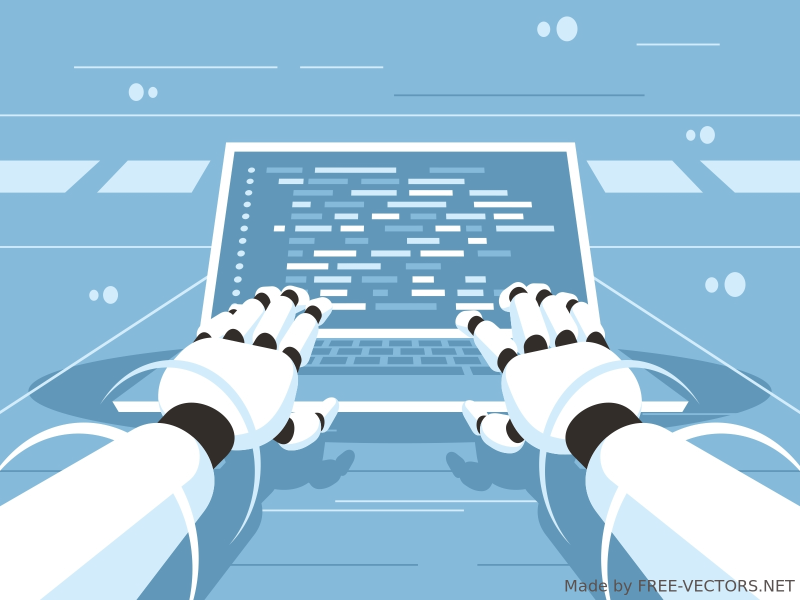
Credit: Ilya Sedykh/FreeVectors (CC BY 4.0)

The world’s major military powers have begun a race to wire AI into warfare. For the moment, that mostly means giving algorithms control over individual weapons or drone swarms. No one is inviting AI to formulate grand strategy, or join a meeting of the Joint Chiefs of Staff. But the same seductive logic that accelerated the nuclear arms race could, over a period of years, propel AI up the chain of command. How fast depends, in part, on how fast the technology advances, and it appears to be advancing quickly. How far depends on our foresight as humans, and on our ability to act with collective restraint.

Follow the latest news and policy debates on sustainable agriculture, biomedicine, and other ‘disruptive’ innovations. Subscribe to our newsletter.

AI offers an illusion of cool exactitude, especially in comparison to error-prone, potentially unstable humans. But today’s most advanced AIs are black boxes; we don’t entirely understand how they work. In complex, high-stakes adversarial situations, AI’s notions about what constitutes winning may be impenetrable, if not altogether alien. At the deepest, most important level, an AI may not understand what Ronald Reagan and Mikhail Gorbachev meant when they said, “A nuclear war cannot be won.”


This is an excerpt. Read the original post here

{{ reviewsTotal }}{{ options.labels.singularReviewCountLabel }}
{{ reviewsTotal }}{{ options.labels.pluralReviewCountLabel }}
{{ options.labels.newReviewButton }}
{{ userData.canReview.message }}

Related Articles

Infographic: Global regulatory and health research agencies on whether glyphosate causes cancer

Infographic: Global regulatory and health research agencies on whether glyphosate causes cancer

Does glyphosate—the world's most heavily-used herbicide—pose serious harm to humans? Is it carcinogenic? Those issues are of both legal and ...

Most Popular

Screenshot 2025-07-30 at 10.48
Can gene editing eliminate Down syndrome? Scientists have done it in lab-grown cells
ChatGPT Image May 26, 2026, 08_42_17 AM (1)
Viewpoint: Greenpeace and poison: How environmental advocacy groups rely on compliant (and often ignorant) journalists to spread disinformation and spark litigation
Screenshot-2026-05-28-at-1.36.28-PM
Viewpoint: Can mRNA research survive the Trump administration?
ChatGPT Image May 26, 2026, 08_21_36 AM
Limiting gender affirming interventions: Trump administration targets Texas even though it already bans youth access
ChatGPT-Image-May-26-2026-07_51_21-AM-2
Viewpoint: There are more than 1,000 chemicals in a cup of coffee—including many substances that can cause cancer. Why isn’t it banned?
Screenshot 2025-11-18 at 3.45
Viewpoint—GMOs and sustainability: Why buying organic foods is the least environmentally-sensitive food choice—without offering any health benefits
Picture1
Sounds we can’t hear — the hidden planetary signals behind science, fear, and misinformation
Screenshot-2026-06-03-at-1.24.46-PM
Challenging anti-GMO disinformation: Why genetically-tweaked crops offer bushels of benefits
ChatGPT-Image-Jun-2-2026-11_39_58-AM
Viewpoint: Who is RFK, Jr.’s newly-appointed CDC senior counselor, Sara Brenner — Vaccine skeptic and self-proclaimed “MAHA mom”

ChatGPT-Image-Jun-2-2026-03_04_17-PM
Viewpoint: Why the hyper-promoted doping ‘enhanced games’ pseudo Olympics flopped
tick-DNA
GLP podcast: Spread meat allergy with gene-edited ticks? Bioethicists pose vile ‘thought experiment’
ChatGPT Image May 28, 2026, 08_16_38 PM
Viewpoint: Why the EPA mismeasures cancer risk of chemicals and what should be done to fix it
Screenshot-2026-06-02-at-11.59.11-AM
Magnifica Humanitas: Pope’s encyclical broadside against AI naivete and overreach
ChatGPT-Image-Jun-3-2026-12_33_40-PM-2-1
Viewpoint—The end of ‘ivory tower science’: What does that even mean, and what comes next
glp menu logo outlined

Get news on human & agricultural genetics and biotechnology delivered to your inbox.