Then a gust begins pushing, pulling and twisting the waxy wings in concert, cracking a window to the fireball roiling 93 million miles away. It’s a prime, precious opportunity for photosynthesis to transform the sunlight into food. Unfortunately, the photosynthetic equivalent of a surge protector—one evolved to help plants mitigate damage driven by sudden spikes of high-intensity light—is slow to reset after so much time in the shade. The gust dissipates, the moment gone before the leaf and its cellular kitchen can take advantage.
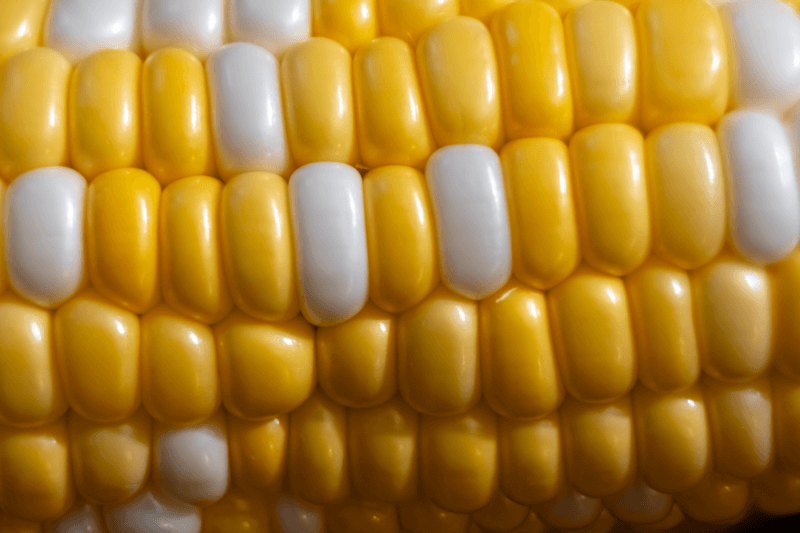
A summer’s worth of those minute but missed opportunities to harvest light can cost cornfields, and those who farm them, a sizable portion of the potential harvests they yield in the fall. By recently identifying and measuring the influence of new genes that regulate the surge protector, the University of Nebraska–Lincoln’s Kasia Glowacka and colleagues could help increase those yields by upward of 20%.
Which isn’t to downplay the importance of the safeguard, which goes by the name of non-photochemical quenching, or NPQ, and can transform light to heat whenever a plant absorbs more of the former than it can put toward photosynthesis. A failure to cut the biochemical circuit, after all, can lead to a toxic buildup of ultra-reactive oxygen that damages DNA and can even kill a cell. But the safety measure has a downside: The slower it is to relax and resume letting the absorbed light fuel photosynthesis, the more of that energy-granting light it wastes.
“When you think from the perspective of a chloroplast in a plant cell, life is really difficult,” said Glowacka, assistant professor of biochemistry at Nebraska. “Every few seconds, the environment is changing.”
In 2016, Glowacka contributed to a study showing that cranking up the activity of three particular genes allowed tobacco plants to switch NPQ on and off at a much faster pace, granting it both better protection and more efficient photosynthesis. That tobacco, in turn, produced leaves roughly 20% larger, with simulations suggesting that even greater gains might be possible. Follow-up research found that the same technique could generate similar benefits in soybean—not just for leaves, but the beans, too.
But tobacco and soybean employ a different form of photosynthesis than corn, sorghum, sugarcane and several other crops better suited to hot and dry conditions—crops whose yields must increase to help feed the 10 billion people expected to populate the globe by 2050. Glowacka wondered whether the genes that coded for NPQ activity in one might play that same role in the other. Even if they did, Glowacka and Nebraska’s James Schnable figured there must be other genes aiding a process as complex as NPQ.
They were right. Their discovery began with toiling in the fields during the summers of 2020 and 2021, when the team planted more than 700 genetically different lines of corn at the Havelock Research Farm in northeast Lincoln. Glowacka’s plan: look for differences in NPQ performance among the lines, then try to tease out which genes were ultimately responsible for those differences. Still, the existing methods for measuring NPQ, Glowacka knew, were expensive and time-consuming. More than that, they struggled to flatten out daily disparities in each line’s exposure to light, potentially spoiling the validity of any findings.
Rather than settle, Glowacka developed her own method. The team used a modified hole-punch to extract tiny samples from the leaves of every line in the field. Back in the lab, the researchers gave the tissue samples nearly a day to adapt to the dark, eventually measuring their fluorescence—a proxy for photosynthesis and NPQ—before and after exposing them to flashes of light. Instead of measuring one sample every 20 minutes, the team was able to handle 96 samples over that same span.
The researchers found that the speed and magnitude of NPQ responses varied widely among the lines, a fact that helped ease the search for any new genes potentially driving that variation in corn. A comparison of the lines’ genetic code, cross-referenced against the differences in NPQ performance, eventually revealed six promising gene candidates. Several of those candidates were already familiar to the team. Others were not—including one called PSI3, which introduced more of that variation than any other candidate.

After identifying counterparts of those six genes in Arabidopsis, a flowering plant commonly used to study plant biology, the team proceeded to order mutants: Arabidopsis seeds each lacking one of the six genes. In all six of the mutants, the surge protector was generally sluggish to respond under the lights but also slower to relax when the lights were turned out. The NPQ peaks were typically lower, too, and the troughs higher, suggesting that the plants both buffered less against surges and squandered more of the light available for photosynthesis.
The identification of those genes, combined with the amount of natural NPQ variation across lines of corn, could open the way to breeding plants far better at capitalizing on yield-boosting sunlight, the researchers said. In the best case, Schnable said, those efforts might come to bear fruit in as little as a half-dozen years.
If they do, the results could prove a boon for crop breeders now investigating every and all possibilities to preclude global food shortages in the coming decades.
“We can gain 22% of that yield from the crops, potentially, if we were to speed up the NPQ,” Glowacka said.
Given that the researchers kicked off the study early in 2020, their attempts to help stem an impending global crisis meant dealing with a contemporary one. Two of the team’s members, Seema Sahay and Marcin Grzybowski, had only recently arrived in the United States—recently enough that neither had yet gotten a driver’s license. Prior to COVID-19, the two would have hitched rides out to the Havelock Research Farm.
University protocols designed to slow the spread of the virus, though, temporarily put that option on hold. Undeterred, Sahay and Grzybowski regularly resorted to biking roughly seven miles out to the research farm—a 30-plus-minute trek amid the heat and humidity of a Nebraska summer.
“Seema and Marcin,” Glowacka said, “are the real heroes of this experiment.”
The study is published in the journal New Phytologist.