Fact checking lab-grown meat rejectionists: No, animal cells used to make cultivated meat do not cause cancer

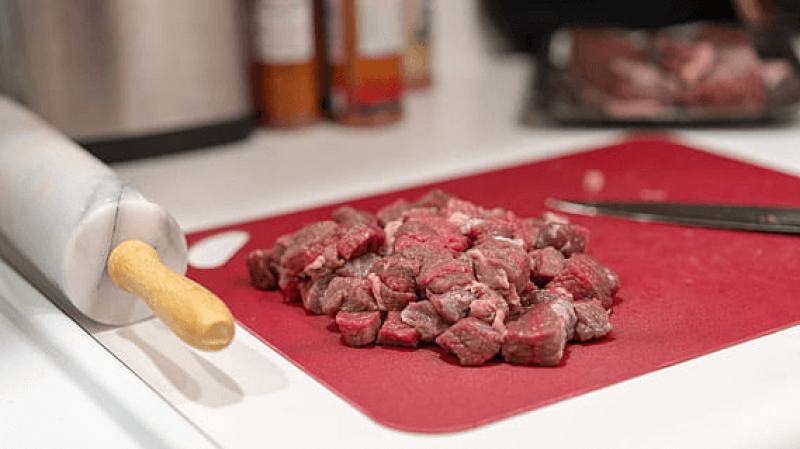
sliced raw meat on chopping board thumbnail
Credit: Wallpaper Flare (Public Domain)

CLAIM: Lab-grown meat is made out of cancerous animal cells.

AP’S ASSESSMENT: False. Meat grown in labs is made using cells taken from animals, but those cells are not cancerous and there are many safeguards in place to ensure that the end product is safe to consume, experts told The Associated Press. The false claim stems from the fact that, like cancer cells, those used in lab-grown meat often go through a process that allows them to divide indefinitely. But cells must exhibit other traits to be considered cancerous.

Follow the latest news and policy debates on sustainable agriculture, biomedicine, and other ‘disruptive’ innovations. Subscribe to our newsletter.

THE FACTS: Following recent news that two companies were given the go-ahead to sell lab-grown meat in the U.S., some social media users are falsely claiming that the products are made from a dangerous source.

One TikTok video, which had received more than 587,000 views by Friday, falsely states that the companies behind the products realized that “cancer cells” are the best source for “fast-replicating cells,” and so are using those as the “base” of the meat.

“Lab grown meat is being cultivated from animal’s cancer cells because they replicate fastest,” reads a Facebook post.

But this is categorically untrue, experts say.

This is an excerpt. Read the original post here

{{ reviewsTotal }}{{ options.labels.singularReviewCountLabel }}
{{ reviewsTotal }}{{ options.labels.pluralReviewCountLabel }}
{{ options.labels.newReviewButton }}
{{ userData.canReview.message }}

Related Articles

Infographic: Global regulatory and health research agencies on whether glyphosate causes cancer

Infographic: Global regulatory and health research agencies on whether glyphosate causes cancer

Does glyphosate—the world's most heavily-used herbicide—pose serious harm to humans? Is it carcinogenic? Those issues are of both legal and ...

Most Popular

ChatGPT-Image-May-7-2026-12_16_37-PM-2
Viewpoint: Are cancer rates ‘skyrocketing’ as RFK, Jr. and MAHA claims? The evidence says mostly the opposite
ChatGPT-Image-May-13-2026-11_56_08-AM
After slashing global health aid by $19 Billion, Trump moves to tap $2.1 billion more—to cover shutdown costs
Screenshot-2026-04-22-at-10.46.29-AM
Viewpoint: How to counter science disinformation? Science journalist offers 12 practical tips
ChatGPT-Image-May-12-2026-08_39_41-PM
GLP podcast: Big Pharma, Big Ag, Big Food—health harming industries or life-saving innovators?
png-pill-omega-Supp-fish-oil
Millions take omega-3 fish oil for brain health. New research suggests it may do the opposite.
Screenshot-2026-04-23-at-11.00.36-AM
Regulators' dilemma: Thalidomide, Metformin, and the cost of getting drug approvals wrong
Screenshot-2026-02-20-at-10.48.04-AM
Deepfakes raise profound ethical questions in science
Picture1-1
Cooling the planet with balloons: Could a geoengineering gamble slow global warming?
Picture1-5
Science Disinformation Gap: The transatlantic battle over social media and censorship
ChatGPT-Image-May-12-2026-01_41_42-PM
Viewpoint: ‘Measles is a canary in the healthcare coal mine’: Challenging RFK, Jr.’s scare campaign
Screenshot-2026-05-08-at-3.40.33-PM
Seeds of power: China turns to genetic engineering to become global superpower
donut-decorated-with-e-food-additives-tablets
RFK, Jr. is targeting chemical food additives. What does science tell us?
glp menu logo outlined

Get news on human & agricultural genetics and biotechnology delivered to your inbox.