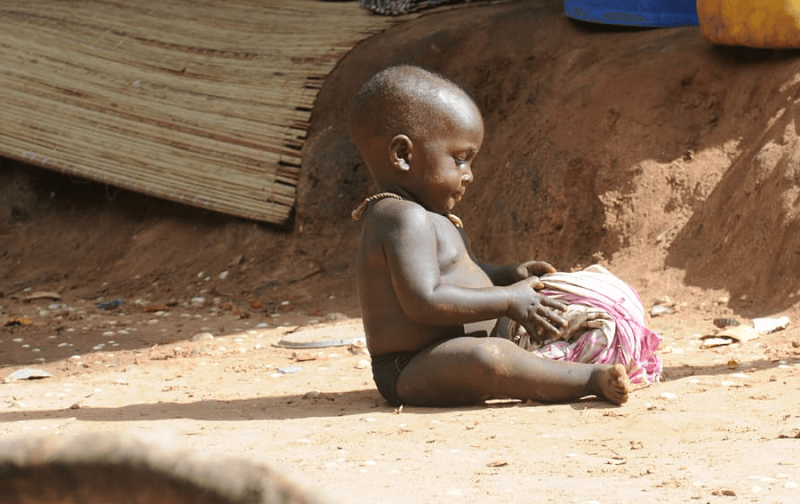

The United States allowed the affected African countries to import food aid to help needy people.
This gesture of kindness was met with hesitation and denial because the food imports contained genetically modified organisms (GMOs).
That year, The Economist published an article titled Better Dead than GM-fed that laid bare African sentiments towards GMOs.
Levy Mwanawasa, the then-president of Zambia, stated that GMOs were poison and would not be acceptable to his people.
His comments lacked scientific merit because there was no evidence that GMOs were unhealthy and unsafe for human consumption.
However, other serious issues fueled the anti-genetic modification sentiments in Africa then and have persisted.
The European Union (EU) was and is still the largest market for African agricultural produce, b
The EU has been waging war against GMOs for decades, citing its citizens’ safety and health concerns.
The EU was protecting its farmers from competitive American producers who had embraced GM food crops.
It was said the US food aid would contaminate African crops, ultimately closing export markets for Africa’s agricultural produce in the EU.
In 2003, The Royal Society published the results of field trials on GMOs in the UK, finding them harmful in some cases and helpful in others.
Based on these mixed findings, some non-governmental organizations in the EU demanded that all GM crops be banned.
This typical European attitude towards GMOs found a breeding ground in Africa, where it fueled the prevailing anti-genetic modification sentiments, despite the documented evidence of embracing GM-based agriculture.
In June 2023, a leaked document showed that the European Union Commission plans to relax rules on genetic engineering.
After decades of denialism and taking a hard-line stance, there is a realization that the EU must embrace genetic technologies to guarantee its food security.
A critical component of this leaked document is the caveats around new genomic techniques (NGTs), which describe novel scientific methods used to alter plant genomes to generate desired traits such as drought tolerance and disease resistance.
As NGTs will not involve introducing new genes into plants, there would be relaxation on regulation and labeling currently imposed on GMOs.
Amid severe threats, such as pests, diseases, and climate change, to food production, the world must embrace new strategies to guarantee food security.
Such a policy shift in the EU would have far-reaching effects on farmers, consumers, and researchers in Africa and the rest of the world.
The European Food Safety Authority (EFSA) has concluded that there are no new environmental, animal, or human health risks from food products generated by NGTs.

This is an excellent initiative because it supports an earlier review by the European Commission of its GMO policy, acknowledging that the existing 2001 legislation needed to be updated.
Moreover, EU scientists have pressured the Commission to revise its strict regulatory laws to boost research, development, and innovation.
This regulatory softening by the EU follows in the footsteps of the United Kingdom, which reviewed its existing regulatory framework to support the research and application of gene editing in agriculture.
Is it likely to diffuse the skepticism in the Global South?
Anti-GM sentiments in the EU have profoundly affected Africa and shaped GM policies.
In most cases, Africa’s leaders have always cited Europe as a benchmark for adopting genetic engineering technologies in agriculture.
Now that the EU is softening its stance on genetic technologies, we hope this can revolutionize agriculture in the Global South.
Agriculture accounts for 17.2 percent of Africa’s Gross Domestic Product (GDP) and provides livelihood to over 50 percent of the population.
Yet, Africa’s agriculture is the least developed, has the lowest productivity, and is significantly affected by diseases, emerging pests, and extreme weather events.
Even as the EU is taking a new direction regarding genetic modification in agriculture, it will take much effort to change decades-old anti-GM sentiments in the Global South.
Governments in the Global South must take this challenge head-on and drive effective communication with farmers at the grassroots level.
These technologies must make sense to farmers to facilitate their adoption.
No farmer enjoys losing their yields to preventable diseases and pests that can be eradicated.
Therefore, they will adopt affordable, effective, and readily available alternatives that guarantee productivity if well presented.
However, it will only work when effective dialogue between all stakeholders is backed by sound research.
Finally, for Global South, we must ask ourselves whether we want to be recipients of technologies long after they have been developed and adopted in other places.
This is an opportunity for Africa to organize itself and take advantage of technologies that will help revolutionize agriculture.
Data from the World Bank shows that agriculture and related industries contribute less than 3 percent of the total GDP in the EU and the United States.
Compared to sub-Saharan Africa and South Asia, where agriculture contributes over 15 percent of GDP, it is evident that our economies must revolutionize agriculture to stay afloat.
The ball is now in our court.
Dr. Victor Oria (PhD) is LEAD Fellow, Prof Janine Erler Research Group, Biotech Research and Innovation Centre – University of Copenhagen, Denmark. Follow Victor on Twitter @Nyuka_Bel