Cost of GMO bans: Global crop assessment finds GMO restrictions limit food production to ⅓ of potential, with poorer countries hit hardest

fedf b
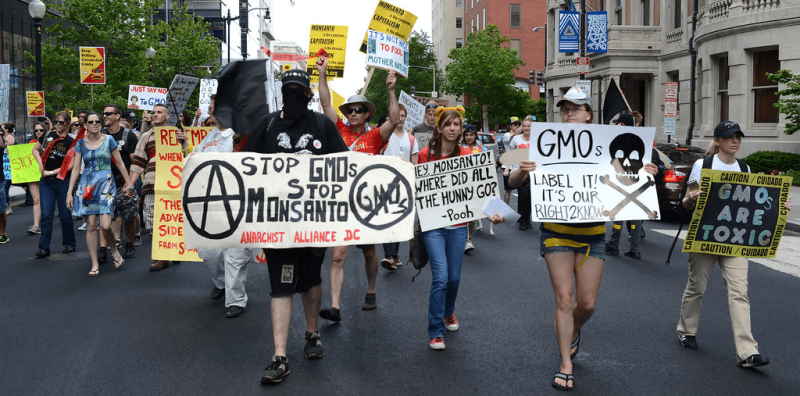
Credit: Stephen Melkisethian/Flickr (CC BY-NC-ND 2.0)

How costly are GM bans? To find out, we calculate by how much yields would have been higher in 2019 had all bans on cultivation been lifted ten years before. The result… shows that GM bans mainly hurt Sub-Saharan Africa. Not only because the region is relatively poor and warm, but also because it grows substantial amounts of cotton and maize. Moreover, Sub-Saharan Africa and other low-income countries have large agricultural sectors, so the cost of GM bans relative to their total economies would be disproportionately larger than in richer countries.

At the global level, we find that cost of GM bans in terms of lost output was about US$69 billion in 2019. As our estimated realized gain was $39 billion, it follows that only one-third of the potential of the currently available GM varieties has been realized. The one-third is an average for the four crops, however. Without bans, the world would have produced 13 percent more cotton, 28 percent more maize, 26 percent more rapeseed, and 4 percent more soybean in 2019.

Follow the latest news and policy debates on sustainable agriculture, biomedicine, and other ‘disruptive’ innovations. Subscribe to our newsletter.

Were Europe to adopt GM crops, emissions could be cut by 33 million tonnes per year, most of which would come from reduced land use. Our results suggest that the scope for reducing emissions this way is even greater in developing countries, where the yield advantage of GM crops is larger. So although valid concerns about their environmental impact remain, our study reinforces the current scientific consensus that GM crops are net positive for the environment.


This is an excerpt. Read the original post here

{{ reviewsTotal }}{{ options.labels.singularReviewCountLabel }}
{{ reviewsTotal }}{{ options.labels.pluralReviewCountLabel }}
{{ options.labels.noReviewsLabel }}
{{ options.labels.newReviewButton }}
{{ userData.canReview.message }}

Related Articles

Infographic: Global regulatory and health research agencies on whether glyphosate causes cancer

Infographic: Global regulatory and health research agencies on whether glyphosate causes cancer

Does glyphosate—the world's most heavily-used herbicide—pose serious harm to humans? Is it carcinogenic? Those issues are of both legal and ...

Most Popular

organic scaled
Facts & Fallacies podcast: Organic food cuts pesticide exposure? A response to Dr. Rhonda Patrick
ChatGPT-Image-Jul-26-2026-05_58_17-PM
Louisiana and Texas bring RFK,Jr.- MAHA-backed restrictions on dyes and other ‘controversial’ ingredients to eight states
ChatGPT-Image-Jul-22-2026-09_13_07-AM
Viewpoint—The Strategic Litigation boom: Understanding the tightening coalition among NGOs, foundations, journalists, and tort lawyers
ChatGPT-Image-Mar-10-2026-01_39_01-PM
Viewpoint—“Miracle molecule” debunked: Why acemannan supplements don’t work
ChatGPT-Image-Jul-26-2026-05_35_53-PM
FDA takes up peptide therapies as hype outpaces science
Screenshot-2026-07-07-at-12.55.44-PM
Viewpoint: Yes, we can adapt to a changing climate without devastating the environment and the economy
Screenshot-2026-07-23-at-11.58.47-AM
Viewpoint: ‘Thought police in the UK?’ Conservatives lash out at government report calling anti-LGBQT+ narratives ‘false and misleading’
ChatGPT-Image-Jul-9-2026-11_33_49-AM
Viewpoint: High-dose resveratrol supplements to extend health and life? Don’t waste your money.
ChatGPT-Image-Jul-10-2026-09_42_12-AM-1
Peptides, patient autonomy, and the limits of medical freedom
IVF Rex
Poll: Younger people more open to using genetics to increase fertility and reduce chances of inherited diseases 
ChatGPT-Image-Jul-6-2026-02_25_26-PM
40 million Americans take glucosamine. If you have memory loss, it could accelerate cognitive decline.
How to Include More Strawberries in Your Diet
Strawberries are berries—and 35 other surprising food and drink myths
glp menu logo outlined

Get news on human & agricultural genetics and biotechnology delivered to your inbox.