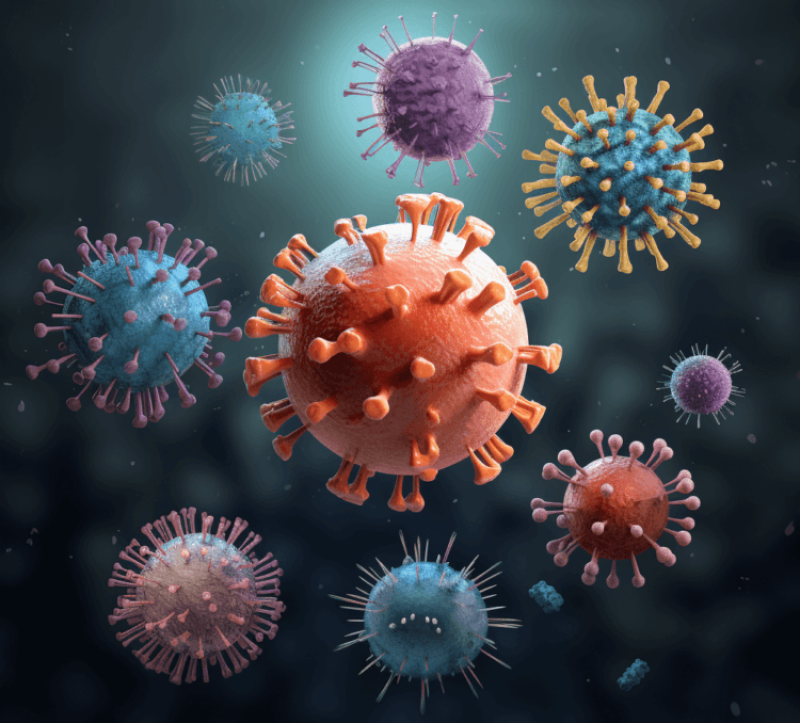
BA.2.86: Current vaccines do not offer protection against new globally-spreading COVID variant

Current vaccines do not offer protection against new globally-spreading COVID virus
Credit: Midjourney/ Heenan

A highly mutated form of the coronavirus that threatens to be the most adept yet at slipping past the body’s immune defenses is capturing the attention of virologists and health officials.

While only about a dozen cases of the new BA.2.86 variant have been reported worldwide — including three in the United States — experts say this variant requires intense monitoring and vigilance that many of its predecessors did not. That’s because it has even greater potential to escape the antibodies that protect people from getting sick, even if you’ve recently been infected or vaccinated.

Follow the latest news and policy debates on sustainable agriculture, biomedicine, and other ‘disruptive’ innovations. Subscribe to our newsletter.

BA.2.86 stands out in the omicron family tree because of how much it has morphed. It has more than 30 mutations on its spike protein, the part of the virus that pierces through the cell and that vaccines train the body to fend off. Experts believe the antibodies forged through battles with earlier variants will have a difficult time recognizing this new foe.

“This is a radical change of the virus, like what happened with omicron, which caught a lot of people defenseless,” said Eric Topol, director of the Scripps Research Translational Institute. “Even if they had a vaccine or prior infection, it could still get into them and infect them again or for the first time. We are facing that again.”


This is an excerpt. Read the full article here

{{ reviewsTotal }}{{ options.labels.singularReviewCountLabel }}
{{ reviewsTotal }}{{ options.labels.pluralReviewCountLabel }}
{{ options.labels.newReviewButton }}
{{ userData.canReview.message }}

Related Articles

Infographic: Global regulatory and health research agencies on whether glyphosate causes cancer

Infographic: Global regulatory and health research agencies on whether glyphosate causes cancer

Does glyphosate—the world's most heavily-used herbicide—pose serious harm to humans? Is it carcinogenic? Those issues are of both legal and ...

Most Popular

ChatGPT-Image-Jun-25-2026-12_23_17-PM
No, Bill Gates did not secretly engineer ticks to promote veganism
ChatGPT-Image-Jun-23-2026-03_12_23-PM
Is cellular reprogramming junk science? Nearly 20 patients are getting eye injections in the first FDA-cleared cellular trial
ChatGPT-Image-Jun-24-2026-11_36_47-AM
Why the human genome is less a script than a puzzle
Screenshot-2026-06-15-at-1.55.27-PM
America's trust in Trump-Kennedy's CDC health recommendations is plunging
ChatGPT-Image-Jun-17-2026-10_52_43-AM
Anguished parents, doctors in tears: Utah’s long measles outbreak takes a toll
ChatGPT-Image-Mar-10-2026-01_39_01-PM
Viewpoint—“Miracle molecule” debunked: Why acemannan supplements don’t work
Screenshot 2026-06-25 at 10.55
Leading OB-GYN group challenges RFK, Jr. gutting of maternal vaccine schedule
Screenshot-2026-06-22-at-9.04.46-PM
Kennedy's nutrition prescription for medical schools: Real problem, bad cure
Screenshot-2026-06-24-at-2.57.41-PM
Viewpoint: Trump’s Reflecting Pool algae fiasco points to a bigger culprit: Climate change
Screenshot-2026-06-24-at-2.40.46-PM
Hegseth reversal: As Air Force flu outbreak continues to surge, military reinstitutes mandatory vaccines for recruits
Screenshot-2026-06-25-at-1.48.40-PM
Glyphosate affirmed as safe: Supreme Court rejects lawsuit claiming Roundup herbicide causes cancer, upholding EPA determination

Sorry. No data so far.

glp menu logo outlined

Get news on human & agricultural genetics and biotechnology delivered to your inbox.