China poised for new great leap forward on backs of new generation of biotech crops

China's huge agricultural industry is about to get even more diverse. Credit: fuzheado via CC-BY-SA-2.0

A trial planting of genetically modified corn and soybean crops outside lab settings in multiple sites across China is projected to have a bumper harvest as autumn nears, according to officials from the Ministry of Agriculture and Rural Affairs.

Follow the latest news and policy debates on sustainable agriculture, biomedicine, and other ‘disruptive’ innovations. Subscribe to our newsletter.

Experts said the trial’s success provides a boon to the country’s fast-aging rural food producers in the run-up to the Chinese Farmers’ Harvest Festival on [September 23], the autumn equinox.

Properties that the crops have gained through gene-editing technologies help reduce the labor needed to manage croplands and pave the way for more efficient, large-scale mechanical farming.

Official figures showed that China’s demand for soybean has almost tripled since 1996, reaching more than 100 million metric tons last year, as a result of increased consumption of meat in China.
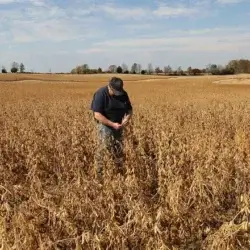
Domestic soybean could only supply 18.5 percent of its needs last year despite recent efforts by the central government to bolster the self-sufficiency of oil crops.

Though having been imported in large amounts for years, GMO corn and soybean are yet to be planted for commercial consumption in China.

Cotton and papaya are the only GMO crops that have been planted commercially in the country so far.


This is an excerpt. Read the original post here

{{ reviewsTotal }}{{ options.labels.singularReviewCountLabel }}
{{ reviewsTotal }}{{ options.labels.pluralReviewCountLabel }}
{{ options.labels.newReviewButton }}
{{ userData.canReview.message }}

Related Articles

Infographic: Global regulatory and health research agencies on whether glyphosate causes cancer

Infographic: Global regulatory and health research agencies on whether glyphosate causes cancer

Does glyphosate—the world's most heavily-used herbicide—pose serious harm to humans? Is it carcinogenic? Those issues are of both legal and ...

Most Popular

Screenshot-PM-24
Viewpoint: The herbicide glyphosate isn’t perfect. Banning it would be far worse.
79d03212-2508-45d0-b427-8e9743ff6432
Viewpoint: The Casey Means hustle—Wellness woo opportunism dressed up as medical wisdom
d-b
Blocked arteries, kidney stones, nausea, constipation, fatigue: Long list of health problems caused by too much vitamin D 
ChatGPT-Image-Mar-10-2026-01_39_01-PM
Viewpoint—“Miracle molecule” debunked: Why acemannan supplements don’t work
ChatGPT-Image-Apr-30-2026-05_00_48-PM
Wellness grifter physician turned wellness influencer out as surgeon general nominee
Screenshot-2026-04-30-at-11.33.46-AM
Anti-seed-oil to anti-vax pipeline: MAHA movement spreads to teen influencers
lab grown meat research kelly schultz lehighuniversity main
Profiles of the 10 top global cultured meat companies
ChatGPT-Image-Mar-27-2026-11_27_05-AM
The myths of “process”: What science says about the “dangers’ of synthetic products and ultra-processed foods
ChatGPT-Image-Apr-30-2026-12_21_05-PM-2
The tech billionaires behind the immortality movement

Sorry. No data so far.

glp menu logo outlined

Get news on human & agricultural genetics and biotechnology delivered to your inbox.