Surprising consequence of dinosaur extinction: Helping flowers become a dominant form of plant life

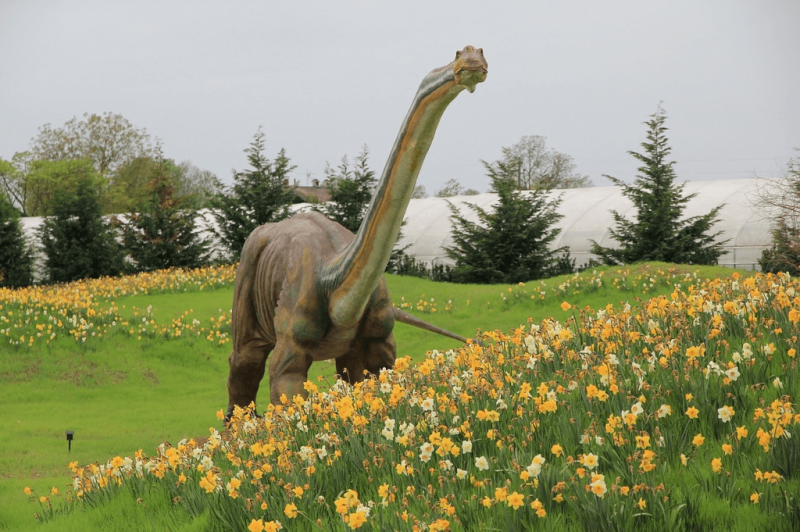
dinosaur jurassic park flowering field ca
Credit: GetArchive (CC0 1.0)

When a mountain-size slab of space rock rammed into the Yucatán Peninsula 66 million years ago, the fallout was apocalyptic. Tsunamis washed away coastlines, raging fires engulfed forests and dust and debris blotted out the sun for months. Roughly three-fourths of the planet’s species, most notably non-avian dinosaurs, were wiped out.

But one group appears to have weathered the maelstrom. In a paper published [September 13] in the journal Biology Letters, researchers present evidence that flowering plants survived the Cretaceous-Paleogene, or K-Pg, mass extinction relatively unscathed compared with other living things on Earth at the time. The catastrophe may have even helped flowering plants blossom into the dominant green things they are today.

Follow the latest news and policy debates on sustainable agriculture, biomedicine, and other ‘disruptive’ innovations. Subscribe to our newsletter.

Flowering plants are known to scientists as angiosperms. They originated in the early Cretaceous, and were often overshadowed by older groups like conifers and ferns. But they rapidly diversified as mass extinction loomed.

In this way the impact that doomed the dinosaurs gave rise to modern ecosystems. Instead of giant reptiles, these habitats were populated by mammals, who had persisted through the mass extinction along with flowering plants and were primed for a similar explosion in diversity.


This is an excerpt. Read the original post here

{{ reviewsTotal }}{{ options.labels.singularReviewCountLabel }}
{{ reviewsTotal }}{{ options.labels.pluralReviewCountLabel }}
{{ options.labels.newReviewButton }}
{{ userData.canReview.message }}

Related Articles

Infographic: Global regulatory and health research agencies on whether glyphosate causes cancer

Infographic: Global regulatory and health research agencies on whether glyphosate causes cancer

Does glyphosate—the world's most heavily-used herbicide—pose serious harm to humans? Is it carcinogenic? Those issues are of both legal and ...

Most Popular

Picture1
The FDA couldn’t find a vaccine safety crisis, so it buried its own research
ChatGPT-Image-Apr-16-2026-02_56_53-PM
Financial incentives, over diagnosis, and weak oversight: Autism claims are driving up Medicare costs
Screenshot-2026-04-22-at-12.21.32-PM
Viewpoint: Why the retracted Monsanto glyphosate study doesn’t change the science—the world’s most popular herbicide is safe 
Screenshot-2026-05-08-at-11.55.47-AM
Anti-vax activists falsely blame COVID vaccines for the rising U.S. cancer rate among younger people.
Screenshot-2026-05-19-at-11.23.34-AM
West-originated vaccine disinformation sparks murders of health care workers across Africa
ChatGPT-Image-May-7-2026-12_32_36-PM
Viewpoint: The state of U.S. vaccine policy? Dismal nationally, but some states are stepping up.
ChatGPT-Image-May-12-2026-11_27_01-AM-2
AI likely to improve health care, research shows—but not for blacks and ethnic minorities
modi visit sikkim
Viewpoint: Indian PM wants farmers to switch to 50% organic. It would take at least 10 years, likely won’t work, and isn’t more sustainable
Screenshot-2026-04-13-at-1.39.26-PM
Viewpoint: ‘Safer for children?’ Stonyfield yogurt under fire for deceptive organic marketing
placebo
Viewpoint — Alternative medicine and the placebo effect: Selling a reassuring illusion of health
Screenshot-2026-05-18-at-12.57.12-PM
Viewpoint—‘Technology is pulling us apart’: Environmental, political, and economic
glp menu logo outlined

Get news on human & agricultural genetics and biotechnology delivered to your inbox.