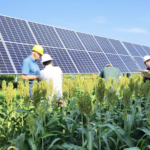
The good and problematic elements of the ‘Green Revolution’ — and prospects for genetics-driven version 2.0

Credit: लोकपर्याय, लोणी-खु ता.वैजापूर,जि.औरंगाबाद via CC-BY-SA-4.0

What were the Impacts of the Green Revolution?

Increased Food Production: The Green Revolution led to a significant increase in agricultural productivity. New high-yielding crop varieties, such as dwarf wheat and rice, produced higher yields per hectare of land, helping to meet the growing global demand for food. For example, in 1978–1979, a tremendous increase in crop production led to a grain output of 131 million tones, making India one of the largest agricultural producers in the world.

Mis- and disinformation are distorting science and public policy. Subscribe to our Daily and Weekly Digests for incisive coverage of ‘disruptive’ innovations in AI, agricultural biotechnology, food, chemicals, nuclear energy, vaccines, and other disruptive innovations.

What are the Challenges brought by the Green Revolution?
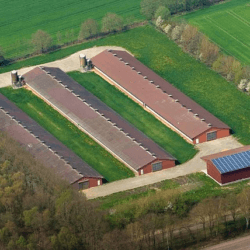
  • It caused environmental degradation due to the use of synthetic fertilizers and pesticides, and soil erosion and water pollution. For example, the reliance on modern agricultural technologies has made some countries and communities dependent on external inputs, which can be expensive and subject to market fluctuations.
Mis- and disinformation are distorting science and public policy. Subscribe to our Daily and Weekly Digests for incisive coverage of ‘disruptive’ innovations in AI, agricultural biotechnology, food, chemicals, nuclear energy, vaccines, and other disruptive innovations.

Is Green Revolution 2.0 a Solution to the Green Revolution?

  • Green Revolution 2.0 is seen as a way to make agriculture more adaptive and resilient to the changing climate and socio-economic conditions, and to ensure food and nutrition security for the present and future generations.
  • Some of the features of Green Revolution 2.0 are:
    • Biotechnology and Genetic Engineering: Green Revolution 2.0 places a strong emphasis on biotechnology and genetic engineering to develop crops that are more resilient to climate change, pests, and diseases. Genetically modified (GM) crops, if adopted responsibly, can contribute to increased productivity and reduced environmental impact.
    • Precision Agriculture: This approach involves the use of advanced technologies like GPS-guided tractors and drones to optimize the use of resources such as water, fertilizers, and pesticides. Precision agriculture can increase efficiency and reduce the environmental footprint of farming.


This is an excerpt. Read the original post here

Related Articles

Infographic: Global regulatory and health research agencies on whether glyphosate causes cancer

Infographic: Global regulatory and health research agencies on whether glyphosate causes cancer

Does glyphosate—the world's most heavily-used herbicide—pose serious harm to humans? Is it carcinogenic? Those issues are of both legal and ...

Most Popular

Screenshot 2026-10-16 at 5.38
PFAS in Agriculture: Science, Uncertainty, and Risk Communication
Discarded Green Cap on Public Trash Can
'Blatant slap in the face': MAHA activists turn on RFK Jr. and Trump administration
newborn baby spit up gerd
Vaccine-preventable congenital infections are a leading driver of autism
Screenshot 2026-10-16 at 11.17
Viewpoint: Latest attack on renewable energy and farmers, new USDA rules could put solar grants out of reach for small producers
Government Briefing on Autism Trends
Viewpoint: ‘Statistical murder’: Kennedy’s expanding record of “duplicity and mendacity”
FDA Vials and Syringes Flat Lay
Online gold rush of unapproved peptides is outrunning federal regulators
ChatGPT-Image-Mar-10-2026-01_39_01-PM
Viewpoint—“Miracle molecule” debunked: Why acemannan supplements don’t work
Screenshot-2026-10-15-at-9.51.15-AM
 Viewpoint: Selective pronatalism: The radical “ethical” case challenging parents’ right to end a pregnancy when a fetus has a severe genetic disorder
Screenshot-2026-10-12-at-10.44.38-AM
Widely condemned as unethical, hepatitis B vaccine study funded by RFK Jr’s CDC gets a final greenlight
Screenshot-2026-10-14-at-11.45.36-AM
Viewpoint: RFK Jr.’s stacked FDA advisory council endorses multicancer screening test from ethically- questionable company that would increase false positives and waste billions of dollars
Screenshot-2026-10-15-at-12.13.33-PM
Ahead of the midterms, Meta has paid at least 29 anti-LGBTQ accounts for their posts
Prescription Capsules Scattered on Twenty-Dollar Bills
Facts & Fallacies podcast: America's health care system is broken. A doctor explains how to fix it, Part 2
glp menu logo outlined

Get news on human & agricultural genetics and biotechnology delivered to your inbox.