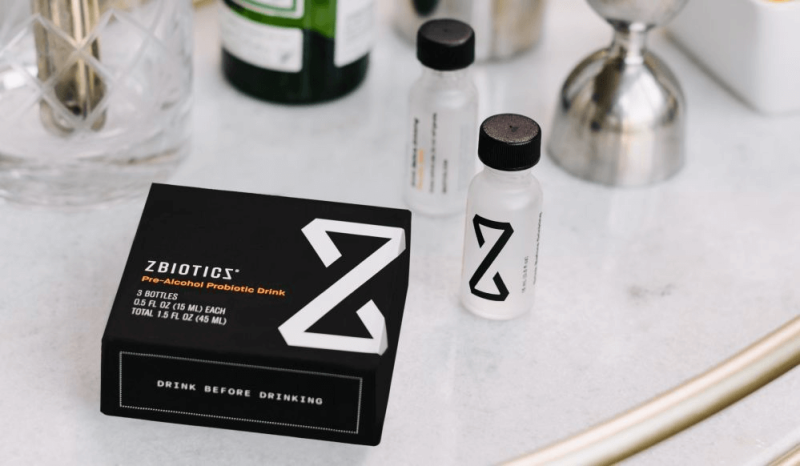
Precision probiotics: Can this anti-hangover drink help you metabolize alcohol quicker?

zbiotics and drinks image credit zbiotics
Credit: ZBiotics

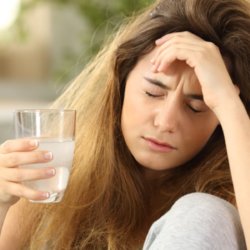
Spoiler alert: Hangover ‘cures’ don’t work, observes Dr. Zachary Abbott. If you’ve overindulged the night before, Gatorade, herbal remedies and B vitamins won’t stop you feeling like death warmed up the next morning. But a shot of ZBiotics just might.

Which doesn’t mean you can down a bottle of Jack Daniels or 10 pints of beer consequence-free, says Abbott (catchphrase: ‘We’re into science, not science fiction’), but “If you drink ZBiotics before you drink alcohol, you wake up the next day feeling better than you would have felt otherwise.’

So how does it work?

Mis- and disinformation are distorting science and public policy. Subscribe to our Daily and Weekly Digests for incisive coverage of ‘disruptive’ innovations in AI, agricultural biotechnology, food, chemicals, nuclear energy, vaccines, and other disruptive innovations.

The liver is pretty good at producing enzymes that break down alcohol into acetaldehyde and then convert it into acetate (basically vinegar). However, the gut—where some alcohol is also metabolized—does not do this quite as efficiently, says Abbott. Which is where ZBiotics comes in.
Founded by Abbott and Stephen Lamb in 2016, the San Francisco-based startup has engineered a microbe to express the enzyme that breaks down acetaldehyde by transferring said trait from the liver into a strain of bacteria (B. subtilis ZB183).

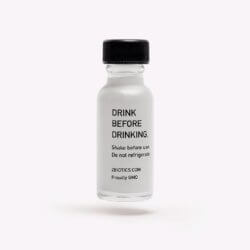
Rather than building a costly precision fermentation business to produce, purify, and sell the enzyme, ZBiotics sells the probiotic bacteria (via a shelf-stable shot sold direct-to-consumer), which then expresses the protein inside the gut.


This is an excerpt. Read the original post here

Related Articles

Infographic: Global regulatory and health research agencies on whether glyphosate causes cancer

Infographic: Global regulatory and health research agencies on whether glyphosate causes cancer

Does glyphosate—the world's most heavily-used herbicide—pose serious harm to humans? Is it carcinogenic? Those issues are of both legal and ...

Most Popular

ChatGPT-Image-Sep-17-2026-12_28_43-PM
Vitamin D, omega-3 fish oil and glucosamine supplements could cause brain damage 
ChatGPT-Image-Mar-10-2026-01_39_01-PM
Viewpoint—“Miracle molecule” debunked: Why acemannan supplements don’t work
ChatGPT-Image-Sep-17-2026-10_17_15-AM
Viewpoint: Why are the less intelligent more likely to be conservative—and smarter people more socially liberal?
Screenshot-2026-09-10-at-12.20.19-PM
'Jet fuel didn't melt the steel': 9/11 conspiracy theories debunked
Screenshot-2026-08-12-at-11.31.46-AM
AI is helping develop new vaccines
Screenshot-2026-09-16-at-12.07.47-PM
The heated debate over trans athletes in the WNBA
Screenshot-2026-09-17-at-10.24.54-AM
Viewpoint: Dubious environmental fears: Why the AI buildout is critical to America’s ecological future
ChatGPT-Image-Sep-9-2026-02_48_24-PM
Viewpoint: Trump-RFK Jr. report on “Gender Ideology & Left-wing Ideology’ targets LGBTQ community—and science
Screenshot 2026-09-11 at 12.39
Child-monitoring apps: When the cure is worse than the harm—and how the technology could be tweaked
ChatGPT-Image-Sep-15-2026-12_15_00-PM
Viewpoint: Women, depression and empathy: Explaining the gender gap in views about child-murderer Lindsay Clancy
Screenshot-2026-09-11-at-2.26.23-PM
Newly approved GMO chestnut trees planted across from the White House are stirring debate
Screenshot-2026-09-10-at-11.50.46-AM
Did COVID vaccines kill 2,500 service members? RFK Jr. hires an investigator who compares vaccine promoters to Nazi doctors
glp menu logo outlined

Get news on human & agricultural genetics and biotechnology delivered to your inbox.