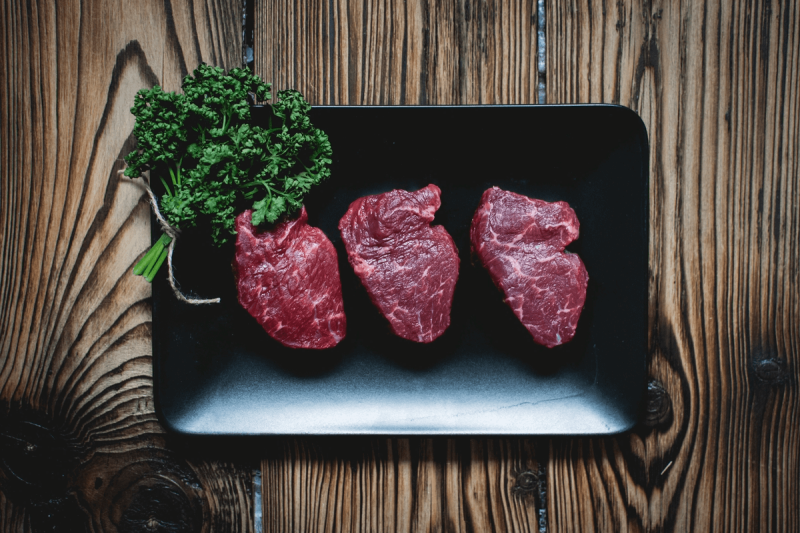
It’s become axiomatic that the ability to eat meat helped spur development of intelligence in early humans. Let’s reassess

Credit: Rawpixel (CC0 1.0)

Modern man is a born meat eater, they reason, as a glance at human history shows. What’s more, the mastery of fire, the development of language, the origin of the division of labor, the beginning of social hierarchies and even the emergence of culture could be related to hunting and eating meat. Accordingly, the consumption of meat is a natural need of humankind whereas vegetarianism is unnatural and possibly even harmful to health. But experts from such diverse fields as paleoanthropology and nutrition are questioning these ideas.

Follow the latest news and policy debates on sustainable agriculture, biomedicine, and other ‘disruptive’ innovations. Subscribe to our newsletter.

In a 2022 study, a research group led by paleoanthropologists W. Andrew Barr of George Washington University and Briana Pobiner of the Smithsonian National Museum of Natural History took another systematic look at the purported archaeological evidence for the “meat made us human” theory. The scientists compiled data from 59 sites from nine major research areas in East Africa, ranging in age from 2.6 to 1.2 million years old. Then the team put all previous bone finds into chronological perspective. Archaeological evidence of meat consumption does increase sharply when looking at specimens linked to the emergence of the Homo erectus species, the researchers reported in the journal PNAS. However, they found, this trend reflects the scientific focus on that period of evolutionary development; that is, there is simply more material collected from sites linked to early Homo erectus. As a result, the picture is distorted and the connection between eating meat and the evolution of the genus Homo is falsely underscored, they said.

This is an excerpt. Read the original post here

{{ reviewsTotal }}{{ options.labels.singularReviewCountLabel }}
{{ reviewsTotal }}{{ options.labels.pluralReviewCountLabel }}
{{ options.labels.newReviewButton }}
{{ userData.canReview.message }}

Related Articles

Infographic: Global regulatory and health research agencies on whether glyphosate causes cancer

Infographic: Global regulatory and health research agencies on whether glyphosate causes cancer

Does glyphosate—the world's most heavily-used herbicide—pose serious harm to humans? Is it carcinogenic? Those issues are of both legal and ...

Most Popular

Screenshot-2026-04-22-at-12.21.32-PM
Viewpoint: Why the retracted Monsanto glyphosate study doesn’t change the science—the world’s most popular herbicide is safe 
ChatGPT-Image-May-1-2026-11_42_59-AM-2
Viewpoint: NAD is the wellness grifters latest evidence-lite longevity fad. At least the mice are impressed.
Picture1
The FDA couldn’t find a vaccine safety crisis, so it buried its own research
ChatGPT-Image-Apr-16-2026-02_56_53-PM
Financial incentives, over diagnosis, and weak oversight: Autism claims are driving up Medicare costs
Screenshot-2026-04-12-135256
Bixonimania: The fake disease scam that AI swallowed whole

Sorry. No data so far.

glp menu logo outlined

Get news on human & agricultural genetics and biotechnology delivered to your inbox.