Meat lobby restricting innovation? Florida legislature to take up cell based meat ban in the wake of Italy’s vote to restrict cultured meats

chjpdmf zs sci pbwfnzxmvd vic l zs ymdiylta l zsnda mtm mtyxnjqtchvibgljlwltywdllwtvbnzkc lmpwzw
Credit: Rawpixel (Public Domain)

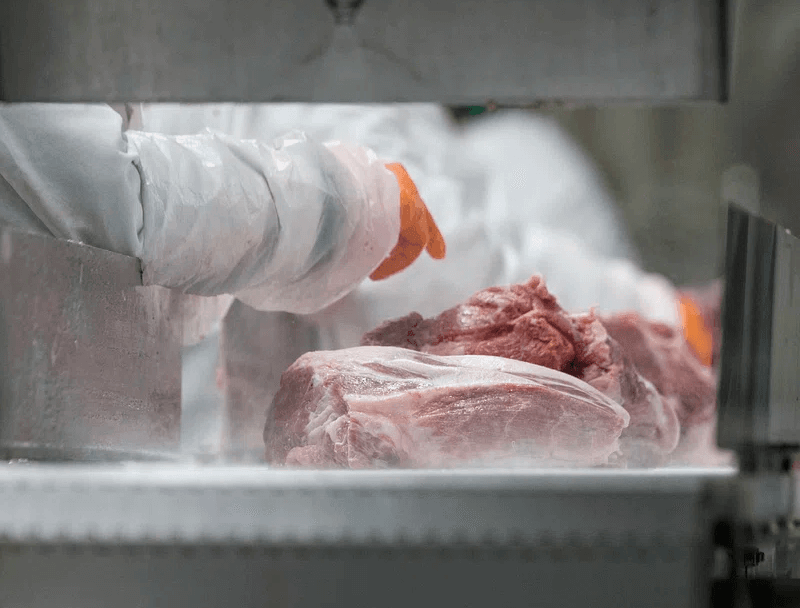
The Italian government has voted to ban cultured meat being produced or sold in the country, which could complicate the regulatory environment surrounding cell-based food.

As other countries like the US, UK, Singapore and Israel embrace what’s hailed as a crucial solution to slaughter-free alternative proteins, Italian ministers have moved to prohibit the production, sale or import of cultivated meat or animal feed.

Follow the latest news and policy debates on sustainable agriculture, biomedicine, and other ‘disruptive’ innovations. Subscribe to our newsletter.

Cell-based is also proving to be a polarizing issue in Florida, US, with Republican Tyler Sirois proposing legislation that would make it a criminal offense to sell cultivated meat in the state from July 2024.

A few days ago, Sirosis declared that he wanted Florida to become the first state to ban cultured meat. He has the support of Wilton Simpson, the state’s agriculture commissioner.

Similar to the situation in Italy, the proposed legislation seeks to ban the production, sale, holding and distribution of cell-cultured meat within Florida and calls for criminal penalties on anyone violating these rules.

The proposed legislation will now go through due process in the state.

It directly contrasts the US government’s stance on cultured products and cellular agriculture in general.


This is an excerpt. Read the original post here

{{ reviewsTotal }}{{ options.labels.singularReviewCountLabel }}
{{ reviewsTotal }}{{ options.labels.pluralReviewCountLabel }}
{{ options.labels.newReviewButton }}
{{ userData.canReview.message }}

Related Articles

Infographic: Global regulatory and health research agencies on whether glyphosate causes cancer

Infographic: Global regulatory and health research agencies on whether glyphosate causes cancer

Does glyphosate—the world's most heavily-used herbicide—pose serious harm to humans? Is it carcinogenic? Those issues are of both legal and ...

Most Popular

Screenshot 2026-05-26 at 10.15
Viewpoint: Double standard—Why does the wellness industry get a free pass while Big Healthcare is treated as morally suspect?
ChatGPT-Image-Jun-4-2026-01_27_58-PM
Viewpoint—N.A.D.+: Why Gwenyth Paltrow’s heralded anti-aging supplement doesn’t work
ChatGPT-Image-Mar-10-2026-01_39_01-PM
Viewpoint—“Miracle molecule” debunked: Why acemannan supplements don’t work
Screenshot 2025-07-30 at 10.48
Can gene editing eliminate Down syndrome? Scientists have done it in lab-grown cells
tick-DNA
GLP podcast: Spread meat allergy with gene-edited ticks? Bioethicists pose vile ‘thought experiment’
Screenshot-2026-06-03-at-1.24.46-PM
Challenging anti-GMO disinformation: Why genetically-tweaked crops offer bushels of benefits
downsyndrome_compilation_MID_1
CRISPR breakthrough that can remove the chromosome responsible for Down syndrome raises ethical questions
ChatGPT-Image-Jun-4-2026-11_49_36-AM-2
‘You don’t understand Tolkien’: Skeptic Pope trolls tech giants about the exaggerated, risk-less benefits of AI
Screenshot-2026-06-04-at-12.05.08-PM
Cases of brain inflammation surge as U.S. measles pandemic approaches 2000
ChatGPT-Image-May-26-2026-07_51_21-AM-2
Viewpoint: There are more than 1,000 chemicals in a cup of coffee—including many substances that can cause cancer. Why isn’t it banned?
ChatGPT Image May 26, 2026, 08_42_17 AM (1)
Viewpoint: Greenpeace and poison: How environmental advocacy groups rely on compliant (and often ignorant) journalists to spread disinformation and spark litigation

Sorry. No data so far.

glp menu logo outlined

Get news on human & agricultural genetics and biotechnology delivered to your inbox.