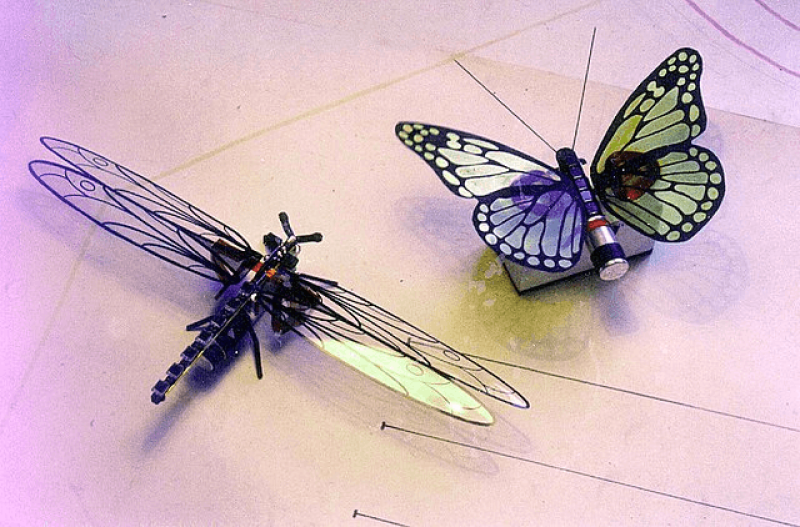

Insects are the “perfect machines,” faster and stronger than humans relative to size, [mechanical engineer Conor Trygstad] said. They are also tasty to the fish he’s trying to catch, so he has spent hours studying them to perfect his lure.
…
After mimicking the insect on his lure, Trygstad wondered if he could mimic them in his lab.
The two insect-like robots developed from his research are smaller, lighter and faster than micro-robots others have created in the past. They could someday be used for water safety testing, robotic-assisted surgery, artificial pollination, search and rescue, and other purposes.
“Looking at the mechanisms that these insects use, they can do exactly what we want to do. They can transmit forces much larger than their size and weight, and they work in teams collaboratively to build big structures,” Trygstad said.



Because of its ability to operate on the surface of the water, a water strider could be used to monitor water for environmental toxins at a much more constant basis than currently possible.
“Our water strider could go around the surface of the water and take data about the water – like temperature, pH levels, different chemicals. And all that could then be constantly being transmitted back to the technician,” he said.