Precision medicine timeline: ‘Floodgates might be opening for a generalized cure of most genetic diseases in less than one generation’

Precision medicine timeline: ‘Floodgates might be opening for a generalized cure of most genetic diseases in less than one generation’
Credit: Midjourney/ Heenan

Precision therapies have always been the ultimate goal of medicine. Instead of drugs acting on multiple parts of the body, these therapies would only target one organ, one cell, or even one gene.

In theory, not only would this be a lot more efficient, but it would also dramatically reduce side effects and allow the cure of diseases that have so far resisted treatment, from genetic diseases to paralysis or even cancer.

Follow the latest news and policy debates on sustainable agriculture, biomedicine, and other ‘disruptive’ innovations. Subscribe to our newsletter.

With the approval of the first CRISPR gene therapy in 2023, the floodgates might be opening for a generalized cure of most genetic diseases in less than one generation.

Only 864 out of 20,000 proteins in the human body are currently targeted by FDA-approved drugs. This is just 4% of the total, with another 17% potentially targetable. This is mostly due to the extreme difficulty of finding a chemical compound that efficiently targets a specific protein.

A new technology, TPDs, could target 56% of the total human proteome (the whole catalog of proteins, the way the genome is for genes). This could bear massive results in untreatable diseases associated with abnormal proteins, like Alzheimer’s Disease.
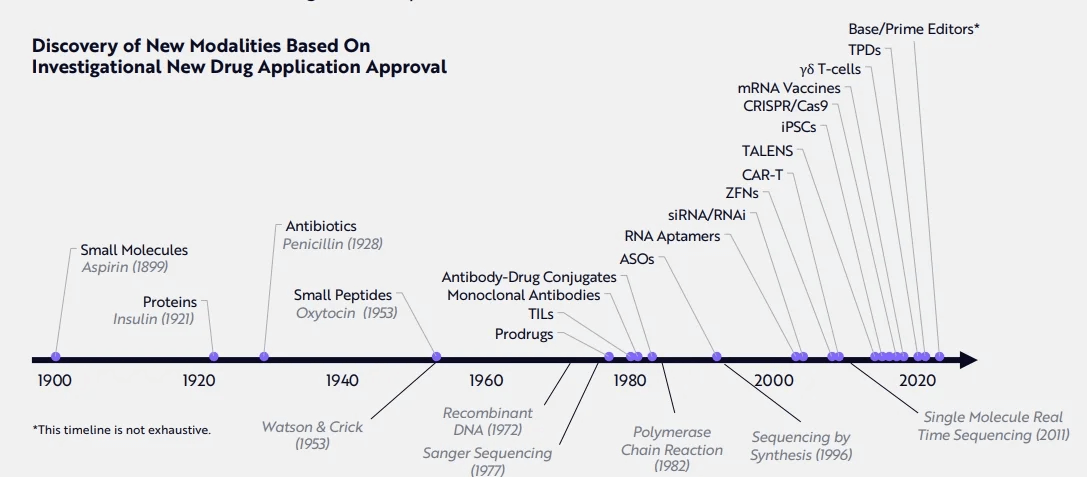

precision therapies timeline ark
Credit: ARK Invest

This is an excerpt. Read the full article here

{{ reviewsTotal }}{{ options.labels.singularReviewCountLabel }}
{{ reviewsTotal }}{{ options.labels.pluralReviewCountLabel }}
{{ options.labels.newReviewButton }}
{{ userData.canReview.message }}

Related Articles

Infographic: Global regulatory and health research agencies on whether glyphosate causes cancer

Infographic: Global regulatory and health research agencies on whether glyphosate causes cancer

Does glyphosate—the world's most heavily-used herbicide—pose serious harm to humans? Is it carcinogenic? Those issues are of both legal and ...

Most Popular

Picture1
The Orange Bowl without oranges: Can CRISPR save Florida citrus?
global warming
‘Implausible’: Top climate scientists reject worst-case scenario—soaring temperatures and fast-rising sea levels
Screenshot 2026-05-22 at 11.31
‘Realistic and durable’: EPA proposes loosening restrictions on some PFAS ‘forever chemicals.’
ChatGPT Image May 26, 2026, 12_06_53 PM
Fake Ebola cure promoters already cashing in as disinformation videos flood social media
Screenshot-2026-05-21-at-12.15.17-PM
UK gene-editing milestone: Livestock barley that increases ruminant value and reduces methane emissions is first-approved CRISPR crop
Screenshot-2026-04-22-at-12.21.32-PM
Viewpoint: Why the retracted Monsanto glyphosate study doesn’t change the science—the world’s most popular herbicide is safe 
ChatGPT-Image-May-22-2026-10_26_09-AM
Gutting the National Science Board: How the Trump-RFK, Jr. crusade is erasing the separation of science and state
Screenshot-2026-04-14-at-11.11.06-AM
‘Turbo cancer’ or mRNA cancer cure: Strategies to counter misinformation
ChatGPT-Image-May-26-2026-09_19_32-AM
Viewpoint— “A safe space to chat, flirt, and be intimate without sex”: Are new AI companies exploiting vulnerable asexuals?
glp menu logo outlined

Get news on human & agricultural genetics and biotechnology delivered to your inbox.