‘I’m actually present in my daily life and that’s incredible’: Breakthrough brain implant treats both epilepsy and OCD

‘I'm actually present in my daily life and that's incredible’: Breakthrough brain implant treats both epilepsy and OCD
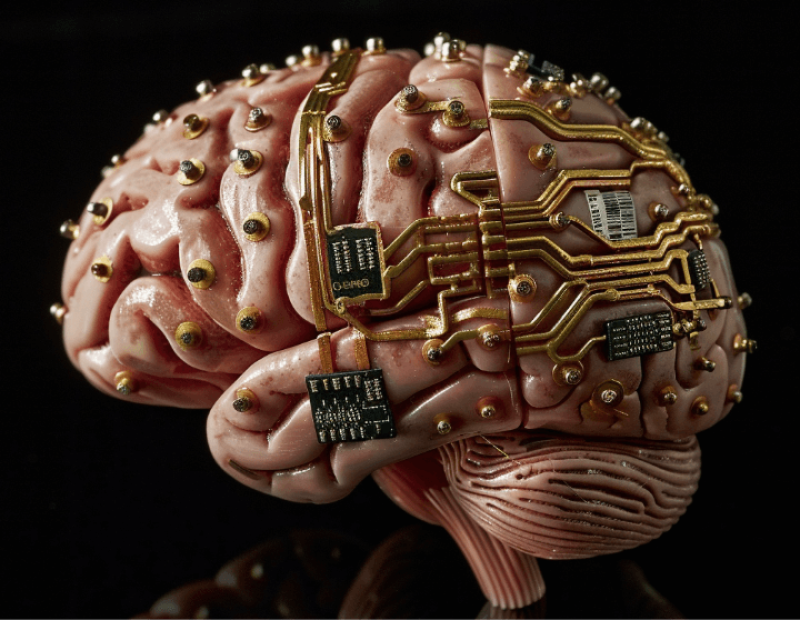
Credit: Midjourney/ Heenan

American Amber Pearson used to wash her hands until they bled, terrified by the idea of contamination from everyday items, a debilitating result of her obsessive compulsive disorder (OCD).

But the repetitive rituals of her condition are largely consigned to memory, thanks to a revolutionary brain implant that is being used to treat both her epilepsy and her OCD.

“I’m actually present in my daily life and that’s incredible,” the 34-year-old told AFP.

“Before, I was just constantly in my head worrying about my compulsions.”

Follow the latest news and policy debates on sustainable agriculture, biomedicine, and other ‘disruptive’ innovations. Subscribe to our newsletter.

Pearson’s doctors offered her the 32-millimeter (just over an inch-long) device to treat her debilitating epileptic seizures, confident it would be able to detect the activity that causes the episodes and deliver a pulse to interfere with them.

Doctors worked with Pearson to see exactly what happens in her brain when she gets trapped in an obsessive loop.

The technique involved exposing her to known stressors – in this case, seafood – and recording the electrical markers.

In this way, they could effectively isolate the brain activity associated with her OCD.

They could then configure her implant so that it would react to that specific signal.

This is an excerpt. Read the full article here

{{ reviewsTotal }}{{ options.labels.singularReviewCountLabel }}
{{ reviewsTotal }}{{ options.labels.pluralReviewCountLabel }}
{{ options.labels.noReviewsLabel }}
{{ options.labels.newReviewButton }}
{{ userData.canReview.message }}

Related Articles

Infographic: Global regulatory and health research agencies on whether glyphosate causes cancer

Infographic: Global regulatory and health research agencies on whether glyphosate causes cancer

Does glyphosate—the world's most heavily-used herbicide—pose serious harm to humans? Is it carcinogenic? Those issues are of both legal and ...

Most Popular

ChatGPT-Image-Mar-10-2026-01_39_01-PM
Viewpoint—“Miracle molecule” debunked: Why acemannan supplements don’t work
organic scaled
Facts & Fallacies podcast: Organic food cuts pesticide exposure? A response to Dr. Rhonda Patrick
close up arabica coffee farmer s hands picking beans plant his farm colombia
Viewpoint: Why do so many ‘mainstream’ and ‘respected’ media outlets exaggerate climate change threats?
How to Include More Strawberries in Your Diet
Strawberries are berries—and 35 other surprising food and drink myths
kratom
Viewpoint: Kratom ‘supplement’ crisis: DEA sits on its hands while patient addictions to this ineffective drug  rise
ChatGPT-Image-Jul-22-2026-09_13_07-AM
Viewpoint—The Strategic Litigation boom: Understanding the tightening coalition among NGOs, foundations, journalists, and tort lawyers
Screenshot 2026-07-22 at 10.25
Science brain drain escalates as Trump purge extends to USDA
diversity
We are entering a new era of personalized medicine—if you’re white
Screenshot-2026-07-07-at-12.55.44-PM
Viewpoint: Yes, we can adapt to a changing climate without devastating the environment and the economy
Screenshot-2026-07-01-at-2.49.48-PM
Dr. TikTok and male fertility: Viral claims tout GLP-1 drugs as fertility boosters. What does the science say?
ChatGPT-Image-May-22-2026-10_26_09-AM
Trump-RFK, Jr. National Science Board firings: Accountability vs. partisan meddling
using genetics to reverse aging
Is the longevity obsession a new form of ageism?
ChatGPT-Image-Jun-25-2026-02_53_56-PM
Embryo gene editing is on the horizon, stirring mixed emotions
glp menu logo outlined

Get news on human & agricultural genetics and biotechnology delivered to your inbox.