Are ‘superdodgers’ real? Is COVID seasonal? We’re finally making progress on understanding 7 of the biggest COVID mysteries

covid
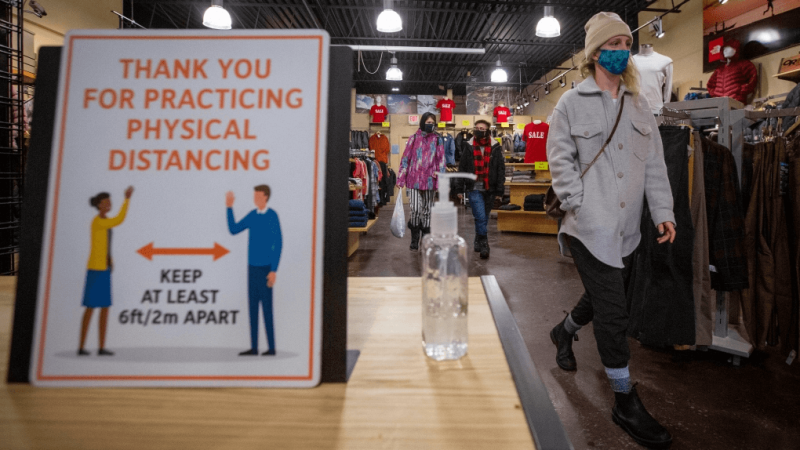
Credit: Lars Hagberg/Canadian Press

When the World Health Organization declared Covid-19 a global pandemic in March 2020, nearly everything about the novel coronavirus was an open question.

Here’s a look at what we’ve learned.

Why do people’s experiences with Covid vary so widely? And are superdodgers real?

Follow the latest news and policy debates on sustainable agriculture, biomedicine, and other ‘disruptive’ innovations. Subscribe to our newsletter.

Scientists have been trying to investigate if there’s something biologically unique about Covid superdodgers that gives them immunity to infection. But the closest they have come is finding that mutations in the human leukocyte antigen — which signals to the immune system that cells are infected — can help clear out the virus so quickly that a person might be completely asymptomatic.

When Covid first took off in winter 2020, many people hoped that the summer months (at least in some parts of the world) would bring a reprieve. It’s true that there are naturally more opportunities for aerosol transmission of Covid in the colder months, when people spend more time indoors. Buildings are also more tightly closed in the winter, leading to poorer ventilation and potentially higher levels of pathogens in the air. And some studies suggest that the virus also remains infectious for longer, and particles carrying it are able to stay in the air for a greater period of time, when the relative humidity is low.
But Covid doesn’t seem to be inherently seasonal — “we’ve clearly had surges in the summer as well,” [environmental engineer Dr. Linsey] Marr said.


This is an excerpt. Read the original post here

{{ reviewsTotal }}{{ options.labels.singularReviewCountLabel }}
{{ reviewsTotal }}{{ options.labels.pluralReviewCountLabel }}
{{ options.labels.newReviewButton }}
{{ userData.canReview.message }}

Related Articles

Infographic: Global regulatory and health research agencies on whether glyphosate causes cancer

Infographic: Global regulatory and health research agencies on whether glyphosate causes cancer

Does glyphosate—the world's most heavily-used herbicide—pose serious harm to humans? Is it carcinogenic? Those issues are of both legal and ...

Most Popular

ChatGPT-Image-May-7-2026-12_16_37-PM-2
Viewpoint: Are cancer rates ‘skyrocketing’ as RFK, Jr. and MAHA claims? The evidence says mostly the opposite
Screenshot-2026-04-13-at-1.39.26-PM
Viewpoint: ‘Safer for children?’ Stonyfield yogurt under fire for deceptive organic marketing
Screenshot-2026-04-22-at-10.46.29-AM
Viewpoint: How to counter science disinformation? Science journalist offers 12 practical tips
png-pill-omega-Supp-fish-oil
Millions take omega-3 fish oil for brain health. New research suggests it may do the opposite.
ChatGPT Image May 14, 2026, 09_51_35 PM
Facebook swamped by hundreds of thousands of scam ads for illegal or dangerous medical products
ChatGPT Image May 12, 2026, 01_21_30 PM
How big health brands are funding online medical misinformation 
Screenshot-2026-04-23-at-11.00.36-AM
Regulators' dilemma: Thalidomide, Metformin, and the cost of getting drug approvals wrong
Picture1-5
Science Disinformation Gap: The transatlantic battle over social media and censorship
Picture1-1
Cooling the planet with balloons: Could a geoengineering gamble slow global warming?
ChatGPT-Image-May-13-2026-12_43_37-PM-2
Longevity: Is cellular rejuvenation even possible?
ChatGPT-Image-May-12-2026-08_39_41-PM
GLP podcast: Big Pharma, Big Ag, Big Food—health harming industries or life-saving innovators?
glp menu logo outlined

Get news on human & agricultural genetics and biotechnology delivered to your inbox.