‘People are going to be better-looking, healthier and smarter – what’s not to like?’ What are the pitfalls of selecting embryos for intelligence?

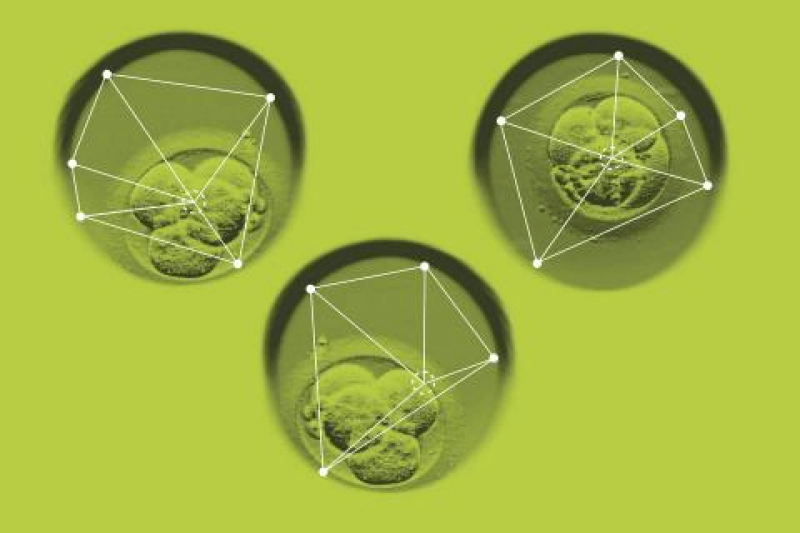
embryos time lapse ai
Credit: emBIO

Which prospective parent has not wanted to influence how their child will turn out? It underpins our choice of partner, after all. But what if one could amplify that influence further, harnessing the latest advances in reproductive and genetic technologies to select for intelligence, say, or sporting ability?

Follow the latest news and policy debates on sustainable agriculture, biomedicine, and other ‘disruptive’ innovations. Subscribe to our newsletter.
[Geneticist and co-founder of GenRAIT Razib] Khan has declared that we are in the “second age of eugenics”. He reports that would-be parents in the US are not stopping at non-invasive prenatal testing – the kind offered on the NHS to test for conditions such as Down’s syndrome – but going much further.

Americans are employing preimplantation genetic testing for both monogenic disorders (those caused by the inheritance of single gene mutations, such as haemophilia and cystic fibrosis) and polygenic disorders (those requiring multiple genetic factors to manifest, such as diabetes and heart disease). More controversially still, they are using polygenic risk scores, which purport to offer a measure of your disease risk due to your genes. This embryo screening is only possible, of course, with in vitro fertilisation (IVF).


When it comes to screening embryos for complex traits, which may be born out of a desire to have more intelligent children, for example, does Khan worry about unintended consequences? “There’s going to be less suffering in the world. People are going to be better-looking, healthier and smarter – what’s not to like? But the main issue is you smooth out all the rough edges, and you might over-optimise,” Khan replies.


This is an excerpt. Read the full article here

{{ reviewsTotal }}{{ options.labels.singularReviewCountLabel }}
{{ reviewsTotal }}{{ options.labels.pluralReviewCountLabel }}
{{ options.labels.newReviewButton }}
{{ userData.canReview.message }}

Related Articles

Infographic: Global regulatory and health research agencies on whether glyphosate causes cancer

Infographic: Global regulatory and health research agencies on whether glyphosate causes cancer

Does glyphosate—the world's most heavily-used herbicide—pose serious harm to humans? Is it carcinogenic? Those issues are of both legal and ...

Most Popular

ChatGPT-Image-Jun-25-2026-12_23_17-PM
No, Bill Gates did not secretly engineer ticks to promote veganism
ChatGPT-Image-Mar-10-2026-01_39_01-PM
Viewpoint—“Miracle molecule” debunked: Why acemannan supplements don’t work
Screenshot-2026-06-05-at-2.12.30-PM
Some plants can poison you. So how did humans figure out what is safe to eat?
ChatGPT-Image-Jun-23-2026-03_12_23-PM
Is cellular reprogramming junk science? Nearly 20 patients are getting eye injections in the first FDA-cleared cellular trial
ChatGPT-Image-Jun-17-2026-10_52_43-AM
Anguished parents, doctors in tears: Utah’s long measles outbreak takes a toll
ChatGPT-Image-May-18-2026-12_06_18-PM-2
Defying death: The immortality movement goes mainstream
artificial intelligence brain think illustration md
Viewpoint — Digital gods and human extinction: Will we be the first species ever to design our own descendants?

Sorry. No data so far.

glp menu logo outlined

Get news on human & agricultural genetics and biotechnology delivered to your inbox.