Viewpoint: Proposed Vermont bill follows New York in banning neonic pesticides — a move that lacks evidence and will hurt farmers

pesticides presser statehouse vermontpublic giles
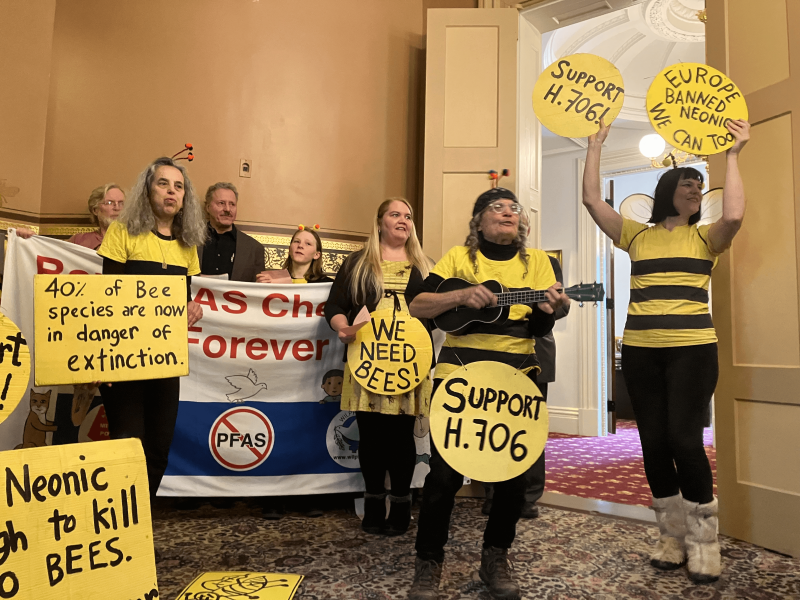
Members of the Honeybee Steelband showed their support at the Statehouse for a bill that would ban neonicotinoid-coated seeds. Credit: Abagael Giles/Vermont Public

A new bill in the Vermont House would ban the use of certain insecticides by the state’s agricultural sector. Bill H.706 bans the use of neonicotinoid insecticides on many crops, such as corn, soy and grain, and on all crops during bloom. The bill follows a recent move by New York state to ban the use of neonics out of the fear it would hurt pollinators. This claim lacks evidence. What does not lack evidence is a ban on neonics would increase consumer prices and hurt farmers, especially in the dairy industry.

Follow the latest news and policy debates on sustainable agriculture, biomedicine, and other ‘disruptive’ innovations. Subscribe to our newsletter.

Replacing neonics is hard to do: For every pound of neonicotinoid, it would now require five pounds of older pesticides that insects have sometimes built resistance to. One neonic alternative, diamide, would be three times as expensive, which would impoverish farmers and increase food prices for consumers. In fact, lawmakers have not commissioned an impact assessment on what this ban would really mean for consumers and growers. What they do instead is rely on a Cornell report from 2020 made for New York state, which states itself that it was not designed to contain any policy prescriptions. We cannot afford to answer the question “what will this do?” with “we don’t know.”


This is an excerpt. Read the original post here

{{ reviewsTotal }}{{ options.labels.singularReviewCountLabel }}
{{ reviewsTotal }}{{ options.labels.pluralReviewCountLabel }}
{{ options.labels.newReviewButton }}
{{ userData.canReview.message }}

Related Articles

Infographic: Global regulatory and health research agencies on whether glyphosate causes cancer

Infographic: Global regulatory and health research agencies on whether glyphosate causes cancer

Does glyphosate—the world's most heavily-used herbicide—pose serious harm to humans? Is it carcinogenic? Those issues are of both legal and ...

Most Popular

Screenshot-PM-24
Viewpoint: The herbicide glyphosate isn’t perfect. Banning it would be far worse.
d-b
Blocked arteries, kidney stones, nausea, constipation, fatigue: Long list of health problems caused by too much vitamin D 
Screenshot-2026-04-27-at-12.22.38-PM
Running ‘wild’: Last year, RFK, Jr. was given a green light to ‘reform’ chemical policies. Glyphosate illustrates how Trump now has him on a tight leash, and MAHA is furious
bayer-supremecourt-lt
EPA concludes glyphosate is not carcinogenic. Missouri courts say Monsanto failed to warn it might be. SCOTUS weighs in.
circular-bioeconomy-should-focus-on-sustainable-wellbeing
GLP podcast: What's wrong with 'doomsday' environmentalism? It's false.
ChatGPT-Image-Apr-22-2026-11_06_18-AM
Wellness influencer nonsense: No, nicotine does not boost cognition and productivity, but it can damage your health 
Screenshot 2026-02-25 at 11.20
Why the herbicide glyphosate is key to sustainable agriculture
glp menu logo outlined

Get news on human & agricultural genetics and biotechnology delivered to your inbox.