Humans and whales are the only animals to go through menopause. What can this tell us about aging and fertility?

Humans and whales are the only animals to go through menopause. What can this tell us about aging and fertility?
Credit: Midjourney/ Heenan

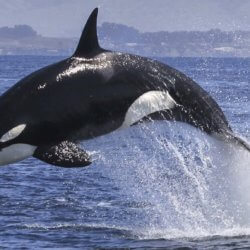
Out of 5,000 mammals, just five species of whales with teeth – including killer whales, beluga whales and narwhals – are the only others known to have females that regularly live long after they stop reproducing.

By looking at the differences between these two groups, a UK-led team of researchers sought to discover why some whales evolved to get menopause – and what this could tell us about ourselves.

Mis- and disinformation are distorting science and public policy. Subscribe to our Daily and Weekly Digests for incisive coverage of ‘disruptive’ innovations in AI, agricultural biotechnology, food, chemicals, nuclear energy, vaccines, and other disruptive innovations.

Female killer whales “regularly live into their 60s and 70s, but the males are all dead by 40,” lead study author Samuel Ellis of the UK’s University of Exeter told an online press conference.

This supports what is known as the “grandmother hypothesis” – that older females care for their grandchildren, therefore helping their species survive in a different way.

But why would it be an evolutionary advantage for these grandmothers to stop having offspring?

“The second part of this story is about competition,” study co-author Darren Croft said.

When killer whale “mothers and daughters try and breed at the same time, the calves of the older females” have a significantly lower survival rate as they compete for resources, he said.

“So they have evolved a longer lifespan while keeping a short reproductive lifespan,” Croft added. “This is just the same pattern of life history we see in humans.”


This is an excerpt. Read the full article here

Related Articles

Infographic: Global regulatory and health research agencies on whether glyphosate causes cancer

Infographic: Global regulatory and health research agencies on whether glyphosate causes cancer

Does glyphosate—the world's most heavily-used herbicide—pose serious harm to humans? Is it carcinogenic? Those issues are of both legal and ...

Most Popular

DOJ Emblem with Transgender Symbol
‘They’ve already decided what they want studies to say’: Questioning Trump’s plan to study whether people distressed about their sex are prone to violence
ChatGPT Image Jul 31, 2026, 08_05_37 AM
26% and far worse than during COVID: Under RFK Jr., Americans’ opinion of ‘revamped’ CDC hits an all-time low
ChatGPT-Image-Mar-10-2026-01_39_01-PM
Viewpoint—“Miracle molecule” debunked: Why acemannan supplements don’t work
Picture1
Viewpoint: How badly is the U.S. food-safety net fraying? FDA’s bungled handling of the tainted lettuce crisis deepens concerns over cuts to disease tracking and response
Screenshot-2026-10-24-121036
Many hospitals embrace longevity medicine. Are they separating science from hype?
Screenshot-2026-10-26-at-11.06.10-AM
Viewpoint: The organic, good-food, small-farm movement is seductive but wrongheaded. Here’s the sustainability and environmental case for industrial farming
Screenshot 2026-10-20 at 1.37
Race against food rot: How AI and gene editing could slash fruit and vegetable waste
China Innovation Lightbulb 2
China’s 5-year plan to accelerate science innovation is putting the U.S. and Europe in the rearview mirror
Screenshot-2026-10-23-at-10.37.12-AM
Viewpoint: Drones, dollars and baby food: Critical innovations that anti-plastic ideologues willfully ignore
Screenshot-2026-10-24-124559
Healthier, stronger, better sniffers? Warhound’s genetically-engineered solution to the war dog shortage
d a f b
Genetics of IQ: At what age do various forms of intelligence peak?
glp menu logo outlined

Get news on human & agricultural genetics and biotechnology delivered to your inbox.