Challenging bioethical taboos: Chinese scientist He Jiankui who modified the genes of human embryos to protect them from HIV reopens his lab

Challenging bioethical taboos: Chinese scientist He Jiankui who modified the genes of human embryos to protect them from HIV reopens his lab
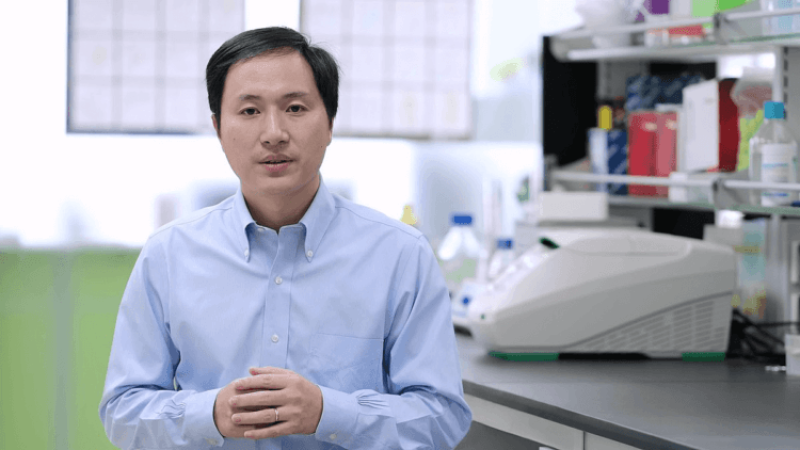
Credit: The He Lab, CC BY 3.0, via Wikimedia Commons

In 2018, Chinese researcher He Jiankui announced the birth of the world’s first genome-edited babies, and was subsequently imprisoned in China. In his first solo interview with Japanese media, he revealed to the Mainichi Shimbun that he has resumed research on human embryo genome editing for the treatment of genetic diseases while adhering to international rules, and claimed “society will eventually accept it.”

His renewed enthusiasm for research that breaks the bioethical taboo against artificially rewriting genes could have wide-ranging repercussions.

Follow the latest news and policy debates on sustainable agriculture, biomedicine, and other ‘disruptive’ innovations. Subscribe to our newsletter.

Jiankui told the Mainichi he aims to treat rare genetic diseases such as Duchenne muscular dystrophy and familial Alzheimer’s disease using genome editing in human embryos. After his release, he reportedly established three laboratories in China, including in Beijing and Wuhan, and resumed his research. “We will use discarded human embryos and comply with both domestic and international rules,” he explained, denying any current intent to produce more genome-edited babies.


This is an excerpt. Read the full article here

{{ reviewsTotal }}{{ options.labels.singularReviewCountLabel }}
{{ reviewsTotal }}{{ options.labels.pluralReviewCountLabel }}
{{ options.labels.newReviewButton }}
{{ userData.canReview.message }}

Related Articles

Infographic: Global regulatory and health research agencies on whether glyphosate causes cancer

Infographic: Global regulatory and health research agencies on whether glyphosate causes cancer

Does glyphosate—the world's most heavily-used herbicide—pose serious harm to humans? Is it carcinogenic? Those issues are of both legal and ...

Most Popular

Screenshot-2026-04-23-at-11.00.36-AM
Regulators' dilemma: Thalidomide, Metformin, and the cost of getting drug approvals wrong
Picture1-5
Science Disinformation Gap: The transatlantic battle over social media and censorship
ChatGPT-Image-May-13-2026-11_56_08-AM
After slashing global health aid by $19 Billion, Trump moves to tap $2.1 billion more—to cover shutdown costs
ChatGPT-Image-May-12-2026-08_39_41-PM
GLP podcast: Big Pharma, Big Ag, Big Food—health harming industries or life-saving innovators?
Picture1-1
Cooling the planet with balloons: Could a geoengineering gamble slow global warming?
ChatGPT Image May 10, 2026, 08_16_59 PM 2
Overmedicalization? RFK Jr.’s antidepressant crackdown raises conflict questions over his fee stake in Wisner Baum, the tort firm built on suing drug makers
Screenshot-2026-05-01-at-1.29.41-PM
Viewpoint: What happens when whole grains meet modern food manufacturing? Labels don’t tell the whole story.
ChatGPT-Image-Apr-13-2026-02_20_22-PM
Viewpoint: Misinformation infodemic? Why assessing evidence is so challenging 
Screenshot-2026-02-20-at-10.48.04-AM
Deepfakes raise profound ethical questions in science
Screenshot-2026-05-12-at-9.58.31-PM
'He seems fine': Marty Makary out as FDA commissioner
S
As vaccine rejectionism spreads, measles may be taking a more dangerous turn
Screenshot-2026-05-11-104424
Hantavirus outbreak research: Trump administration shut down study last year on rodent-to-human transmission
glp menu logo outlined

Get news on human & agricultural genetics and biotechnology delivered to your inbox.