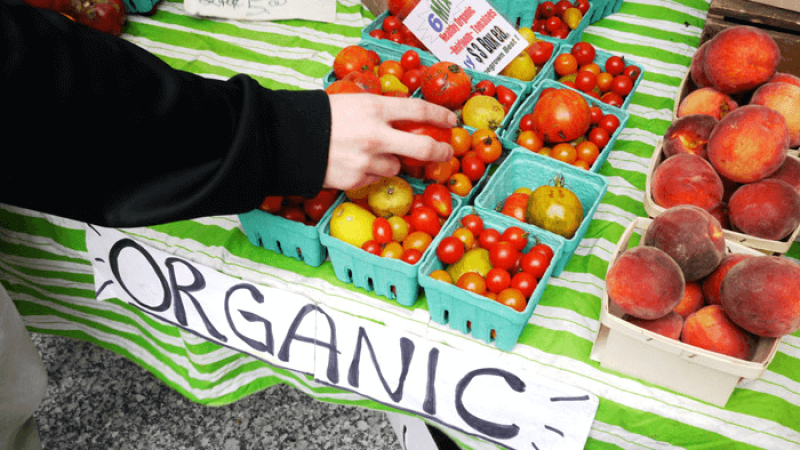

Viewpoint: ‘If we follow science, organic food loses its apparent advantages’ — Harvard professor debunks organic produce myths

Credit: Creative Commons

screenshot amOrganic foods, valued at over $75 billion, have long been touted as superior to conventionally grown foods, with some studies claiming they have added health properties and can ward off disease.

More than two-thirds of Americans believe these foods, which claim to be grown with fewer pesticides and often cost significantly more than regular food, are healthier.

However, Dr Robert Paalberg, professor in the Sustainability Science Program at Harvard University, said that evidence suggesting organic food is more nutritious is unreliable, and consuming fewer pesticides may not have an impact on health.

‘There is no reliable evidence showing that organically grown foods are more nutritious or safer to eat,’ he said.

‘If we follow science, organic food loses its apparent advantage.’

Dr Paalberg pointed to a 2012 review from Stanford University, which looked at 237 studies on organic food. The researchers found no convincing differences in nutrients or health benefits between organic and conventional foods.
The main difference was that organic foods had fewer pesticides.

Mis- and disinformation are distorting science and public policy. Subscribe to our Daily and Weekly Digests for incisive coverage of ‘disruptive’ innovations in AI, agricultural biotechnology, food, chemicals, nuclear energy, vaccines, and other disruptive innovations.

Organic foods still use pesticides, but per the US Department of Agriculture, they are mostly restricted to natural sources, like copper and sulfur, whereas conventional produce can use synthetic pesticides.

However, organic farmers still have restricted access to 25 synthetic pesticides, whereas conventional farming can use more than 900.


This is an excerpt. Read the original post here

Related Articles

Infographic: Global regulatory and health research agencies on whether glyphosate causes cancer

Infographic: Global regulatory and health research agencies on whether glyphosate causes cancer

Does glyphosate—the world's most heavily-used herbicide—pose serious harm to humans? Is it carcinogenic? Those issues are of both legal and ...

Most Popular

ChatGPT-Image-Sep-17-2026-12_28_43-PM
Vitamin D, omega-3 fish oil and glucosamine supplements could cause brain damage 
ChatGPT-Image-Mar-10-2026-01_39_01-PM
Viewpoint—“Miracle molecule” debunked: Why acemannan supplements don’t work
ChatGPT-Image-Sep-17-2026-10_17_15-AM
Viewpoint: Why are the less intelligent more likely to be conservative—and smarter people more socially liberal?
Screenshot-2026-08-12-at-11.31.46-AM
AI is helping develop new vaccines
Screenshot-2026-09-17-at-10.24.54-AM
Viewpoint: Dubious environmental fears: Why the AI buildout is critical to America’s ecological future
Screenshot-2026-09-10-at-12.20.19-PM
'Jet fuel didn't melt the steel': 9/11 conspiracy theories debunked
Screenshot 2026-09-11 at 12.39
Child-monitoring apps: When the cure is worse than the harm—and how the technology could be tweaked
Screenshot-2026-09-16-at-12.07.47-PM
The heated debate over trans athletes in the WNBA
ChatGPT-Image-Sep-9-2026-02_48_24-PM
Viewpoint: Trump-RFK Jr. report on “Gender Ideology & Left-wing Ideology’ targets LGBTQ community—and science
ChatGPT-Image-Sep-15-2026-12_15_00-PM
Viewpoint: Women, depression and empathy: Explaining the gender gap in views about child-murderer Lindsay Clancy
glp menu logo outlined

Get news on human & agricultural genetics and biotechnology delivered to your inbox.