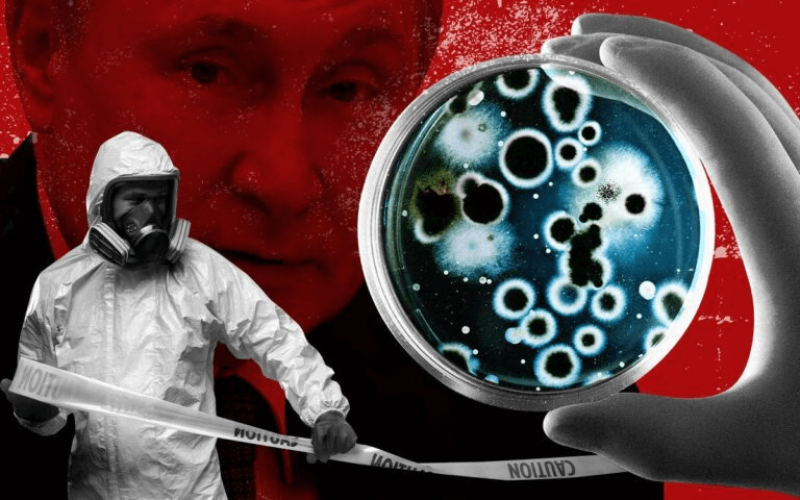

Rapidly accelerating breakthroughs in our ability to change the genes of organisms are generating medically thrilling possibilities. They are also generating novel capabilities for biological weapons, a form of warfare that has been largely abandoned for decades. Take the recent AI-enabled advancements in gene-editing, construction of artificial viral vectors for human genome remodeling, protein folding, and the creation of custom proteins. Far outpacing the regulatory environment, these advances are facilitating the weaponization and delivery of harmful bioagents–overcoming impediments that previously made biological weapons impractical.
Speculation about “genetic weapons” capable of singling out specific groups for infection dates back to the 1970s. In 2012, Vladimir Putin mused publicly about weapons that could be “as effective as nuclear” but “more ‘acceptable’ from the political and military perspective.” He predicted that nuclear weapons would, over the next half- century, become eclipsed by “fundamentally new instruments for achieving political and strategic goals.” The future of war, he said, is “based on new physical principles,” including “genetic” science.
The convergence of genetic technologies and intense competition among highly motivated actors along with historic geopolitical shifts requires the attention of the international life sciences community and bioethicists to establish guidance for what was once a threat in the realm of science fiction.