Our brains have gotten smaller over the last 100,000 years. What’s going on?

Credit: Lucas van Oort/Unsplash

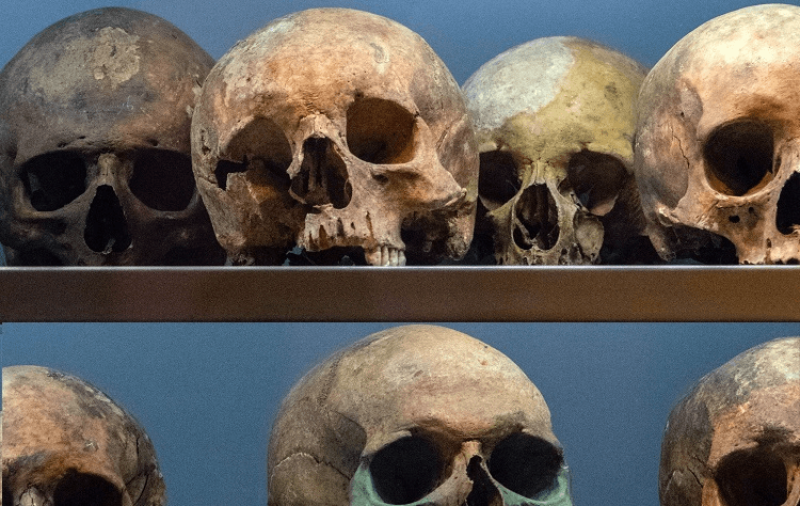
The human brain has nearly quadrupled in size in the six million years since our species last shared a common ancestor with chimpanzees. However, studies show this trend toward larger brains has reversed in Homo sapiens. In our species, average brain sizes have shrunk over the course of the last 100,000 years.

Follow the latest news and policy debates on sustainable agriculture, biomedicine, and other ‘disruptive’ innovations. Subscribe to our newsletter.

However, the trend for brain enlargement over time was turned on its head with the arrival of modern humans. The skulls of men and women today are on average 12.7% smaller than that of Homo sapiens who lived during the last ice age.

So how can we explain this striking reduction? [Ian Tattersall, a paleoanthropologist and curator emeritus with the American Museum of Natural History in New York City] suggests that the shrinkage in brain size began around 100,000 years ago, which corresponds to a period of time in which humans switched from a more intuitive style of thinking to what he terms “symbolic information processing” – or thinking in a more abstract way to better understand your surroundings.

Tattersall believes that the catalyst that caused this change in thinking style was the spontaneous invention of language. This led to the neural pathways of the brain being reorganised in a more metabolically efficient way, allowing humans to get more “bang for their buck”.


This is an excerpt. Read the full article here

{{ reviewsTotal }}{{ options.labels.singularReviewCountLabel }}
{{ reviewsTotal }}{{ options.labels.pluralReviewCountLabel }}
{{ options.labels.newReviewButton }}
{{ userData.canReview.message }}

Related Articles

Infographic: Global regulatory and health research agencies on whether glyphosate causes cancer

Infographic: Global regulatory and health research agencies on whether glyphosate causes cancer

Does glyphosate—the world's most heavily-used herbicide—pose serious harm to humans? Is it carcinogenic? Those issues are of both legal and ...

Most Popular

Picture1
The FDA couldn’t find a vaccine safety crisis, so it buried its own research
ChatGPT-Image-Apr-16-2026-02_56_53-PM
Financial incentives, over diagnosis, and weak oversight: Autism claims are driving up Medicare costs
Screenshot-2026-05-08-at-11.55.47-AM
Anti-vax activists falsely blame COVID vaccines for the rising U.S. cancer rate among younger people.
Screenshot-2026-04-22-at-12.21.32-PM
Viewpoint: Why the retracted Monsanto glyphosate study doesn’t change the science—the world’s most popular herbicide is safe 
Screenshot-2026-05-19-at-11.23.34-AM
West-originated vaccine disinformation sparks murders of health care workers across Africa
ChatGPT-Image-May-7-2026-12_32_36-PM
Viewpoint: The state of U.S. vaccine policy? Dismal nationally, but some states are stepping up.
ChatGPT-Image-May-12-2026-11_27_01-AM-2
AI likely to improve health care, research shows—but not for blacks and ethnic minorities
modi visit sikkim
Viewpoint: Indian PM wants farmers to switch to 50% organic. It would take at least 10 years, likely won’t work, and isn’t more sustainable
Screenshot-2026-04-13-at-1.39.26-PM
Viewpoint: ‘Safer for children?’ Stonyfield yogurt under fire for deceptive organic marketing
placebo
Viewpoint — Alternative medicine and the placebo effect: Selling a reassuring illusion of health
glp menu logo outlined

Get news on human & agricultural genetics and biotechnology delivered to your inbox.