Why this endangered horseshoe crab species is drained of blue blood to save human lives

Credit: Business Insider

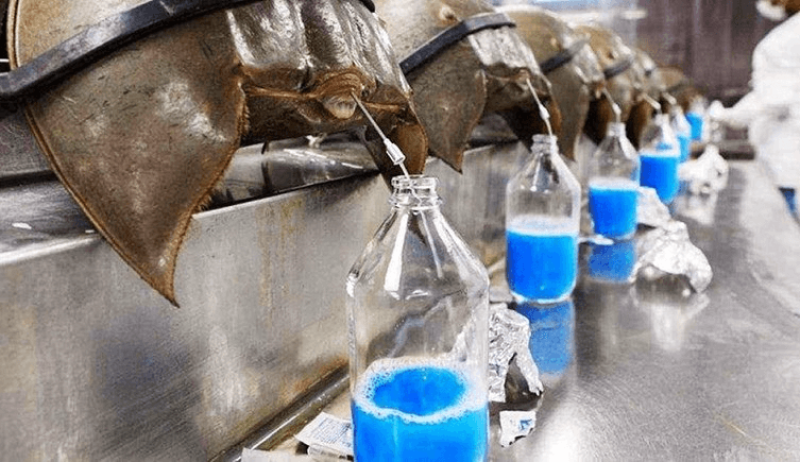
Horseshoe crabs are tied up and mounted in a row. Each of them is attached to a cannula through which the blood flows and is collected in glass bottles. The bottles are slowly filled with light blue blood.

Around them, people in white coats with masks and gloves are moving.

They are after the horseshow crabs’ very special, blue blood.

It is used to test whether vaccines and medicines are dangerous. The blood has saved many human lives but has also led to the loss of many horseshoe crab lives.

Horseshoe crabs are now on the international red list of endangered species. Is it time to find other ways to test vaccines and medicines?

Follow the latest news and policy debates on sustainable agriculture, biomedicine, and other ‘disruptive’ innovations. Subscribe to our newsletter.

Even just a little bit of common bacterial toxin, which can cause fever and in the worst case lead to death in humans, was enough to turn horseshoe crab blood into gel.
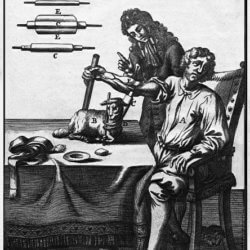

Since the blood harvesting results in so many horseshoe crabs dying, researchers have been exploring alternative methods.

One promising new technology is gene editing, which could offer a solution.

With this technology, researchers can synthesise an artificial version of the substance that reacts to bacteria and causes the horseshoe crab blood to clot.


This is an excerpt. Read the full article here

{{ reviewsTotal }}{{ options.labels.singularReviewCountLabel }}
{{ reviewsTotal }}{{ options.labels.pluralReviewCountLabel }}
{{ options.labels.newReviewButton }}
{{ userData.canReview.message }}

Related Articles

Infographic: Global regulatory and health research agencies on whether glyphosate causes cancer

Infographic: Global regulatory and health research agencies on whether glyphosate causes cancer

Does glyphosate—the world's most heavily-used herbicide—pose serious harm to humans? Is it carcinogenic? Those issues are of both legal and ...

Most Popular

Screenshot-2026-04-22-at-12.21.32-PM
Viewpoint: Why the retracted Monsanto glyphosate study doesn’t change the science—the world’s most popular herbicide is safe 
Picture1
The FDA couldn’t find a vaccine safety crisis, so it buried its own research
ChatGPT-Image-Apr-16-2026-02_56_53-PM
Financial incentives, over diagnosis, and weak oversight: Autism claims are driving up Medicare costs
global warming
‘Implausible’: Top climate scientists reject worst-case scenario—soaring temperatures and fast-rising sea levels
ChatGPT-Image-May-1-2026-11_42_59-AM-2
Viewpoint: NAD is the wellness grifters latest evidence-lite longevity fad. At least the mice are impressed.

Sorry. No data so far.

glp menu logo outlined

Get news on human & agricultural genetics and biotechnology delivered to your inbox.