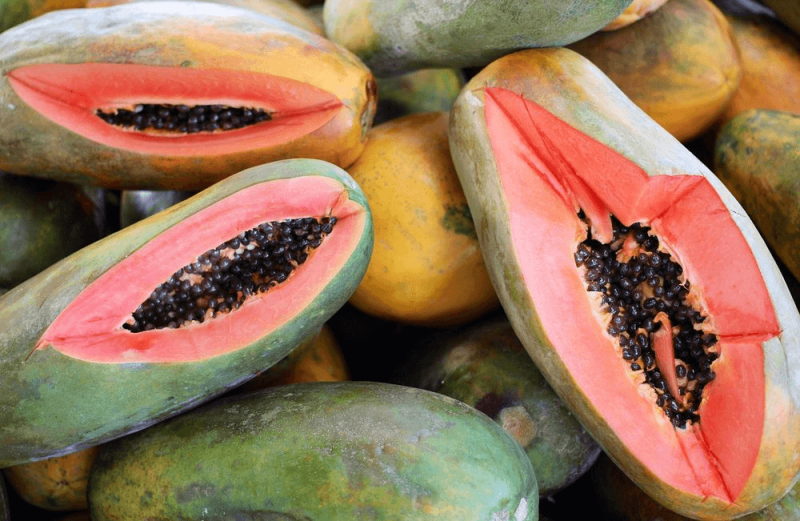
In 1998, the papaya industry in Hawaii was on the verge of collapse due to an uncontrollable virus. In just 6 years, an outbreak of the papaya mosaic virus had devastated the archipelago’s main orchards.
Briefly, the team coordinated by [Cornell researcher Dennis] Gonsalves bombarded papaya embryos with tungsten particles containing the gene for a virus protein. According to the scientific concept of “pathogen-derived resistance”, the viral protein should function as a vaccine, stimulating natural defense mechanisms in the plant that would prevent the progression of future infections. From the modified embryos, the researchers then generated lines of papayas that were exposed to the virus in greenhouse and field trials. By the end of 1992 it was already clear that one of the transformed plants exhibited significant resistance to the virus. The resistant plant was then crossed with commercial cultivars, creating the “Rainbow” variant.
…
The adoption of the transgenic “Rainbow” papaya in Hawaii was extremely rapid and its impact was significant. Local agriculture has been revitalized, population food security has strengthened and small farmers have regained a stable source of income. Resistance to the mosaic virus remained and consumer acceptance was excellent, such that in 2015, around 85% of papayas grown in Hawaii were transgenic.
…

Controversies surrounding GM foods persist… The story of the “Rainbow” papaya shows, however, that sometimes there are critical situations in which it becomes unethical to ignore or discard genetic modification technologies.
[Editor’s Note: This article has been translated from Portuguese and edited for clarity]