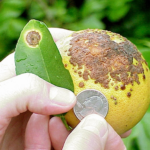
When you think of GMOs, controversial products like Monsanto’s herbicide-tolerant RoundupReady corn might spring to mind. However, the world of genetically modified crops extends far beyond such familiar examples. And although biotechnology in agriculture remains controversial, the positive impact of many genetically modified and gene edited crops is undeniable. Consider the Rainbow Papaya, a lifeline for Hawaii’s papaya industry against a devastating virus.
Biotech crops have increased crop yields, protected crops from pests and disease, decreased pesticide use, limited deforestation, and reduced emissions. To continue growing these benefits, biotech crop developers must be able to bring their products to market. But first, they need to demonstrate safety and responsible use of the technology. Failure to do so risks backlash that could stymie the future of promising technologies.
Beyond agricultural crops, genetically modified trees for conservation are garnering attention. The genetically-modified, disease-resistant American Chestnut rose to prominence first, and captured attention in the US. But over the past couple years, a company called Living Carbon emerged with a genetically-modified “photosynthesis enhanced” poplar that grows faster, with the goal of increasing carbon sequestration.
Meeting regulatory requirements can be a challenge, and regulators responded very differently to the two trees. And a closer look at Living Carbon’s progress shows additional challenges that developers face in demonstrating responsible use of genetic modification for a new type of product.

How should biotech developers demonstrate safety and responsible use?
There are many different ways for developers of biotech products to demonstrate safe and responsible use of the technology, whether it’s a more nutritious gene-edited tomato or a genetically modified tree for conservation.
Being transparent about the advantages and disadvantages of products, explaining how a product is fit for purpose, sharing company practices, conducting safety and efficacy research, sharing information about regulatory approval, and engaging with stakeholders all represent important steps that biotech crop developers must take to win consumer trust.
Historically, the main biotech crops have 1) benefited farmers more directly than consumers, 2) been tied to pesticide and herbicide use, and 3) been eaten by consumers only in processed forms, and mainly eaten by livestock. These include genetically modified insect-resistant and herbicide-tolerant maize, soybean, cotton, canola, and sugarbeet.
Biotechnology is now expanding to consumer-oriented crops, thereby increasing visibility of the technology. For instance, while an older high-oleic soybean gene-edited using TALEN technology was marketed to restaurants, new biotech crops like the high-GABA tomato and high-anthocyanin tomato are available for consumers to directly purchase. Strong consumer backlash to first-generation GMOs suggests that developers must do more to build public trust and support for biotechnology, which could enable greater use and greater public benefits.
There’s an even more urgent need for companies to follow practices for responsible use when developing genetically modified plants for conservation that would be grown in the wild, such as the disease-resistant American Chestnut and fast-growing poplars. Genetically modified plants for conservation can pose different challenges compared to crop plants because they are better adapted to survive and spread without human cultivation, and may have a greater chance of cross pollination with wild plants.
A tale of two trees: regulatory response
The American Chestnut dominated Eastern US forests until it was decimated in the early 20th century by Chestnut blight, caused by the fungus Cryphonectria parasitica. The American Chestnut Foundation has led a decades-long effort to develop a blight-resistant tree, both through genetic modification and conventional breeding. The State University of New York College of Environmental Science and Forestry (SUNY-ESF) has led development of the genetically modified ‘Darling’ blight resistant trees through The American Chestnut Research and Restoration Project.
Living Carbon’s genetically-modified “photosynthesis enhanced” poplars are meant to grow faster and sequester more carbon. The company’s genetically modified trees contain two added genes from other species —and have decreased expression of an existing gene, together meant to make the process of photosynthesis more efficient — allowing their poplars to take more carbon dioxide from the air and turn it into energy for growth.
SUNY-ESF submitted the ‘Darling’ blight-resistant genetically modified chestnuts for regulatory review in the US first, in 2020. But Living Carbon’s lesser-known genetically modified tree beat the chestnut to the stage of large-scale plantings after applying in 2020 and receiving confirmation 3 months later that it isn’t subject to premarket regulation under USDA’s biotechnology-specific rule.
Living Carbon is now marketing the poplars as a tool for carbon sequestration that can provide income for land owners by generating carbon credits. The first planting of these genetically modified trees was in early 2023 on a timber plantation in Georgia, making them likely the first genetically modified plants outside of confined research trials or an agricultural setting. The company planted a second set of trees in May 2023 on abandoned mineland in Ohio, and their website lists an additional planting in Georgia. In total, Living Carbon planted over 170,000 trees by 2024, 8,900 of which are the genetically modified poplars. The company aims to reach a much larger goal of 4 million trees planted by the end of 2024.
Though SUNY-ESF’s blight-resistant genetically modified chestnut has been under regulatory review in the US since 2020 with public support from The American Chestnut Foundation, in December 2023 the foundation withdrew support for the applications due to poor performance of the trees that year. However, SUNY-ESF says there are no major problems with the trees’ performance and they will continue to support the application for regulatory approval and study the trees’ suitability for large-scale restoration. The American Chestnut Foundation continues working toward restoration of the American chestnut.
Transparency and responsible stewardship
Both SUNY-ESF and The American Chestnut Foundation websites contain general and technical information about the organizations’ varied strategies for restoration, including clear descriptions of the use of genetic modification to create disease resistance, and shares data from safety studies for the genetically modified trees. In addition, SUNY-ESF and The American Chestnut Foundation both explain the reasoning behind their respective decisions to continue or withdraw support for the regulatory application for one of the ‘Darling’ genetically modified trees.

The public benefit corporation Living Carbon has taken significant steps to be transparent and to demonstrate safe and responsible use of their technology. The company has published data from greenhouse trials of their modified poplars, including the exact genes they inserted into the poplars — information companies often deem confidential. The company’s website describes their engagement with regulatory authorities, approach to limiting spread of the fast-growing trait, use of mixed-species plantings for habitat restoration, and approach to carbon credits. Despite following these key practices for consumer acceptance, additional questions for Living Carbon remain unanswered.
The USDA’s exemption of Living Carbon’s poplars opens the company to public backlash. Because USDA exempted gene gun mediated transformation at the time of their application, Living Carbon did not have to provide the same level of documentation about the risk of their plant spreading as many other developers of genetically modified crops. If Living Carbon submitted the same genetically modified poplars today, the trees would likely not be exempted and the company would need to provide more information in order for USDA to conduct a review of the product for potential plant pest risk. Considering this, the company could take additional steps to build public trust by demonstrating that their trees meet the same standards as regulated genetically modified plants.
Living Carbon’s published data shows that the most successful of their genetically-modified poplars accumulated 35–53% more biomass than non-genetically modified poplars over four months in a controlled environment greenhouse study. However, greenhouse trials are far from a guarantee that plants will perform similarly outdoors. Field trials began in Summer 2021 and Living Carbon reportedly received promising initial results in April 2023, but the data has not been publicly released.
Many experts say there’s not yet enough information to assess the efficacy of Living Carbon’s poplars, in particular their ability to thrive in the wild. The company genetically modified a type of poplar that is not native to the Southeast and may be unsuitable to the climate; the individuals planted have little genetic variation that could make stands more resilient; and faster growth often decreases plant fitness in other ways, for example by increasing susceptibility to disease. In addition, even if the company releases data from the field trials, these are still under favorable conditions — i.e. with irrigation and fertilizer — which the trees planted for restoration purposes do not have. These field trial results would also not be generalizable to Living Carbon’s actual product, because the trees are genetically different from those being planted on private land and used to generate carbon credits. As far as the first 2023 planting on private land in Georgia, the company says it is doubling as another study site where the trees’ growth will be assessed.
All this information raises concerns that Living Carbon is moving too quickly with a product that may not live up to expectations. Even though the company is explicitly choosing to move quickly — citing the urgency of climate change and the need to scale carbon sequestration — failure of their trees to succeed in the wild could still jeopardize support for other ongoing efforts to develop biotech plants for wild release, and for biological carbon sequestration generally.
In comparison, in public statements about choosing to withdraw support for the current genetically modified disease-resistant American Chestnut undergoing regulatory review at USDA, The American Chestnut Foundation said “One of the major lessons learned from this process is the need to have field test data and results, not just lab and greenhouse data, available prior to plans for deployment and release of a given product.” In addition, the foundation cited concern that by further developing these trees that now have scientifically validated genetic issues they could “decrease public acceptance of the use of biotechnology in forest health and restoration efforts”.
Further uncertainty about Living Carbon’s product comes from the fact that the modified poplars used for the greenhouse experiments and field trials are different from those planted in much larger numbers in Georgia and Ohio in 2023, and on which the carbon credits are based. The two sets of trees were created using different techniques, and only those with the genetic insertion made using a gene gun are exempt from USDA’s biotech-specific SECURE rule and allowed for wild planting. In contrast, those with the genetic insertion made using Agrobacterium can only be planted in controlled greenhouse and field trial conditions. Each individual with the genetic insertion is different, so they will not all demonstrate the same improvement in photosynthesis and biomass production. For example, the company initially created 41 separate trees using Agrobacterium-mediated transformation — all with the same genetic sequence added — but it was the descendants from just one of those 41 that showed the dramatic 35–53% increase in biomass accumulation. So while the data from greenhouse trials is promising, the real proof of success must come from outdoor trials using the same type of trees that are being planted at scale, which Living Carbon has not published or indicated plans to share publicly.
As for environmental safety, experts say that while the poplars could get pollinated by wild trees and spread, the chance of them becoming a weed is quite low, and the more likely outcome is that they’ll survive poorly in the wild. The FAQ section on Living Carbon’s website addresses some safety and environmental concerns broadly, such as whether the modified poplars will be able to reproduce and spread. However, the company doesn’t provide any specific information or published data on this risk, and could do more to address this common public concern. For example, SUNY-ESF’s website summarizes research on the environmental impacts of their genetically-modified disease-resistant American Chestnut.
What can other stakeholders do?
In addition to practices that developers of biotech products can use to demonstrate safe and responsible use of the technology, other stakeholders like consumer- and environmentally-focused organizations can help ensure that the technology is being used responsibly, and communicate when it is.
As discussed above, CRISPR gene editing has spurred efforts at education and stakeholder engagement around the technology. Many of these efforts are specifically focused on gene editing, but are in principle largely applicable to other biotechnologies including genetic modification. One such effort is the Center for Food Integrity’s Framework for Responsible Gene Editing in Agriculture, which is “intended to increase transparency and stakeholder engagement to build trust in the products derived through gene editing and those using them”. Developers using gene editing may voluntarily participate in a verification program to demonstrate they are operating in conformance with the Framework, with the goal of supporting the acceptance of gene editing technology in agriculture and food. Many of the Framework practices for demonstrating safe and responsible use of gene editing technology are mentioned throughout this article.
Another effort in this space was a publication in 2021 by a group of environmental, conservation, and consumer NGOs on Responsible governance of gene editing in agriculture and the environment. The publication outlined six principles from “Risk avoidance and delivery of tangible societal benefits” to “Inclusive access to technology and resources”. This publication demonstrates a consensus by a variety of NGOs on the most important high-level principles for responsible use of biotechnologies, and provides priorities for further engagement.
Researchers and organizations working on specific applications of biotech can also develop standards for responsible use in their fields. For example, researchers convened by Revive and Restore, a wildlife conservation organization, published about how to apply the Responsible Research and Innovation framework to genetic interventions for species conservation.
As public outrage over the first generation of GMOs suggests, earning stakeholder trust before moving forward with applications of biotechnology is important to avoid backlash that can stymie the future of promising technologies. Developers of biotech plants must be proactive about demonstrating to stakeholders that they are using the technology responsibly, and NGOs and others who want to see applications of biotechnology succeed can help move the conversation forward. Climate action is urgent, but it’s also a marathon, not a sprint. Sustaining a rapid pace of decarbonization requires building long-term public support for genetically modified crops and other mitigation and adaptation technologies.
Emma Kovak is a senior Food and Agriculture Analyst at Breakthrough. Find Emma on X @EmmaKovak
A version of this article was originally posted at the Breakthrough Institute and is reposted here with permission. Any reposting should credit both the GLP and original article. The Breakthrough Institute can be found on X @TheBTI