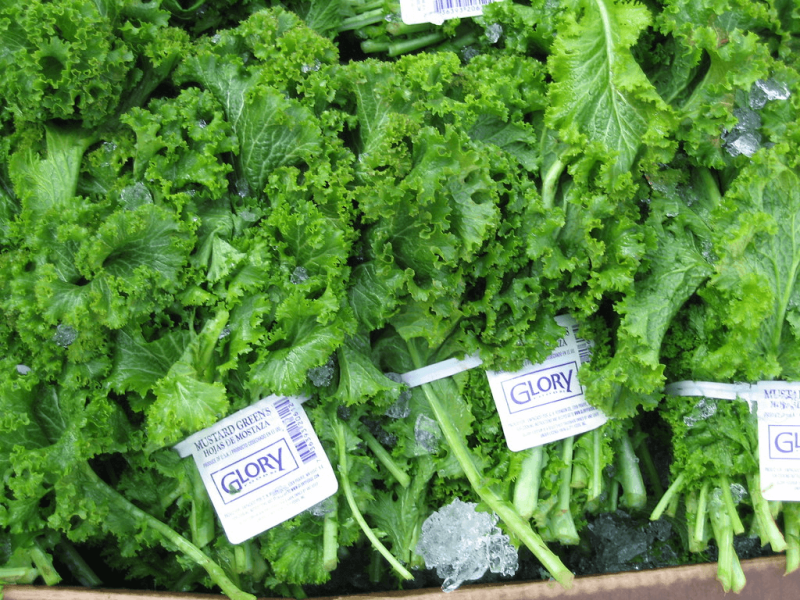
Last year, startup Pairwise started selling the first food in the US made with Crispr technology: a new type of mustard greens with an adjusted flavor. But chances are, most consumers never got to sample them. The company introduced the greens to the food service industry—select restaurants, cafeterias, hotels, retirement centers, and caterers—in just a few cities. A single grocery store in New York City also stocked them.
Now, biotech giant Bayer has licensed the greens from Pairwise and plans to distribute them to grocery stores across the country. “We hope to have product reaching kitchen and dinner tables in the fall of this year,” says Anne Williams, head of protected crops in Bayer’s vegetable seeds division.
Pairwise was looking to make salads more appetizing and nutritious, and the company targeted mustard greens because of their high nutritional value, which is similar to kale. But their peppery, bitter taste means they’re not often eaten raw. Instead, they’re usually cooked to make them more palatable. Pairwise aimed to tone down the flavor while keeping all the fiber, antioxidants, and other nutrients that mustard greens offer. The company used Crispr to remove several copies of a gene responsible for their pungency.
…

Bayer and Pairwise are hoping this distinction will make consumers more open to gene-edited foods than traditional GMOs, which have faced consumer backlash in the US and elsewhere. While decades of research has concluded that genetically modified crops are safe and just as healthy as their traditionally bred counterparts, public confusion around how GMOs are created and misinformation on their supposed risks still persist.