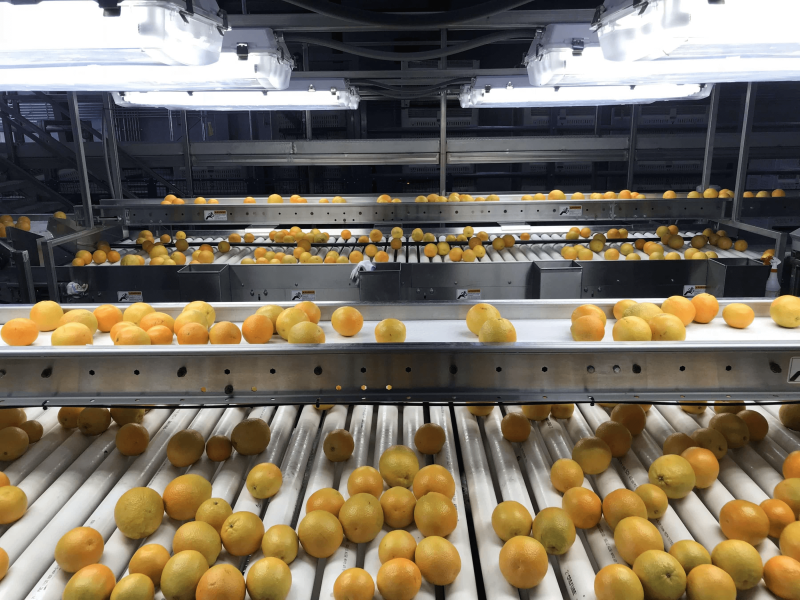
Antibacterial wax coating made from cinnamon? Here is a ‘natural’ way to extend shelf life of food

Credit: Fruit Growers Supply

A team of researchers at Texas A&M University determined a way to make fruits and vegetables last longer — using only ingredients approved by the FDA as antibacterial agents.

The research team, led by professors Mustafa Akbulut and Luis Cisneros-Zevallos, created a nano-encapsulated cinnamon-bark essential oil in protein carriers and then blended that with the wax coating already applied to many fruits and vegetables, which prevents water loss and makes them look shinier.

The nano-encapsulated essential oils, the scientists said, prevent bacteria from adhering to the surface of fruits and veggies. The findings were published in the journal Current Research in Food Science.

“When bacteria are exposed to essential oil it can break down the bacterial wall. This technology is going to basically help us inactivate the bacteria and fungi to extend the shelf life,” Akbulut explained, per AzoNano.
Follow the latest news and policy debates on sustainable agriculture, biomedicine, and other ‘disruptive’ innovations. Subscribe to our newsletter.

Produce with a longer shelf life would be a win for the food industry, as it would reduce the amount of product rendered inedible before it is sold and consumed. It would also be a win for the planet — when fruits and vegetables are thrown away, they are often sent to a landfill, where they take up space and release planet-overheating gases as they decompose.

This is an excerpt. Read the original post here

{{ reviewsTotal }}{{ options.labels.singularReviewCountLabel }}
{{ reviewsTotal }}{{ options.labels.pluralReviewCountLabel }}
{{ options.labels.newReviewButton }}
{{ userData.canReview.message }}

Related Articles

Infographic: Global regulatory and health research agencies on whether glyphosate causes cancer

Infographic: Global regulatory and health research agencies on whether glyphosate causes cancer

Does glyphosate—the world's most heavily-used herbicide—pose serious harm to humans? Is it carcinogenic? Those issues are of both legal and ...

Most Popular

Screenshot-2026-04-13-at-1.39.26-PM
Viewpoint: ‘Safer for children?’ Stonyfield yogurt under fire for deceptive organic marketing
Screenshot-2026-04-22-at-10.46.29-AM
Viewpoint: How to counter science disinformation? Science journalist offers 12 practical tips
ChatGPT-Image-May-7-2026-12_16_37-PM-2
Viewpoint: Are cancer rates ‘skyrocketing’ as RFK, Jr. and MAHA claim? The evidence says mostly the opposite
Picture1-14
When superbugs threaten vulnerable children: Can AI help solve antibiotic resistance?
ChatGPT-Image-May-12-2026-08_39_41-PM
GLP podcast: Big Pharma, Big Ag, Big Food—health harming industries or life-saving innovators?
Screenshot-2026-04-23-at-11.00.36-AM
Regulators' dilemma: Thalidomide, Metformin, and the cost of getting drug approvals wrong
Picture1-1
Cooling the planet with balloons: Could a geoengineering gamble slow global warming?
png-pill-omega-Supp-fish-oil
Millions take omega-3 fish oil for brain health. New research suggests it may do the opposite.
bigstock opioids on chalkboard with rol
GLP podcast: 'Safe injection sites': enabling drug addiction or saving lives?
glp menu logo outlined

Get news on human & agricultural genetics and biotechnology delivered to your inbox.