Supercharged sugarcane: How CRISPR gene-editing angles of leaves optimizes photosynthesis and boosts crop yields nearly 20%

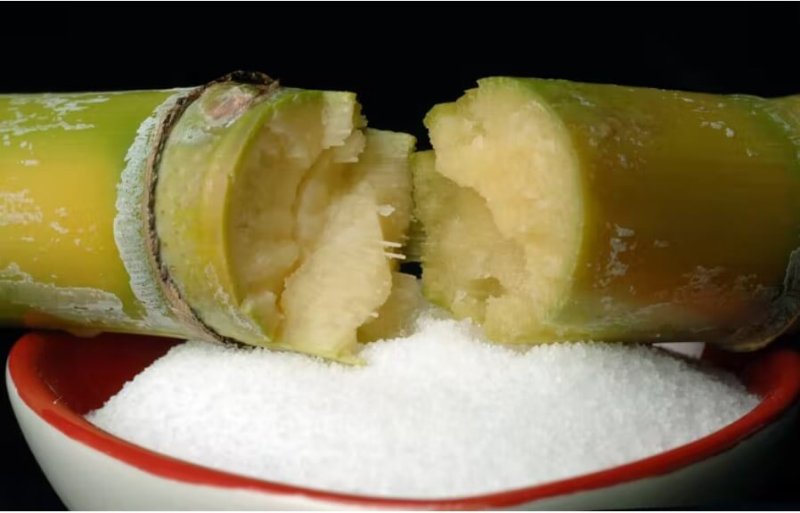
Sugarcane and sugar. Credit: Carl Davies

In a new study, researchers used the genetic scissors CRISPR/Cas9 system to tweak the leaf angle in sugarcane, enabling the plant to capture more sunlight. This single change had a big effect on the amount of biomass produced.

Sugarcane is one of the most important crops in the world. In fact, by biomass yield, it’s the world’s largest crop, with almost 2 billion tons being produced every year. It produces 80% of the sugar the entire world uses. But there’s another reason why scientists are interested in it: biofuel.

Because the sugarcane plant is pretty big and uses water very efficiently, it’s a prime candidate to produce various bioproducts. But, notably, it is useful in producing biofuel. Currently, Sugarcane is used to produce almost 40% of global biofuels.

Follow the latest news and policy debates on sustainable agriculture, biomedicine, and other ‘disruptive’ innovations. Subscribe to our newsletter.

Three transgenic lines with varying levels of LG1 co-editing (12%, 53%, and 95%) were cultivated under greenhouse and field conditions. These trials revealed that as the co-editing frequency increased, the leaf inclination angle became more upright. The most notable results were observed in the line with 12% co-editing, which caused a 56% decrease in the leaf inclination angle and an 18% increase in dry biomass yield.

The implications of this research are profound and can mark a significant milestone in editing crops. It shows how a genetic tool can optimize leaf architecture, opening up an exciting new avenue for enhancing biomass yield, a critical factor for many different crop plants.


{{ reviewsTotal }}{{ options.labels.singularReviewCountLabel }}
{{ reviewsTotal }}{{ options.labels.pluralReviewCountLabel }}
{{ options.labels.newReviewButton }}
{{ userData.canReview.message }}

Related Articles

Infographic: Global regulatory and health research agencies on whether glyphosate causes cancer

Infographic: Global regulatory and health research agencies on whether glyphosate causes cancer

Does glyphosate—the world's most heavily-used herbicide—pose serious harm to humans? Is it carcinogenic? Those issues are of both legal and ...

Most Popular

ChatGPT-Image-May-7-2026-12_16_37-PM-2
Viewpoint: Are cancer rates ‘skyrocketing’ as RFK, Jr. and MAHA claims? The evidence says mostly the opposite
ChatGPT-Image-May-13-2026-11_56_08-AM
After slashing global health aid by $19 Billion, Trump moves to tap $2.1 billion more—to cover shutdown costs
Screenshot-2026-04-22-at-10.46.29-AM
Viewpoint: How to counter science disinformation? Science journalist offers 12 practical tips
ChatGPT-Image-May-12-2026-08_39_41-PM
GLP podcast: Big Pharma, Big Ag, Big Food—health harming industries or life-saving innovators?
Screenshot-2026-04-23-at-11.00.36-AM
Regulators' dilemma: Thalidomide, Metformin, and the cost of getting drug approvals wrong
png-pill-omega-Supp-fish-oil
Millions take omega-3 fish oil for brain health. New research suggests it may do the opposite.
Screenshot-2026-02-20-at-10.48.04-AM
Deepfakes raise profound ethical questions in science
Picture1-5
Science Disinformation Gap: The transatlantic battle over social media and censorship
Picture1-1
Cooling the planet with balloons: Could a geoengineering gamble slow global warming?
Screenshot-2026-05-08-at-3.40.33-PM
Seeds of power: China turns to genetic engineering to become global superpower
ChatGPT-Image-May-12-2026-01_41_42-PM
Viewpoint: ‘Measles is a canary in the healthcare coal mine’: Challenging RFK, Jr.’s scare campaign
donut-decorated-with-e-food-additives-tablets
RFK, Jr. is targeting chemical food additives. What does science tell us?
glp menu logo outlined

Get news on human & agricultural genetics and biotechnology delivered to your inbox.