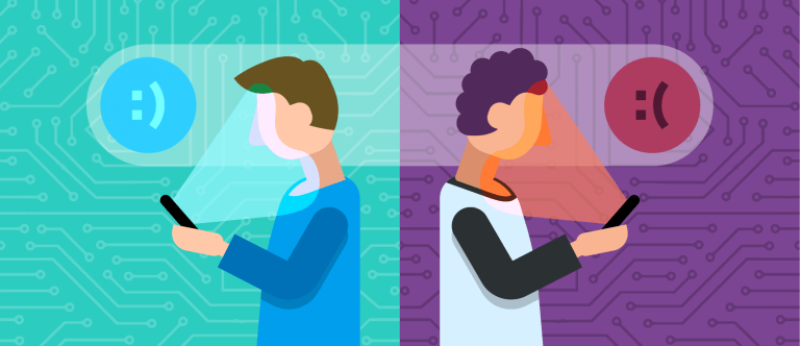
Technology and mental illness: ‘New wave of tools offers quicker, more objective assessments to help patients and doctors’

Credit: August
Credit: August

Whoever said the eyes are the windows to the soul probably didn’t imagine them being a key to diagnosing severe mental health conditions. But some research shows that what a person focuses on and how their pupils respond, among other eye movements, can reveal the presence of depressionPTSD or schizophrenia, as well as developmental disabilities like autism.

Now, Senseye, a Texas-based mental health platform, is aiming to bring that research out of the laboratory and into therapists’ offices and patients’ homes. The company is testing a phone app that measures how people’s eyes respond to various visual tasks as a way to detect PTSD.

Follow the latest news and policy debates on sustainable agriculture, biomedicine, and other ‘disruptive’ innovations. Subscribe to our newsletter.

The effort is part of a new wave of tech-based solutions aimed at improving the accuracy and speed of mental health diagnoses. These digital tools are at various stages of readiness, with some still in the validation testing stage and others already in use by health systems, schools, criminal justice systems and clinical offices.

Clinicom is an adaptive digital assessment tool sent by practitioners to patients that can screen for more than 80 mental health conditions in five languages.

The program uses augmented intelligence, so it learns from how the clinicians respond to the recommended diagnoses. In an open letter, Christopher Lucas, a psychiatrist at Upstate Medical University, said, “Clinicom can efficiently and accurately assess the full picture of a patient’s presentation, while allowing our clinicians to retain full diagnostic control—reducing false positives and negatives.”

“With Clinicom, I can screen an entire school district or the entire state of New York in a day,” Handal says. “It [the test] feels like it’s listening. And if it listens, people want to trust it more.”


This is an excerpt. Read the original post here

{{ reviewsTotal }}{{ options.labels.singularReviewCountLabel }}
{{ reviewsTotal }}{{ options.labels.pluralReviewCountLabel }}
{{ options.labels.newReviewButton }}
{{ userData.canReview.message }}

Related Articles

Infographic: Global regulatory and health research agencies on whether glyphosate causes cancer

Infographic: Global regulatory and health research agencies on whether glyphosate causes cancer

Does glyphosate—the world's most heavily-used herbicide—pose serious harm to humans? Is it carcinogenic? Those issues are of both legal and ...

Most Popular

ChatGPT-Image-Jun-19-2026-04_11_20-PM
Daubert for Dummies—Scientific Reliability in U.S. Courts: Daubert, Rule 702, and Made-for-Litigation Evidence
ChatGPT-Image-Jun-25-2026-01_14_50-PM
Viewpoint: Disinformation grift: The wellness industry is a lucrative and mostly worthless marketplace of ‘balms, brews, and baloney’
ChatGPT-Image-Jun-25-2026-12_23_17-PM
No, Bill Gates did not secretly engineer ticks to promote veganism
ChatGPT-Image-Mar-10-2026-01_39_01-PM
Viewpoint—“Miracle molecule” debunked: Why acemannan supplements don’t work
ChatGPT-Image-Jun-30-2026-01_09_47-PM
Viewpoint: As MAHA blows up over Supreme Court ruling limiting glyphosate litigation, Trump offers toothless plan to reduce pesticides in food
ChatGPT-Image-Jun-23-2026-12_19_35-PM
Ideological red flag: Led by anti-vax doctor, Tennessee is now the U.S. epicenter selling potent ivermectin shown worthless to prevent or treat Covid
Screenshot-2026-06-05-at-2.12.30-PM
Some plants can poison you. So how did humans figure out what is safe to eat?
ChatGPT-Image-May-18-2026-12_06_18-PM-2
Defying death: The immortality movement goes mainstream

Sorry. No data so far.

glp menu logo outlined

Get news on human & agricultural genetics and biotechnology delivered to your inbox.