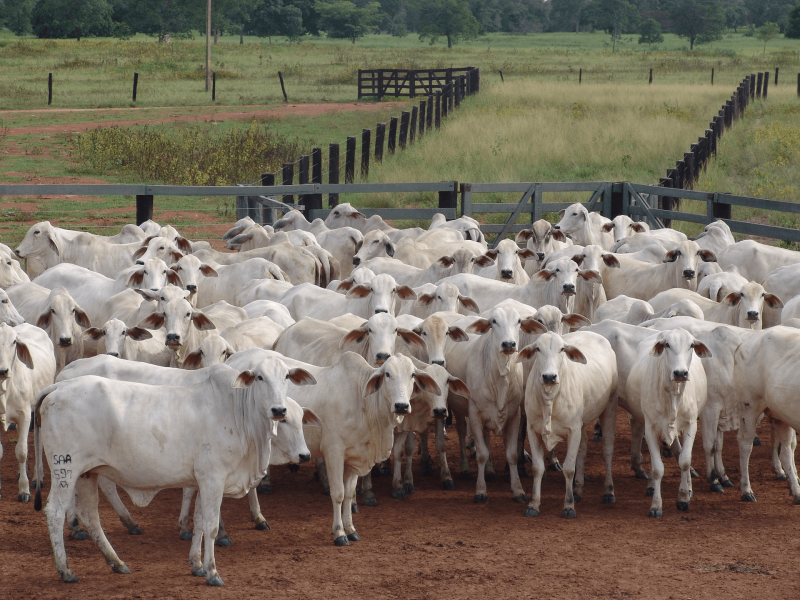
Methane-free cows? Editing genes of gut microbes responsible for emissions could be one-time treatment for climate-friendly cattle

Credit: Erico Ericojr via  Pixabay
Credit: Erico Ericojr via Pixabay

Fromย feed supplementsย toย animal breedingย toย vaccines, multiple approaches are being explored to cut methane emissions from belching ruminants. But if you can edit the genes of the microbes responsible for the problem with a one-time treatment, saysย Professor Ermias Kebreab,ย you could change the game.

โ€œItโ€™s high-risk, high reward, but if it works, you wonโ€™t have to do anything else.โ€

Aย potent greenhouse gas,ย methane is generated by manure as it decomposes.ย It is alsoย burped outย by ruminants, who produce it in a stomach compartment called the rumen. Here, microbes break down complex carbs and produce gases that are converted into methane by another set of microbes (methanogens).

Dr. Kebreab, a professor at the University of California Davis who has conducted extensive research on livestock methane reduction, is one of a team of academics working on aย $70 million initiativeย backed by theย TED Audacious Project.

Follow the latest news and policy debates on sustainable agriculture, biomedicine, and other ‘disruptive’ innovations. Subscribe to our newsletter.
[Dr. Kebreab:] We donโ€™t know a lot about why [some cows/sheep produce less methane than others], it could be that they are more efficient at feed conversion, or itโ€™s something about the makeup of their microbiome, but we donโ€™t really know too much about it. We need to find out exactly what makes an animal inherently lower methane emitting.

This is an excerpt. Read the original post here

{{ reviewsTotal }}{{ options.labels.singularReviewCountLabel }}
{{ reviewsTotal }}{{ options.labels.pluralReviewCountLabel }}
{{ options.labels.newReviewButton }}
{{ userData.canReview.message }}

Related Articles

Infographic: Global regulatory and health research agencies on whether glyphosate causes cancer

Infographic: Global regulatory and health research agencies on whether glyphosate causes cancer

Does glyphosateโ€”the world's most heavily-used herbicideโ€”pose serious harm to humans? Is it carcinogenic? Those issues are of both legal and ...

Most Popular

Screenshot-2026-04-13-at-1.39.26-PM
Viewpoint: โ€˜Safer for children?โ€™ Stonyfield yogurt under fire for deceptive organic marketing
Screenshot-2026-04-22-at-10.46.29-AM
Viewpoint: How to counter science disinformation? Science journalist offers 12 practical tips
ChatGPT-Image-May-7-2026-12_16_37-PM-2
Viewpoint: Are cancer rates โ€˜skyrocketingโ€™ as RFK, Jr. and MAHA claim? The evidence says mostly the opposite
Picture1-14
When superbugs threaten vulnerable children: Can AI help solve antibiotic resistance?
Screenshot-2026-04-23-at-11.00.36-AM
Regulators' dilemma: Thalidomide, Metformin, and the cost of getting drug approvals wrong
ChatGPT-Image-May-12-2026-08_39_41-PM
GLP podcast: Big Pharma, Big Ag, Big Foodโ€”health harming industries or life-saving innovators?
Picture1-1
Cooling the planet with balloons: Could a geoengineering gamble slow global warming?
png-pill-omega-Supp-fish-oil
Millions take omega-3 fish oil for brain health. New research suggests it may do the opposite.
ChatGPT-Image-May-7-2026-12_32_36-PM
Viewpoint: The state of U.S. vaccine policy? Dismal nationally, but some states are stepping up.
glp menu logo outlined

Get news on human & agricultural genetics and biotechnology delivered to your inbox.