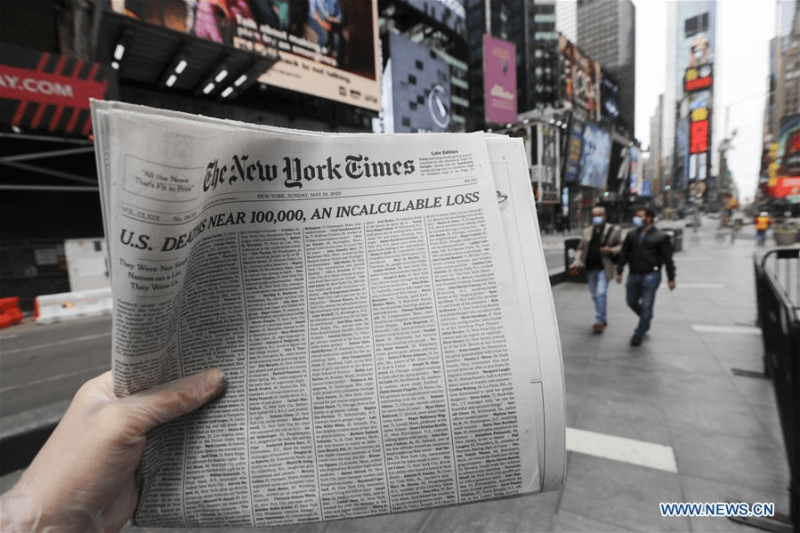
Viewpoint: Science Based Medicine challenges two recent New York Times articles ‘misrepresenting’ the science on COVID

139085079_15903952263501n

The New York Times’ science reporters have provided outstanding coverage of Covid-19 since the earliest days in 2020, including how the pandemic started. Unfortunately, the paper’s opinion desk has had a far more checkered record, culminating in two highly controversial essays that were released online [recently] and co-published in a two-page spread in the print edition on Sunday, June 9. The Times has made it clear to colleagues that it is not interested in considering articles that rebut these two essays. Despite that attitude, the outlandish nature of the two articles does require a public reckoning.

The essay by Alina Chan reiterates speculation that the Covid-19 pandemic originated via a leak of an infectious virus from the Wuhan Institute of Virology (WIV), in Wuhan, China, in late 2019.

Follow the latest news and policy debates on sustainable agriculture, biomedicine, and other ‘disruptive’ innovations. Subscribe to our newsletter.

The accompanying essay by Zeynep Tufekci blames scientists and public health specialists in the Trump administration for poor decision-taking and messaging in the tumultuous early months of the pandemic. Having 20/20 hindsight about 2020 is all very well, but not to us, who also remember what it was like in February through April of that year.

Does the Times truly seek to energize the anti-science agenda that is now such a feature of right-wing media outlets such as the New York Post, the Washington Examiner, the Epoch Times? It would not have surprised us to see the Chan and Tufekci essays on those websites. But to see them in The New York Times was simply shocking.

This is an excerpt. Read the full article here 

{{ reviewsTotal }}{{ options.labels.singularReviewCountLabel }}
{{ reviewsTotal }}{{ options.labels.pluralReviewCountLabel }}
{{ options.labels.newReviewButton }}
{{ userData.canReview.message }}

Related Articles

Infographic: Global regulatory and health research agencies on whether glyphosate causes cancer

Infographic: Global regulatory and health research agencies on whether glyphosate causes cancer

Does glyphosate—the world's most heavily-used herbicide—pose serious harm to humans? Is it carcinogenic? Those issues are of both legal and ...

Most Popular

Screenshot-2026-04-13-at-3.54.04-PM
AI disinformation stress test: Challenges and response strategies
ChatGPT-Image-Feb-16-2026-01_04_32-PM
Raw milk myth wake-up call
ChatGPT-Image-Apr-20-2026-11_17_18-AM-2
10,000 scientists gone: Trump’s cuts create an unprecedented brain drain
Screenshot-2026-04-12-135256
Bixonimania: The fake disease scam that AI swallowed whole
ChatGPT-Image-Apr-23-2026-09_20_20-PM
Kennedy’s CDC blocks publication of study that shows vaccines reduce hospitalizations by 50%, then misrepresents why

Sorry. No data so far.

glp menu logo outlined

Get news on human & agricultural genetics and biotechnology delivered to your inbox.