‘Neanderthals cared for and looked after their vulnerable companions’: Human ancestor child with Down syndrome lived to 6 years old

‘Neanderthals cared for and looked after their vulnerable companions’: Human ancestor child with Down syndrome lived to 6 years old
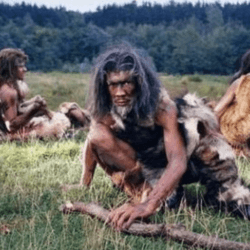
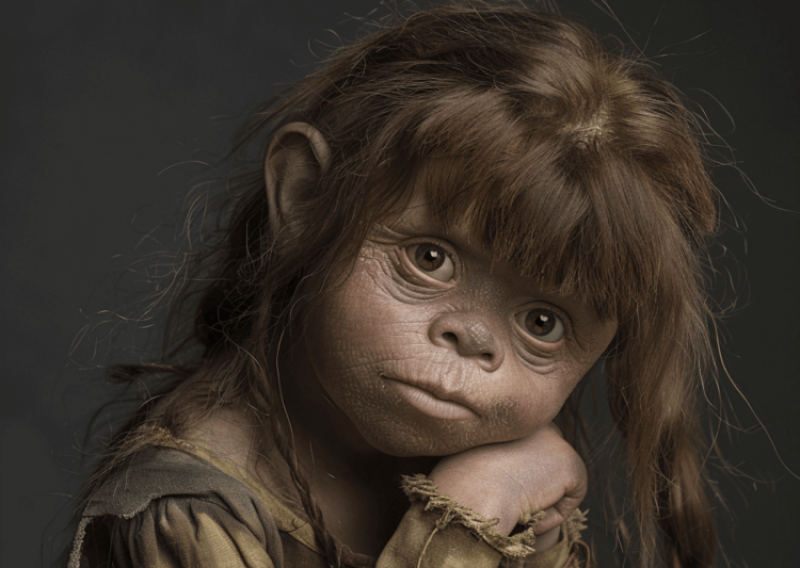
Credit: Midjourney/ Heenan

A Neanderthal child with Down’s syndrome survived until at least the age of six, according to a new study whose findings hint at compassionate caregiving among the extinct, archaic human species.

While the researchers cannot be certain whether the fossil was that of a girl or a boy, they have nicknamed the Neanderthal child “Tina”.

Tina’s combination of inner-ear abnormalities is known only in people with Down’s syndrome.

“The pathology which this individual suffered resulted in highly disabling symptoms, including, at the very least, complete deafness, severe vertigo attacks and an inability to maintain balance,” said Mercedes Conde-Valverde, a palaeoanthropologist at the University of Alcalá in Spain, lead author of the study, published in the journal Science Advances.

“Given these symptoms, it is highly unlikely that the mother alone could have provided all the necessary care while also attending to her own needs. Therefore, for Tina to have survived for at least six years, the group must have continuously assisted the mother, either by relieving her in the care of the child, helping with her daily tasks, or both,” Conde-Valverde added.

Follow the latest news and policy debates on sustainable agriculture, biomedicine, and other ‘disruptive’ innovations. Subscribe to our newsletter.

Conde-Valverde said: “The discovery of Tina represents the oldest known case of Down’s syndrome and demonstrates that the diversity observed in modern humans was already present in prehistoric times. This finding ensures that the story of human evolution includes us all.”


This is an excerpt. Read the full article here

{{ reviewsTotal }}{{ options.labels.singularReviewCountLabel }}
{{ reviewsTotal }}{{ options.labels.pluralReviewCountLabel }}
{{ options.labels.newReviewButton }}
{{ userData.canReview.message }}

Related Articles

Infographic: Global regulatory and health research agencies on whether glyphosate causes cancer

Infographic: Global regulatory and health research agencies on whether glyphosate causes cancer

Does glyphosate—the world's most heavily-used herbicide—pose serious harm to humans? Is it carcinogenic? Those issues are of both legal and ...

Most Popular

Screenshot-PM-24
Viewpoint: The herbicide glyphosate isn’t perfect. Banning it would be far worse.
79d03212-2508-45d0-b427-8e9743ff6432
Viewpoint: The Casey Means hustle—Wellness woo opportunism dressed up as medical wisdom
ChatGPT-Image-Mar-10-2026-01_39_01-PM
Viewpoint—“Miracle molecule” debunked: Why acemannan supplements don’t work
d-b
Blocked arteries, kidney stones, nausea, constipation, fatigue: Long list of health problems caused by too much vitamin D 
ChatGPT-Image-Apr-30-2026-05_00_48-PM
Wellness grifter physician turned wellness influencer out as surgeon general nominee
Screenshot-2026-04-30-at-11.33.46-AM
Anti-seed-oil to anti-vax pipeline: MAHA movement spreads to teen influencers
lab grown meat research kelly schultz lehighuniversity main
Profiles of the 10 top global cultured meat companies
ChatGPT-Image-Mar-27-2026-11_27_05-AM
The myths of “process”: What science says about the “dangers’ of synthetic products and ultra-processed foods
Screenshot-2026-04-28-at-1.21.37-PM
How America’s medical system encourages psychiatric overdiagnosis

Sorry. No data so far.

glp menu logo outlined

Get news on human & agricultural genetics and biotechnology delivered to your inbox.