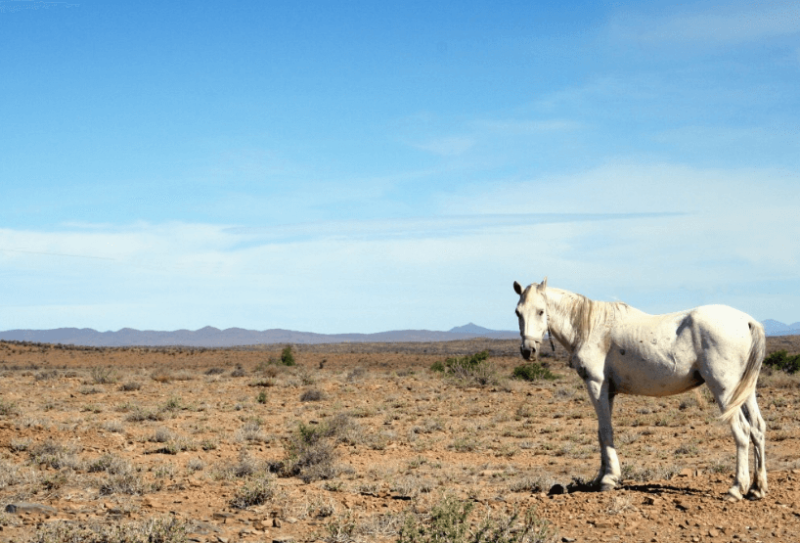
In 2010, when Barry Meijer bought Meijer’s Rust near De Rust in the Klein Karoo, the soil was bare and depleted.
Nevertheless, he managed to produce a small crop of barley and oats each year on the 14ha he had under irrigation, while he restricted his cattle to the hills and mountains, where they primarily lived off spekboom.
About seven years ago, Meijer realised he needed an ‘intervention’ to improve the water-holding capacity of the soil:
“The soil was nothing more than dust. It was dead and compacted, resulting in poor water penetration and a lot of run-off.”
…
“I started reading as much as I could about regenerative agriculture and learnt the importance of building soil carbon to improve the soil structure, create a favourable habitat for soil organisms, and reduce input costs,” he says.
Meijer explains that regenerative agriculture is based on four production principles. The first is minimum disturbance of the soil.

“In the past, I used to plough the land to loosen and improve the water-holding capacity of the soil, but this exacerbated erosion problems and resulted in a lot of topsoil washing away. These days I use a Semeato no-till seeder to plant my cover crops.”
…
The second principle is to have living roots in the soil for as long as possible, while the third emphasises the importance of having as much diversity as possible through, for instance, planting of cover crops.
…
Fourthly, livestock are incorporated into the farming system to improve nutrient cycling through their excretions and movement across fields.