‘Irresponsible’: China bans clinical research on germline human gene editing

com.ft.imagepublish

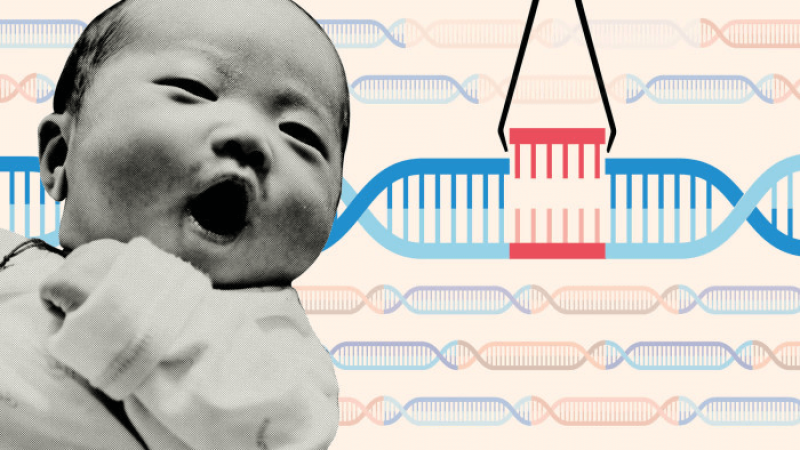
All clinical research involving germline genome editing has been banned by China under a newly released ethics guideline.

Germline gene engineering relates to altering the DNA in sperm, eggs or early embryos to introduce changes that can be inherited.

“Any clinical research involving germline genome editing is irresponsible and not permitted,” according to the Ethical Guideline for Human Genome Editing Research, released [recently] by China’s science and technology ministry.

Follow the latest news and policy debates on sustainable agriculture, biomedicine, and other ‘disruptive’ innovations. Subscribe to our newsletter.
The guideline marks the latest effort from China to tighten ethics reviews and regulations after bioscientist He Jiankui shocked the world in 2018 with the announcement that he had created twin gene-edited babies to make them less vulnerable to HIV/Aids.“Only when benefits, risks and alternative options are fully understood and weighed, when issues of safety and efficacy are addressed, broad social consensus is reached and rigorous evaluation is conducted, could clinical research be considered with strict supervision in place,” the guideline adds.

It also strictly prohibits the use of genome editing research on germ cells, fertilised eggs, or human embryos for reproductive purposes.


This is an excerpt. Read the original post here

{{ reviewsTotal }}{{ options.labels.singularReviewCountLabel }}
{{ reviewsTotal }}{{ options.labels.pluralReviewCountLabel }}
{{ options.labels.newReviewButton }}
{{ userData.canReview.message }}

Related Articles

Infographic: Global regulatory and health research agencies on whether glyphosate causes cancer

Infographic: Global regulatory and health research agencies on whether glyphosate causes cancer

Does glyphosate—the world's most heavily-used herbicide—pose serious harm to humans? Is it carcinogenic? Those issues are of both legal and ...

Most Popular

ChatGPT-Image-Jun-9-2026-01_11_37-PM
Turmeric supplements: More risks than benefits
Screenshot-2026-06-16-at-10.02.22-PM
Viewpoint: ‘Industrial food’ primer—Challenging the dangerous delusions of the alternative food movement
newborn infant baby mother
Facts & Fallacies Podcast: The truth about vitamin K shots
Screen Shot at AM
Facts & Fallacies Podcast: Right-wing politics bad for your health? Separating speculation from science
ChatGPT Image Jun 16, 2026, 12_03_37 PM
Kennedy accused of trying to ‘bully’ science journal that retracted study linking vaccines to infant deaths
Screenshot-2026-06-16-at-11.23.32-AM
In a rebuke to RFK, Jr.’s anti-vax crusade, journal retracts study claiming hepatitis B vaccine–autism link
ChatGPT-Image-Jun-3-2026-04_29_13-PM
Viewpoint: While unvaccinated children are dying overseas, Congress challenges Trump and Kennedy’s block on aid
Screenshot-2026-06-16-at-12.33.01-PM
Who’s responsible when AI lies? Google challenging court ruling that search results are not protected from legal liability
ChatGPT-Image-Jun-15-2026-11_00_13-AM-2
Glucosamine alert: Alzheimer’s progresses faster among those taking the popular supplement
ChatGPT-Image-Jun-15-2026-12_13_41-PM
Viewpoint: Behind the effort to re-purpose the tobacco attack strategy to fight ultra-processed foods
Screenshot-2026-06-16-at-12.46.54-PM
Viewpoint: “Dead Wrong”—Understanding healthcare’s misinformation epidemic
Screenshot-2026-06-05-at-2.12.30-PM
Some plants can poison you. So how did humans figure out what is safe to eat?
ChatGPT-Image-Mar-10-2026-01_39_01-PM
Viewpoint—“Miracle molecule” debunked: Why acemannan supplements don’t work
glp menu logo outlined

Get news on human & agricultural genetics and biotechnology delivered to your inbox.