Podcast:
Podcast: Play in new window | Download
Subscribe: RSS
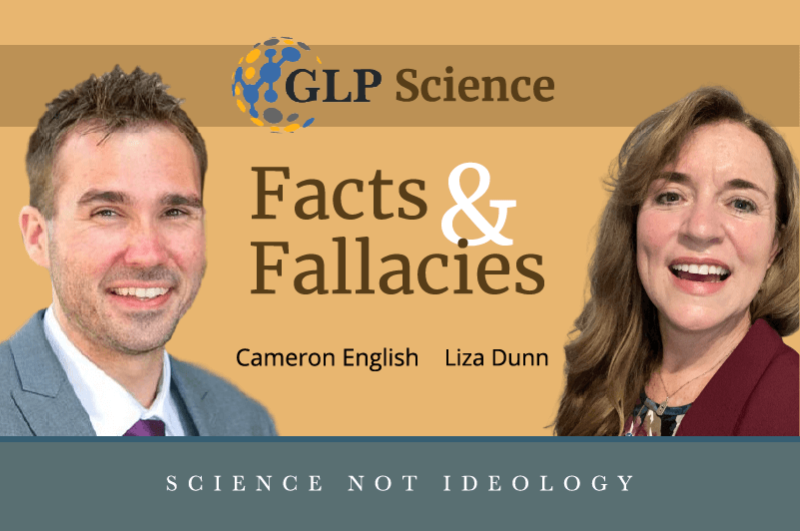
Join hosts Dr. Liza Dunn and GLP contributor Cameron English on episode 279 of Science Facts and Fallacies as they break down these latest news stories:
Echoing widespread criticisms of germline gene editing, Chinese regulators have banned the technology for the foreseeable future, arguing that the “potential detrimental impacts and risks … are still unpredictable.” Germline editing allows scientists to alter the DNA that parents pass down to their children and subsequent generations. In other words, it allows them to alter the genetic makeup of people who don’t yet exist. Which detrimental impacts does China have in mind, and how can they be prevented? Is it even possible to prevent them?




A headline-grabbing study recently found that people who lost weight developed more cases of cancers than a comparable group of individuals whose weight remained stable. The implication of the study is that losing weight, widely recognized as a major step toward improving your metabolic health, increases your risk for cancer. Predictably alarmist news stories amplified the correlation, though a careful look at the study itself shows that this association between weight loss and cancer means very little.
Living alone in crowded cities, far away from nature and separated from family and community, has left many of us depressed and anxiety ridden. That’s an increasingly popular hypothesis among social scientists who argue that humans evolved to live in smaller societies that have little in common with our modern way of life. Civilization isn’t going anywhere, of course, so what steps should we take to protect our mental health in this foreign environment?
Dr. Liza Dunn is a medical toxicologist and the medical affairs lead at Bayer Crop Science. Follow her on X @DrLizaMD
Cameron J. English is the director of bio-sciences at the American Council on Science and Health. Visit his website and follow him on X @camjenglish