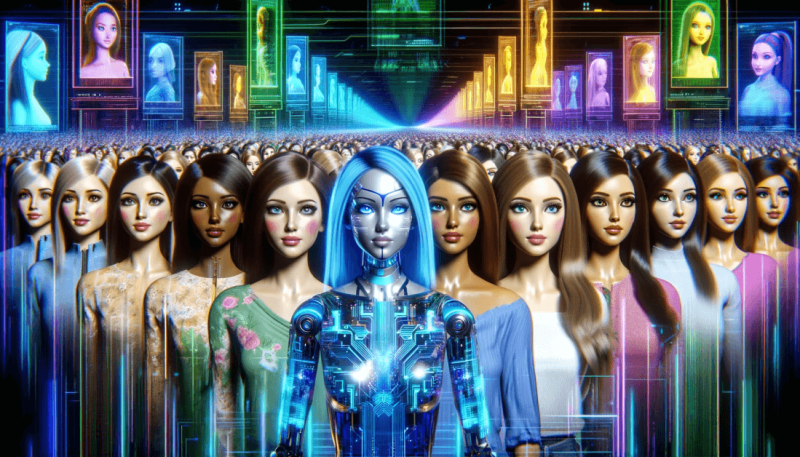
‘Addictively dependent’ on an AI girlfriend? Scientists and ethicists fear artificial intelligence may undermine human romantic connections

ai-girlfriends

AI companionship is no longer theoretical—our analysis of a million ChatGPT interaction logs reveals that the second most popular use of AI is sexual role-playing. We are already starting to invite AIs into our lives as friends, lovers, mentors, therapists, and teachers.

Will it be easier to retreat to a replicant of a deceased partner than to navigate the confusing and painful realities of human relationships? Indeed, the AI companionship provider Replika was born from an attempt to resurrect a deceased best friend and now provides companions to millions of users. Even the CTO of OpenAI warns that AI has the potential to be “extremely addictive.”

Follow the latest news and policy debates on sustainable agriculture, biomedicine, and other ‘disruptive’ innovations. Subscribe to our newsletter.

We’re seeing a giant, real-world experiment unfold, uncertain what impact these AI companions will have either on us individually or on society as a whole. Will Grandma spend her final neglected days chatting with her grandson’s digital double, while her real grandson is mentored by an edgy simulated elder? AI wields the collective charm of all human history and culture with infinite seductive mimicry. These systems are simultaneously superior and submissive, with a new form of allure that may make consent to these interactions illusory. In the face of this power imbalance, can we meaningfully consent to engaging in an AI relationship, especially when for many the alternative is nothing at all?

As AI researchers working closely with policymakers, we are struck by the lack of interest lawmakers have shown in the harms arising from this future. We are still unprepared to respond to these risks because we do not fully understand them. What’s needed is a new scientific inquiry at the intersection of technology, psychology, and law—and perhaps new approaches to AI regulation.


This is an excerpt. Read the original post here

{{ reviewsTotal }}{{ options.labels.singularReviewCountLabel }}
{{ reviewsTotal }}{{ options.labels.pluralReviewCountLabel }}
{{ options.labels.newReviewButton }}
{{ userData.canReview.message }}

Related Articles

Infographic: Global regulatory and health research agencies on whether glyphosate causes cancer

Infographic: Global regulatory and health research agencies on whether glyphosate causes cancer

Does glyphosate—the world's most heavily-used herbicide—pose serious harm to humans? Is it carcinogenic? Those issues are of both legal and ...

Most Popular

Screenshot 2026-05-26 at 10.15
Viewpoint: Double standard—Why does the wellness industry get a free pass while Big Healthcare is treated as morally suspect?
ChatGPT-Image-Jun-4-2026-11_49_36-AM-2
‘You don’t understand Tolkien’: Skeptic Pope trolls tech giants about the exaggerated, risk-less benefits of AI
ChatGPT-Image-Jun-4-2026-01_27_58-PM
Viewpoint—N.A.D.+: Why Gwenyth Paltrow’s heralded anti-aging supplement doesn’t work
Screenshot-2026-06-04-at-12.05.08-PM
Cases of brain inflammation surge as U.S. measles pandemic approaches 2000
Screenshot 2025-07-30 at 10.48
Can gene editing eliminate Down syndrome? Scientists have done it in lab-grown cells
ChatGPT Image May 26, 2026, 08_42_17 AM (1)
Viewpoint: Greenpeace and poison: How environmental advocacy groups rely on compliant (and often ignorant) journalists to spread disinformation and spark litigation
Screenshot-2026-06-03-at-1.24.46-PM
Challenging anti-GMO disinformation: Why genetically-tweaked crops offer bushels of benefits
ChatGPT-Image-Mar-10-2026-01_39_01-PM
Viewpoint—“Miracle molecule” debunked: Why acemannan supplements don’t work
downsyndrome_compilation_MID_1
CRISPR breakthrough that can remove the chromosome responsible for Down syndrome raises ethical questions
ChatGPT Image May 26, 2026, 08_21_36 AM
Limiting gender affirming interventions: Trump administration targets Texas even though it already bans youth access
Screenshot 2026-06-04 at 12.43
Viewpoint: Doctors who are battling Ebola are incredulous that U.S. government is not utilizing specially designed emergency health units meant to fight virulent disease
tick-DNA
GLP podcast: Spread meat allergy with gene-edited ticks? Bioethicists pose vile ‘thought experiment’

Sorry. No data so far.

glp menu logo outlined

Get news on human & agricultural genetics and biotechnology delivered to your inbox.